

Yuchai Generator Set Original Manufacturer Quality and Reliability Guide
2026-11-16
Most generator buyers focus on horsepower and price—until a storm hits and the unit fails. This guide cuts through marketing noise to explain what Yuchai's original factory actually does differently, and how Hichai Power connects you to that standard.
How Yuchai Builds Generator Engines to Outlast the Job Site
Yuchai doesn’t chase peak horsepower numbers for marketing gloss. Instead, the engineering team works backwards from the punishing conditions a generator faces when it's parked on a half-finished construction site: dust that clogs filters, fuel that sits for weeks between uses, and load swings that might trip a lesser engine within minutes. The block is cast with thicker webbing in high-stress zones, and bearing clearances are set deliberately on the tighter side of the tolerance band. That combination keeps the rotating assembly stable when a heavy breaker or welder kicks in without warning.
A separate cooling circuit for the cylinder head is one of the quieter decisions that pays off over time. Many generators pull heat from the head and block through a single loop, which leaves hotspots around the exhaust valves during sustained high-ambient runs. Yuchai routes coolant through the head first at a higher flow rate, then down through the block. It adds a few extra fittings and hoses, but it prevents the slow thermal warping that shortens the life of competitor units being run in direct sunlight or inside poorly ventilated auxiliary rooms.
The fuel system also gets more attention than the spec sheet suggests. Rather than relying on a single fine filter that clogs quickly with site dust, Yuchai fits a staged filtration setup with a water separator and a larger primary element. The injectors are calibrated for a slightly conservative fuel map, sacrificing a fraction of rated output in exchange for clean cold starts and stable idle after weeks of storage. That’s the kind of trade-off that doesn’t show up in a brochure, but it’s what keeps a Yuchai-powered generator running while other machines are waiting for a service van.
The Testing Sequence That Separates Yuchai from the Pack
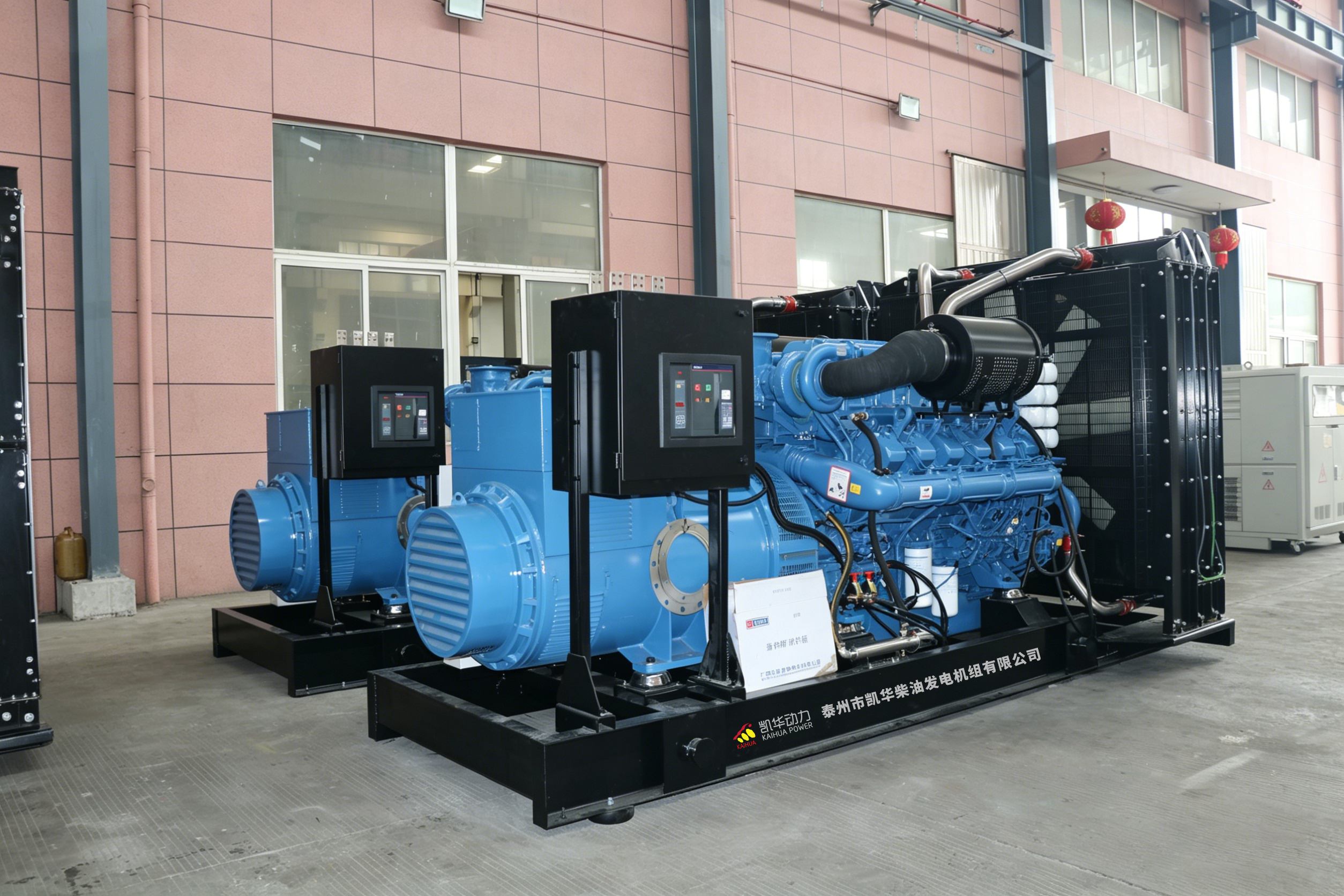
Yuchai doesn't just test engines—it interrogates them. Every unit rolls through a deliberately harsh sequence that begins with cold-soak starts at temperatures well below what most fleets will ever see, then moves to sustained full-load operation where oil temperatures climb past the point competitors would already be backing off. The goal isn't to confirm the engine works; it's to find the exact moment it would break, so that moment never arrives in the field.
What separates this process is the refusal to rush. After thermal cycling, each engine is torn down and measured, not with a quick visual check but with coordinate measuring machines that catch wear measured in microns. Bearings, piston rings, cylinder liners—all get mapped against baseline dimensions. If a single component deviates beyond the tolerance window, the whole batch goes back, not just that one unit. That's the difference between sampling and proving.
Then comes the part most manufacturers skip: the dirty run. Air filters are deliberately loaded with fine dust, fuel is spiked with abrasive particles, and the engine runs at high output for hundreds of hours straight. It's ugly, expensive, and slow. But it's why a Yuchai engine that passes this sequence can shrug off a clogged intake or a bad batch of fuel without drama. The pack talks about reliability; Yuchai's testing sequence actually builds it, one brutal cycle at a time.
Why Yuchai Sources Components Like It's Building for Itself
Yuchai's procurement philosophy goes beyond simple vendor relationships. When sourcing components, the company applies the same engineering rigor, testing protocols, and quality gates that it uses for parts manufactured in its own plants. Suppliers are not just told what to make—they are brought into early design reviews, required to meet failure-rate targets measured in parts per million, and subjected to unannounced process audits. This blurring of the line between in-house and outsourced production ensures that every delivered component would pass inspection if it were rolling off Yuchai's own assembly line.
This approach stems from a hard lesson learned years ago, when a batch of externally sourced fuel injection pumps caused field failures that damaged Yuchai's reputation in key export markets. Since then, the company has adopted a "build for ourselves" standard for all critical parts. That means shared CAD libraries, real-time quality data feeds from supplier lines, and joint root-cause analysis whenever a single defect escapes. It's costly and time-consuming, but Yuchai sees it as the only way to guarantee the durability its engine customers expect after 20,000 operating hours.
The results speak through the supply chain itself. Many of Yuchai's long-term suppliers now co-locate engineers with Yuchai's R&D teams and invest in dedicated production cells just for Yuchai orders. In turn, Yuchai shares warranty data and field performance reports, creating a feedback loop that improves both sides. It's a level of integration that goes far beyond transactional purchasing—essentially, Yuchai treats its vendor network as an extension of its own factories, with the same accountability and pride.
Reading the Run-Time Logs: What Reliability Actually Means
Reading run-time logs is less about spotting errors and more about understanding how a system behaves under real pressure. The logs reveal not just crashes, but the subtle warning signs—slow queries, retry storms, memory creep—that precede them. Reliability, then, isn't a boolean state of up or down. It's a texture: the ability to degrade gracefully, to recover without human intervention, and to keep the user experience intact even when internal components are straining. A log line showing a retry with exponential backoff isn't noise; it's evidence of a system designed to survive.
Many teams treat logs as a forensic tool, something to consult after an incident. But true reliability work turns them into a live diagnostic. When you read the logs during normal operation, you start to notice patterns that no synthetic test can capture—latency spikes tied to a specific upstream dependency, or a cache stampede that happens every Tuesday at 3 a.m. These aren't failures yet, but they're the precursors. Reliability means paying attention to those quiet signals and acting on them before a threshold is crossed. It's the difference between a system that works most of the time and one that you can trust with your sleep.
What reliability actually means becomes clear when you stop asking "Did it work?" and start asking "How did it survive?" The run-time log is the honest answer. It shows the retries, the fallbacks, the circuit breakers opening and closing. A reliable system doesn't hide its scars; it documents them. And that documentation—raw, verbose, sometimes ugly—is what lets you improve the next iteration. Reliability isn't perfection. It's the capacity to keep going when perfection is impossible.
Simple Service Moves That Keep Your Yuchai Set Humming
Spend ten minutes a week with the dipstick and coolant sight glass. Low oil or a slightly dusty radiator can quietly drag down performance long before any warning light flickers on. Use the time to wipe down the air filter housing too, since a clogged intake forces the engine to work harder for every rev.
Belts and battery terminals are often the quiet culprits behind a rough morning start. Give the fan belt a firm push with your thumb; if it flexes more than half an inch, snug it up. A quick scrape of the battery posts with a wire brush and a smear of petroleum jelly keeps the starter spinning crisp and sure.
Finally, keep a small logbook near the control panel. Jot down run hours, fuel filter swaps, and any odd noises you hear during warm-up. This habit turns routine care into a real early-warning system. Your Yuchai set will stay ready for the next outage or job site demand without drama.
Genuine Yuchai Versus Lookalikes: What the Badge Guarantees
The Yuchai badge on an engine isn't just a logo—it's a binding promise of tested performance. Counterfeit units often copy the outer casing, but they can't replicate the metallurgy inside the cylinder liners or the calibration of fuel injection timing. When you buy a genuine unit, you're getting the same tolerances and materials that Yuchai's own quality inspectors signed off on, not a guess made in a back-alley machine shop.
What does that badge actually guarantee? First, traceability. Every genuine engine carries a serial number that links back to batch records of casting temperature, torque settings, and dyno test results. Lookalikes may show a number, but it won't map to any real production log. Second, warranty support with local parts availability. If a genuine engine fails under normal use, there's a claims process and stocked components. With a counterfeit, you're on your own—no dealer will touch it, and the "warranty" is just a piece of paper.
The difference shows up in daily operation, too. Genuine Yuchai engines are tuned for consistent fuel burn across the RPM range, which means fewer filter clogs and smoother idle over thousands of hours. Lookalikes often run hot or vibrate excessively because the cooling passages are rough-cast and the balancer shafts are slightly off-center. The badge is more than vanity: it's the only reliable proof that what's under the hood matches the engineering drawings, not a flawed imitation.
FAQ
It means the engine, alternator, control system, and base frame are assembled and tested under Yuchai's own quality control instead of being pieced together by a third-party packager. You get matched components, a single warranty, and a traceable factory record.
Check the engine serial number against Yuchai's database through an authorized dealer. Original units carry a nameplate with rated output, manufacturing date, and an anti-counterfeit label. If the price is far below the local market and the paperwork is vague, treat it as a red flag.
Every set is load-banked at 25%, 50%, 75%, and 100% of rated capacity before dispatch. The test covers voltage regulation, frequency stability, oil pressure, coolant temperature, and automatic shutdown alarms. Some larger units also undergo a continuous 8-hour run at 110% load.
For standby use, change the oil and filters every 12 months or after 250 hours, whichever comes first. For prime power running more than 8 hours a day, reduce that to 250 hours or 3 months. Always use CH-4 or CI-4 grade diesel oil and genuine Yuchai filters to avoid injector and bearing wear.
Yes, but it needs the right configuration. Specify a heavy-duty air cleaner with a restriction indicator for dusty areas, and a larger radiator with higher airflow for ambient temperatures above 40°C. Keeping the cooling pack clean and checking rubber hoses every 500 hours goes a long way.
Neglected fuel quality and prolonged low-load running. Water and sediment in diesel clog injectors, while running below 30% load for long periods causes wet stacking and carbon buildup. A monthly load bank test at 70% load for at least 30 minutes helps keep the combustion chamber clean.
With proper oil changes, coolant upkeep, and load testing, many Yuchai industrial engines reach 15,000 to 25,000 running hours before needing a major overhaul. Standby units often last 20 years or more because they accumulate fewer hours, but rubber parts and batteries still need periodic replacement.
Conclusion
Yuchai doesn't treat its generator engines as disposable job-site equipment. The block, pistons, and cooling passages are machined with extra clearance tolerances and reinforced at stress points so continuous load doesn't warp seals or crack manifolds before the project ends. Instead of relying on a single dyno pass, every batch goes through a stepped validation: cold-start cycling, full-load heat soak, sudden load rejection, and finally a teardown inspection on sample units. That sequence catches failures most manufacturers only see after warranty claims pile up. It also explains why Yuchai sources bearings, injectors, and gaskets from suppliers who already make parts for its industrial engines rather than chasing the cheapest quote.
Run-time logs from actual sites tell a clearer story than spec sheets. Yuchai tracks coolant temperature drift, oil pressure stability, and frequency response across hundreds of operating hours, then feeds those numbers back into the assembly line. For owners, reliability is less about heroic rebuilds and more about small habits: checking the fuel-water separator before storage, retorquing battery terminals after the first 50 hours, and logging exhaust smoke color during weekly runs. The badge matters too. Genuine Yuchai sets carry matched serial numbers on the alternator and ECU, plus a holographic seal on the control panel. Lookalikes often copy the paint but skip the bonded rotor balancing or use undersized wiring harnesses, which shows up as voltage sag under motor starting. Buying from an authorized distributor and keeping a simple service log keeps that original factory margin intact.
Contact Us
Contact Person: Ms. Lu
Email: [email protected]
Tel/WhatsApp: 8618917899306
Website: https://www.hichaipower.com