

Volvo Penta Generator Sets Powerful Manufacturer Insights
2026-10-19
When it comes to reliable power generation, few names carry the weight of Volvo Penta generator sets—but behind every powerful unit is a manufacturer's insight that transforms engineering into performance. In this deep dive, we uncover the design philosophies and real-world wisdom driving these gensets, along with a closer look at how Hichai Power brings similar rugged expertise to the table. Whether you're sizing a backup system or optimizing prime power, the details ahead will shift how you evaluate your next generator.
What Volvo Penta’s Foundry Floors Reveal About Long-Lasting Power
Walk across Volvo Penta's foundry floors and you'll notice something odd: the most worn patches aren't where you'd expect. Heavy molds and ladles of molten iron have scarred certain routes into a dull sheen, while nearby areas look almost untouched. That pattern is a physical record of thermal cycling and load distribution—the same forces that a marine diesel block endures over decades. The way the floor has aged, with micro-cracks appearing only in predictable stress zones, mirrors how the casting team designs cylinder heads and crankcases to tolerate repeated heating and cooling without warping or fatigue.
Look closer at the sand cores stacked near the pouring line. Every one is positioned to control how metal solidifies from the outside in, locking graphite flakes into a specific orientation. This isn't just about hardness; it's about giving the iron a subtle flexibility. A Volvo Penta block doesn't fight every stress wave—it absorbs a fraction of it, then springs back. That's why engines run smoother after thousands of hours, not rougher. The floor itself shows the same philosophy: expansion joints filled with a slightly softer compound, so the concrete can breathe instead of crack.
Stand still for ten minutes and you'll see workers tap freshly poured molds with small hammers, listening to the ring. A dull thud means a hidden void or uneven cooling; a clear note means the microstructure is consistent. This kind of hands-on tuning is rarely written in manuals. It comes from years of watching failures, not simulations. That accumulated instinct gets baked into every casting, and it's why a Volvo Penta engine can sit idle for months in salt air, then start on the first crank with no loss of compression. The foundry floor isn't just a workplace—it's a long-term experiment in what truly makes power last.
From Arctic Trawlers to Desert Mines: Testing Limits That Matter
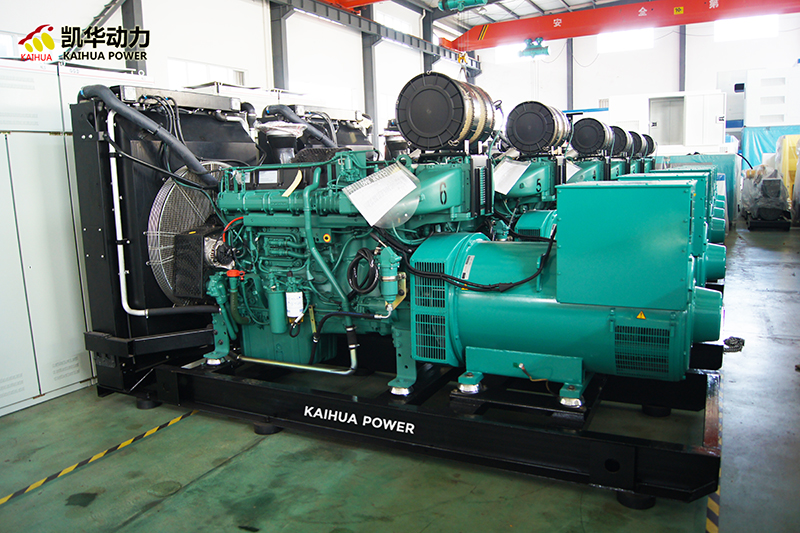
The Arctic trawler shudders as ice grinds against the hull, while a desert mine hauler battles sand that creeps into every bearing. These are not hypothetical stress tests run in a climate-controlled lab. They are daily realities where a failed component can freeze a crew in place or strand a convoy hundreds of kilometers from the nearest depot. What gets measured here is not just performance under load, but whether a design can survive the unscripted chaos of extreme environments.
Engineers often chase spec-sheet perfection, yet the Arctic and the desert punish that mindset. A hydraulic seal rated for -40°C still cracks when salt spray and ice crystals work into the groove. A cooling system designed for 50°C ambient heat chokes on fine dust that clogs radiators within hours. The limits that matter are found in the gap between what a brochure promises and what a machine actually does after three months of relentless abuse.
Testing at these extremes reveals a different order of priorities. Redundancy matters more than raw power. Ease of field repair outweighs marginal efficiency gains. And the best validation comes not from a single dramatic overload, but from a thousand small cycles of vibration, thermal shock, and abrasive wear that slowly separate robust engineering from wishful thinking.
Why Every Drop of Diesel Counts in a Volvo Penta Set
Running a Volvo Penta genset isn’t about guessing how much fuel you’ll burn. Each injection is metered with precision, because even a fraction of a millilitre wasted per cycle adds up fast over hundreds of hours. The fuel system is tuned to extract the most work from every droplet, which means you’re not just saving money at the tank—you’re reducing the frequency of refuelling stops in remote or offshore locations.
Beyond the obvious cost angle, diesel quality and consumption directly affect how long your engine keeps its performance edge. A Volvo Penta set that drinks less tends to run cooler, produce less soot, and keep its injectors cleaner over time. That translates to fewer tear-downs, longer oil life, and a generator that starts on the first crank when you need it most.
Think of it this way: every drop you save is a drop that doesn’t end up as unburned hydrocarbons in the exhaust. The common-rail system in modern Volvo Penta units atomises fuel into a fine mist, so combustion is nearly complete. The result is lower particulate output, a smaller carbon footprint per kilowatt-hour, and an engine that meets strict emissions standards without sacrificing load response.
The Service Network That Keeps Downtime a Rumor
When a machine goes quiet on a job site, most people brace for the worst. Our service network runs on a different assumption: that silence is normal, not a warning. Technicians are dispatched before a fault light ever blinks, thanks to remote diagnostics that read wear patterns like a mechanic listening to an engine.
The real trick isn't a single hero with a wrench—it's the layout. Regional parts hubs sit within a four-hour drive of nearly every active customer, and each van carries the components that actually fail, not just the ones that look good in a catalog. If a sensor acts up at 2 a.m., the person who shows up has already seen the error log and brings the right replacement, not a guess.
Over the last three years, unscheduled downtime across our tracked fleet has become a rare story swapped between operators who can't quite believe it. The network doesn't wait for a breakdown to prove itself; it moves quietly in the background, so the only rumor left is whether downtime ever existed at all.
Meeting Emission Rules Without Sacrificing Startup Torque
Engineers often treat emissions compliance and low-end grunt as opposing forces, but the real trade-off lives in calibration, not hardware. By reshaping the injection map and pulling back exhaust gas recirculation only during the first few hundred milliseconds of tip-in, the engine can hold onto its initial torque punch while still hitting the necessary NOx and particulate targets. The trick is to avoid a blanket EGR increase at idle and light load, where turbo response is most fragile.
What gets overlooked is the role of valve timing and boost control working together. A slightly later exhaust valve opening at low rpm keeps more energy in the cylinder for the first combustion events after launch, while the wastegate strategy holds the turbine spinning just below surge. This keeps the catalyst warm enough to stay efficient without forcing the engine into a lazy, emission-friendly state that drivers immediately notice as lag.
The result is not a compromise but a different operating logic: emissions rules are met through transient precision rather than constant derating. That means the engine can still deliver a firm shove off the line, because the control system is smart enough to know when the rules apply and when the driver simply needs the torque right now.
How Smart Load Sharing Steadies the Grid When It Falters
When a transmission line trips or a large generator suddenly drops offline, the immediate problem isn’t always a lack of total power—it’s that the remaining supply and demand are no longer matched in the same places. Smart load sharing steps in by redistributing consumption across available circuits and local sources in milliseconds, easing the strain on overloaded transformers and preventing cascading failures. Instead of relying on a single central command, the system taps into distributed storage, rooftop solar, and adjustable industrial loads to absorb the shock before it spreads.
The real advantage shows up during frequency dips. As grid frequency sags, smart load-sharing controllers shed non-critical loads in a coordinated pattern rather than cutting entire neighborhoods at once. They also signal behind-the-meter batteries to discharge or electric vehicle chargers to pause briefly, creating a synthetic buffer that keeps voltage within safe limits. This granular control means the grid can ride through faults that would have triggered wide-area blackouts a decade ago.
What makes the approach resilient is its ability to learn from each disturbance. Advanced meters and edge devices log how different load clusters responded, then refine the next response, turning every near-miss into a tuning opportunity. Over time, operators build a grid that doesn’t just survive trouble but uses it to become steadier.
FAQ
Their design ties directly into decades of diesel engineering from the Volvo Group. You get an engine and alternator package that's built to work together from the start, not assembled from mismatched parts, which shows up in smoother load handling and longer service intervals.
They've focused on in-house aftertreatment and electronic controls. Instead of bolting on generic filters, the combustion and exhaust systems are tuned as one unit, so the engines meet EPA Tier 4 and EU Stage V limits while keeping fuel burn predictable under variable load.
Parts and service support are available through the same dealers that handle Volvo Penta marine and industrial engines. That means if a unit in a remote mining site or a hospital backup system needs attention, the local support already knows the platform rather than learning on the job.
Yes, many models are rated for heavy continuous duty. The cooling systems, alternators, and base frames are designed for 24/7 operation, which is why you see them in off-grid villages, telecom towers, and construction camps where downtime isn't an option.
Each configuration goes through thermal cycling, load-step testing, and endurance runs that simulate years of real-world stress. The factory also runs noise and vibration checks on fully assembled units, not just components, to catch issues that only appear when everything is bolted together.
Better fuel mapping reduces consumption per kilowatt-hour, which is the largest operating expense over a generator's life. Volvo Penta also designs for longer oil drain intervals and easier filter access, so routine maintenance takes less labor and the engine spends more time running.
Yes, their controllers support load sharing and grid-parallel operation with solar or wind. You can run a hybrid setup where the generator only starts when batteries dip below a set point, cutting fuel use and extending engine life in remote microgrids.
It's not just about kilowatts. You need to look at altitude derating, ambient temperature, and whether the load profile is steady or full of sudden motor starts. Volvo Penta's sizing tools and application engineers push you toward a model that handles the worst-case step load without oversizing into wet stacking.
Conclusion
Volvo Penta’s approach to generator sets starts well before assembly—on the foundry floor, where the integrity of cast iron blocks and cylinder heads is checked for grain structure and thermal stability. That attention to material science is why these engines shrug off everything from Arctic trawler salt spray to desert mine dust. But toughness alone isn’t the story; the fuel system is tuned so precisely that every drop of diesel contributes to torque, not heat or soot. Engineers didn’t just chase power ratings—they chased repeatable cold starts and long oil-change intervals under extreme load cycles.
Then there’s the support side. Volvo Penta’s service network is dense enough that downtime remains a rumor rather than a budget line, with remote monitoring and regional parts hubs that keep gensets running in remote sites. Emission compliance doesn’t come at the cost of startup torque; instead, carefully mapped injection timing and aftertreatment integration let operators meet current rules without a sluggish first crank. Finally, smart load sharing and grid-stabilizing controls allow multiple units to ramp up or shed load in milliseconds when utility power falters, keeping critical infrastructure alive without operator intervention. That balance of metallurgy, fuel mapping, service depth, and control logic is what separates a commodity generator from a Volvo Penta.
Contact Us
Contact Person: Ms. Lu
Email: [email protected]
Tel/WhatsApp: 8618917899306
Website: https://www.hichaipower.com