

USB4 Cable Manufacturer: How to Choose a Reliable Partner for High-Speed Data Transfer
2026-10-17
Choosing a USB4 cable manufacturer isn't just about specs on paper—it's about trust under real-world data loads. High-speed transfer demands more than compliance; it requires a partner who sweats the details like signal integrity, shielding, and connector durability. That's where EBCYX comes in, with a track record of engineering cables that hold up when throughput matters most. But how do you separate a truly reliable vendor from the rest? Let's break down the critical questions to ask before you sign off.
USB-IF Certification Is a Starting Point, Not a Guarantee
USB-IF certification tells you a device passed a defined set of electrical and protocol checks at a specific moment, usually with a reference host or charger. That matters because it filters out designs that can't handle basic enumeration or negotiated power levels. But passing those tests doesn't predict how the port will behave after months of connector wear, with a cheap third-party cable, or when two certified devices from different vendors meet for the first time. Certification is closer to a driver's license than a racing pedigree: it proves minimum competence, not flawless performance in every situation.
The real world adds variables that no lab can fully replicate. Docks, hubs, high-power chargers, and e-marked cables all interact through negotiation layers that sometimes expose ambiguous interpretations of the USB spec. A certified laptop and a certified dock can still fall back to slow charging or drop USB 3 speeds if their firmware takes different paths through the same standard. That is why enterprise buyers and enthusiasts often keep their own test matrix, not because they distrust USB-IF, but because certification alone does not guarantee the exact combination of devices they actually use will behave.
Treat USB-IF certification as a useful filter, not a promise. It narrows the field to products that respect the baseline, which saves a lot of time. After that, the burden shifts to real-world validation: checking cable compatibility, confirming the expected power profile under load, and seeing how the port recovers from a failed negotiation. Ports that only look good on paper tend to reveal themselves quickly once you move beyond the certificate.
Connector Housing Design Determines How Long the Cable Lasts
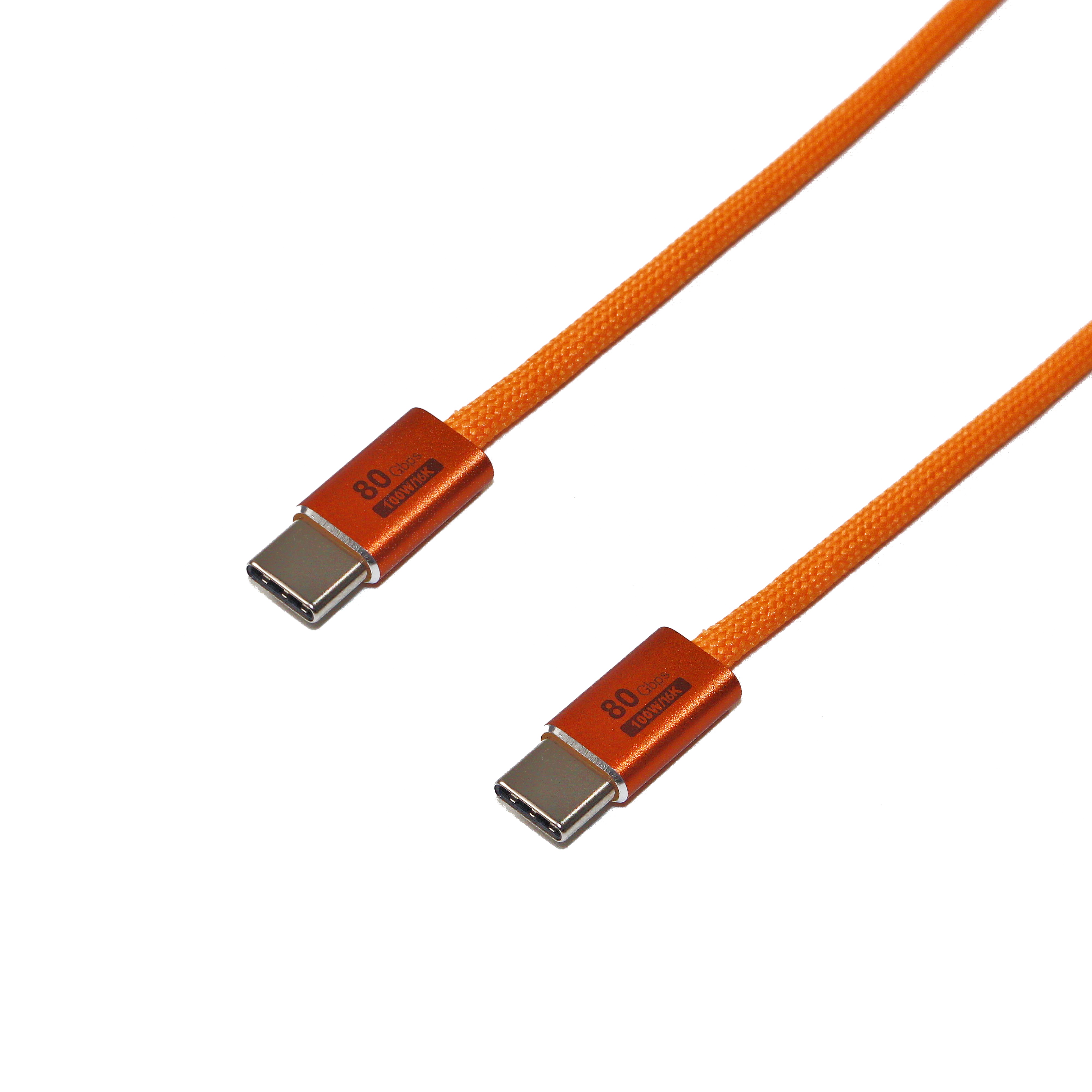
The weakest point of any cable assembly is rarely the wire itself—it's where the wire enters the connector. A poorly designed housing concentrates bending stress at that junction, causing insulation cracking and eventual conductor fatigue. By contrast, a well-shaped housing with tapered strain relief spreads the flex zone over a longer distance, allowing the cable to survive repeated movement without internal damage.
Material selection in the housing also plays an underrated role. Rigid plastics may snap under cold or repeated load, while overly soft materials wear down and expose the cable entry. The best designs use glass-filled nylon or engineered blends that keep their dimensions over time, preserving the seal and keeping contact pins aligned.
Environmental protection is another direct result of housing geometry. Tight snap fits, molded gaskets, and recessed mating faces prevent moisture and dust from reaching the internal conductors. Once a housing loses its seal, corrosion starts silently, and the cable can fail long before the outer jacket shows visible wear. So choosing a connector with a thoughtful housing isn't just about fit—it's about how many years the whole cable will actually work.
Shielding and Twisted Pairs: The Real Reason Speeds Stay High
The twist in each pair isn’t just for flexibility. When two conductors are wound together, external electromagnetic interference hits both wires at nearly the same amplitude and phase. A differential receiver only cares about the voltage difference between the pair, so that common-mode noise cancels out. This lets the signal travel at higher frequencies without the receiver mistaking noise for data.
Shielding adds another layer. A foil or braided screen around the pair or around all pairs blocks radiated noise before it reaches the conductors. At gigabit speeds and beyond, even tiny amounts of crosstalk between adjacent pairs can close the eye diagram and force retransmissions. Shielding keeps that crosstalk low enough that the link can maintain its negotiated speed instead of falling back to a slower rate.
Without these two mechanisms, long cable runs would suffer from severe attenuation and interference, making high-frequency signaling unreliable. Twisted pairs handle differential noise, while shielding handles common-mode interference from outside sources. Together they preserve signal integrity so well that modern Ethernet and other high-speed links can keep pushing more data over copper without replacing the cabling.
In-House Signal Testing Separates Serious Makers From Resellers
Most resellers are happy to forward a factory test report and call it a day. Serious makers, on the other hand, build their own signal-test setups. They probe boards under real load, inject noise, and watch how edges behave before trusting a design. That hands-on process is what turns a borrowed reference layout into something that can actually survive outside a lab.
In-house testing also catches problems no datasheet will ever mention: marginal decoupling, ground bounce on fast buses, or a clock that drifts just enough to fail after warm-up. These are the details that separate a maker who stands behind a product from a reseller who simply passes boxes along. Without that internal verification loop, every revision is just a guess.
Warranty Terms Often Mirror the Manufacturer's True Confidence
A company rarely puts its money where its mouth is unless it genuinely believes the product can go the distance. When a maker offers a five-year warranty on a budget appliance, it's not just generosity—it's a signal that their failure-rate data supports that promise. Shorter coverage periods, by contrast, often hint at corners cut during design or sourcing, even if the marketing copy says otherwise.
Look beyond the headline number, too. Some warranties cover only 'manufacturing defects' while excluding the parts most likely to wear out—think hinges, seals, or electronic controls. That fine print reveals where the manufacturer's confidence truly ends. A bold, bumper-to-bumper guarantee suggests the engineering team won internal battles against the accountants, while a patchwork of exclusions tells you the lawyers were in charge.
Over time, warranty terms tend to mirror a company's cultural shift. Brands that once offered lifetime coverage and then quietly trimmed it to two years are often telling you more about their new cost structure than about any change in the product itself. Savvy buyers treat the warranty document not as an afterthought, but as a candid self-assessment from the people who know the product best.
Batch-to-Batch Consistency: Where Cheap Suppliers Fall Apart
Order a sample from a low-cost supplier and it might look flawless. Place a production run six months later and the shade has shifted, the viscosity is off, or the particle size distribution no longer matches your spec. This is the hidden failure mode of cheap manufacturing: they can hit a target once, but they cannot hit it again and again. The root cause is almost always raw material sourcing. Many budget factories buy pigments, resins, and additives on the spot market, switching vendors whenever they find a slightly lower price. Each switch introduces subtle changes in impurity profiles, moisture content, or reactivity that are never fully characterized before the material goes into your product.
Process discipline is the second weak point. Holding tight tolerances across batches requires documented procedures, calibrated instruments, and statistical process control charts that trigger investigation when a parameter drifts. Low-cost suppliers often cut exactly these overhead items. They rely on a senior operator's 'feel' instead of rheometer data, skip retained sample comparisons, and postpone equipment maintenance until something breaks. A worn disperser blade or a thermocouple that is off by six degrees may go unnoticed for months, slowly pushing every batch away from the approved reference.
The cost of that drift rarely appears on the invoice. It shows up as a coating that sags on the line, a tablet that stops meeting dissolution specs after three lots, or a fragrance that smells different in the northern hemisphere winter. By the time you trace the problem back to your supplier, you have already paid for rejected inventory, line stoppages, and a difficult conversation with your own customer. Batch-to-batch consistency is not a premium feature; it is the entire point of buying an industrial input. If a supplier cannot prove they control it, the low unit price is a bet you are making against your own production schedule.
FAQ
A serious supplier will have USB-IF certification for their USB4 cables, which means they passed compliance testing for 40Gbps signaling, power delivery up to 240W, and DisplayPort 2.0 alt mode. Also look for ISO 9001 for process consistency and perhaps ISO 14001 if environmental compliance matters to your project. Some factories only show you a USB-IF logo without the actual test ID — ask for the certification number and verify it on the USB-IF public list.
Ask them about insertion loss, return loss, and crosstalk budgets at 20GHz. A knowledgeable partner will talk about the cable's PCB or paddle card design, the dielectric material, and how they keep the differential pair skew under control. If they can't discuss eye diagram testing or time-domain reflectometry (TDR) results, they probably don't have the engineering depth to troubleshoot high-speed issues.
Because USB4 runs at 40Gbps using PAM3 modulation over 4 lanes, and signal attenuation increases with frequency. Passive copper cables typically max out around 0.8 meters for full speed, while active cables with retimers or redrivers can reach 2 meters or more. A manufacturer that promises a 3-meter passive USB4 40Gbps cable should be treated with suspicion — the physics don't support it without active electronics.
A basic USB-C cable might handle 100W charging and USB 2.0 data, but it won't have the high-speed data lanes, shielding, or e-marker chip required for USB4 tunneling of PCIe and DisplayPort. Genuine USB4 cables are marked with the USB4 logo and a data rate, and they contain an e-marker that advertises the cable's capabilities to the host. Without that chip correctly programmed, the host will fall back to lower speeds or refuse alt modes entirely.
Request a sample test report for a specific production batch: what percentage of cables get tested for high-speed eye diagram compliance, not just continuity? Do they do 100% e-marker verification? How do they handle thermal cycling or bend testing? Another clue is their rework policy — if they can't trace a failed cable back to a specific machine or operator via lot codes, their process control is weak.
The e-marker is tiny but critical. It tells the host the cable's speed rating, current capacity, and USB4 support. If a factory programs it with wrong values — for example, claiming 5A but the cable only has 3A conductors — you get overheating or the host refusing to charge. A reliable manufacturer will have a dedicated programming station with checksums and a validation step that reads back the e-marker data on every reel.
Good factories will offer a pilot run of 100 to 500 pieces if you pay for setup and tooling. That's the smart way to validate a new partner: order 200 cables with your exact length, connector orientation, and overmold color, then stress test them in the field. Beware of manufacturers who insist on 5,000 minimum without any sample support — they're probably more interested in moving inventory than building a relationship.
Watch for vague answers about where the copper and connectors are sourced, unwillingness to share test data, or a catalog listing 'USB4 ready' without any certification ID. Also be wary of prices far below market: real 40Gbps cable costs include high-quality raw materials, precision assembly, and compliance testing. If they can't show you a recent USB-IF certification or a working sample that passes your own protocol analyzer test, keep looking.
Conclusion
Choosing a USB4 cable manufacturer goes far beyond checking for a USB-IF certification logo. While certification is a useful baseline, it doesn't guarantee long-term performance. The physical design of the connector housing, the quality of shielding and twisted pairs, and a maker's commitment to in-house signal testing are what actually keep high-speed data transfers stable over months of heavy use. A manufacturer that only resells cables without its own test lab often can't catch subtle impedance mismatches or crosstalk issues that degrade 40Gbps throughput in real-world setups.
Another telling sign is the warranty—short, vague terms usually reflect weak confidence in the product's durability and batch consistency. Reliable partners tend to offer clear, longer coverage because they know their extrusion, soldering, and assembly processes produce repeatable results. Cheap suppliers often fail at maintaining tight tolerances from one production run to the next, leading to cables that work fine on day one but fail intermittently later. So when evaluating a USB4 cable manufacturer, look for transparent testing data, thoughtful mechanical design, and a track record of consistent batches rather than just a familiar logo on the package.
Contact Us
Contact Person: David Yang
Email: [email protected]
Tel/WhatsApp: 8615814734054
Website: https://www.ebcyx.com/