

Top Prefabricated Substation Manufacturer: A Guide to Modern Power Infrastructure
2026-07-09
Modern power grids demand speed, reliability, and efficiency—prefabricated substations deliver exactly that. As a global leader in this field, CNKEEYA redefines how we think about power infrastructure, blending smart engineering with rapid deployment. But what truly sets a top manufacturer apart in today's competitive landscape? This guide peels back the layers, revealing the key factors that separate industry pioneers from the rest.
Rethinking Substations: Prefab vs. Traditional Builds
The decision between prefabricated and conventional substation construction is often framed as a straightforward choice between speed and customization, but the reality is far more nuanced. A conventional build, with its on-site assembly and tailored design, has long been the standard, allowing for minute adjustments to local topography, soil conditions, and specific utility requirements. Yet this approach is increasingly strained by labor shortages, extended timelines, and unpredictable weather delays, which can push projects years beyond their expected completion. Prefabrication, on the other hand, shifts the bulk of the work to controlled factory environments, dramatically reducing on-site labor and compressing schedules by up to 50%. However, the real rethinking comes not from adopting one method over the other, but from challenging the assumption that substations must be either entirely bespoke or entirely modular. Hybrid models, where core components like control buildings and switchgear are pre-assembled while civil works remain site-specific, are blurring the old boundaries and offering a middle path that balances efficiency with adaptability.
Cost is another dimension where the prefab-versus-traditional debate often misses the mark. Upfront capital expenditures for a factory-built solution can appear lower, especially when factoring in reduced site preparation and fewer skilled workers. But the long-term economics involve more than initial outlay. Traditional substations, with their locally sourced materials and labor, can inject money directly into the regional economy and create durable structures designed for decades of incremental upgrades. Prefabricated units, while faster to deploy, may introduce logistical complexities: transportation permits, crane rentals for heavy modules, and the risk of damage during transit. A more useful lens is to evaluate total lifecycle costs, including maintenance, scalability, and eventual decommissioning. In fire-prone or seismically active regions, for instance, factory-built enclosures with advanced fire suppression and seismic bracing might offer resilience that outweighs their premium, while in areas with ample skilled labor and stable climates, traditional methods still hold a quiet advantage.
Perhaps the most overlooked factor is how the build method shapes a substation's relationship with its surroundings. Traditional construction often disrupts local traffic and ecosystems for months, if not years, leading to community pushback. Prefab substations can arrive as near-complete assemblies, minimizing disturbance and accelerating the return to normalcy. Yet the visual and acoustic footprint matters too. A traditional build can be meticulously integrated into a landscape, with architectural finishes that match local vernacular, whereas a prefab unit may carry the undeniable stamp of factory standardization. Forward-thinking utilities are now using prefabrication not as a cheap shortcut, but as a design strategy—commissioning custom modules that reflect local aesthetics while leveraging factory precision. The substation, in this rethinking, becomes less a construction project and more a product delivered to site, challenging planners to consider not just how it’s built, but what it leaves behind.
What Sets Leading Manufacturers Apart in Modern Grid Design
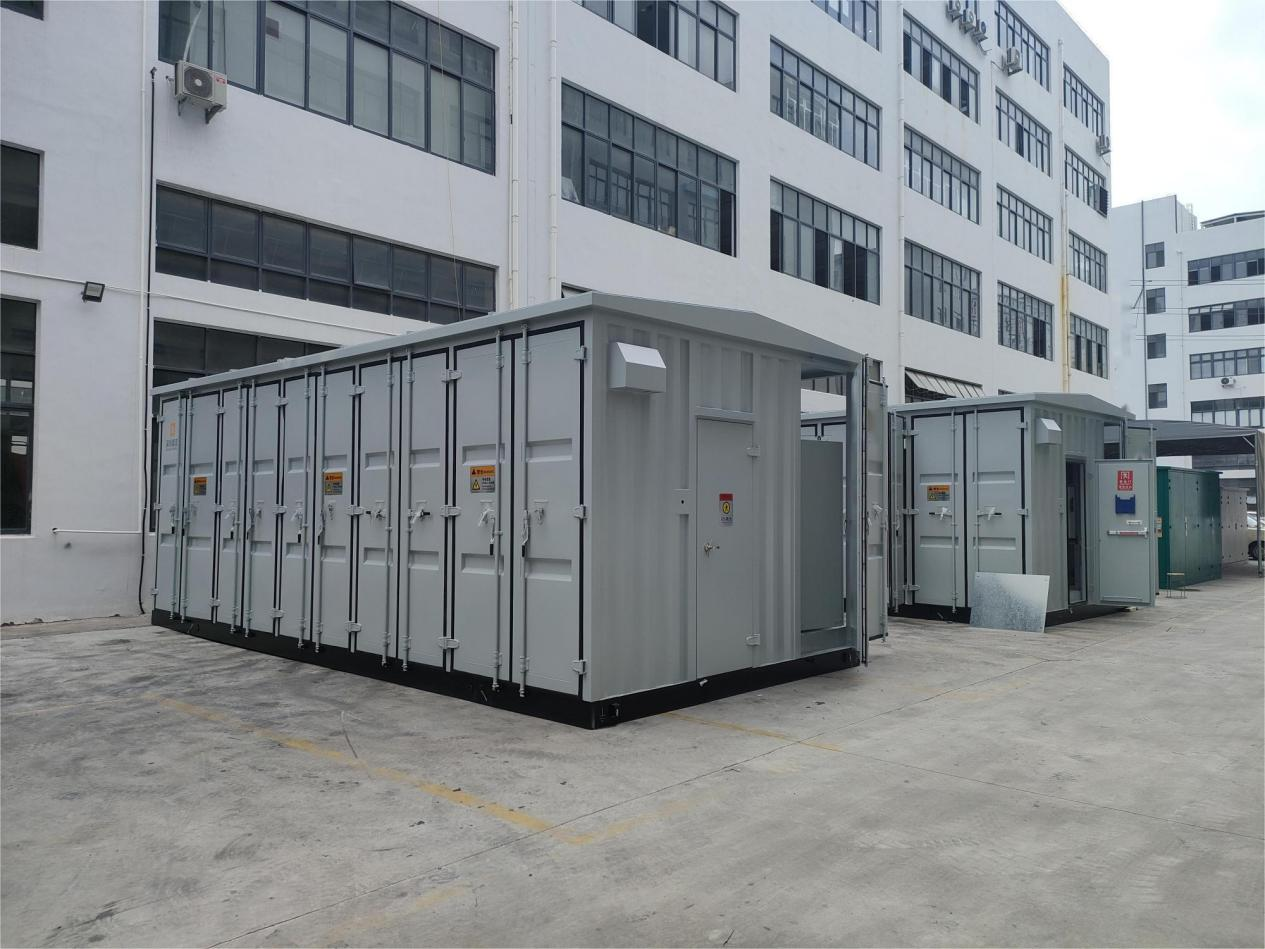
True leadership in modern grid design isn't about chasing the latest buzzwords—it's about solving real operational pain points that most firms overlook. Leading manufacturers obsess over the granular details, like how voltage fluctuations ripple through interconnected substations during peak loads, and then embed that deep understanding into every protection scheme and control layer. They treat the grid as a living organism rather than a static blueprint, anticipating failure modes years in advance through relentless field testing and forensic analysis of past blackouts.
Where others follow standards, the best push boundaries by integrating hardware and software into a single, adaptive nervous system. Instead of bolting on communication modules as an afterthought, they design switchgear and relays that natively speak the same language as the control room, shaving milliseconds off fault response times. This co-design approach extends to cybersecurity, weaving authentication and anomaly detection directly into the firmware, so resilience isn't a patch applied later but a fundamental characteristic.
Another differentiator is a near-fanatical commitment to future-proofing without over-engineering. Top-tier manufacturers build flexibility into their architectures without burdening operators with unnecessary complexity—think modular power blocks that can be reconfigured in hours, not weeks, or analytics tools that surface abnormal patterns before they become emergencies. This blend of pragmatic innovation and deep domain expertise turns a supplier into an indispensable partner.
Inside the Factory: How Prefabricated Units Come Together
Walking onto the production floor, the first thing that hits you is the rhythmic clatter of machinery and the sharp tang of fresh concrete. Massive steel molds are wheeled into position, their surfaces gleaming under the factory lights. Workers move with the ease of long practice, guiding overhead cranes that lift reinforcing cages into place with millimeter precision. There’s no guesswork here—every measurement is checked twice, every connection torqued to spec. The air carries a sense of quiet urgency, a hum of activity that somehow feels both industrial and intensely human. It’s not just an assembly line; it’s a carefully choreographed dance where each step matters.
Once the structural skeleton is in place, the unit begins to take on its character. Plumbers thread pipes through pre-cut channels while electricians pull cables along routes mapped out weeks in advance on digital blueprints. Unlike a traditional site where these trades might clash for space, here the sequence is streamlined—insulation panels slide in before the drywall goes up, and window frames are sealed while the unit is still easy to access from all sides. In one corner, a crew is fitting a bathroom pod, complete with tiled walls and a vanity already fixed in place. Nearby, another team installs kitchen cabinetry, working at a comfortable height on a leveled jig. The contrast to on-site building is stark: no delays from weather, no cramped quarters forcing compromises.
Before a unit leaves the bay, it faces a final exam. Water lines are pressurized and tested, circuits are probed, and every surface is scrutinized under bright utility lights. A group of inspectors runs through a checklist that runs to hundreds of items, flagging anything that doesn’t meet the tolerance—a misaligned door, a rough patch of paint, a seal that hasn’t set properly. Only when every box is ticked does the unit get wrapped in protective sheeting and hoisted onto a flatbed. Watching it roll out through the loading bay doors, you realize this isn’t just a box of rooms. It’s a controlled, factory-crafted solution that leaves little to chance, ready to be stacked and connected in a matter of hours rather than weeks.
Smart Integration: Digital Controls for Tomorrow's Power
The next generation of power management hinges on the seamless fusion of digital intelligence with physical infrastructure. Rather than treating control systems as afterthoughts, engineers are now embedding adaptive logic directly into hardware, enabling real-time adjustments that anticipate load shifts and grid disturbances. This shift moves beyond simple automation, creating a nervous system where sensors, actuators, and processors collaborate to maintain equilibrium without constant human oversight.
What sets these modern digital controls apart is their ability to learn from operational data. By applying lightweight machine learning models at the edge, they can predict wear patterns, optimize energy routing, and even isolate faults before they cascade. This predictive layer transforms static power networks into dynamic, self-healing ecosystems, slashing downtime and extending asset life in ways that conventional SCADA setups never could.
Crucially, this integration doesn’t demand a wholesale rip-and-replace of legacy equipment. Through protocol translation and modular retrofits, older switchgear, transformers, and breakers gain a new digital voice. The result is a phased, cost-effective evolution where yesterday’s hardware becomes a participant in a smarter, more resilient grid—bridging the gap between decades-old infrastructure and a future where every watt is accounted for and intelligently directed.
Deployment Stories: Rapid Installations That Defy Weather and Terrain
In the remote highlands of Patagonia, a team unloaded modular turbine parts from a rugged all-terrain vehicle as wind threatened to scatter lighter components across the rocky slope. They had just a 12-hour window before forecasted 70-mile-per-hour gusts would shut down any chance of assembly. By midday, the machine stood anchored against the gale, its blades rotating in a rhythm that seemed to mock the very storm that should have delayed its arrival.
Further north, above the Arctic Circle, an installation crew worked in a twilight dusk that would last for months. Permafrost presented a different challenge—concrete wouldn’t cure in -40°F conditions, so they had developed a rapid-set, cold-weather epoxy anchoring system that bonded to frozen ground without thermal drilling. In three days, a fully functional unit was feeding power to a remote research outpost, its silhouette barely visible through curtains of drifting snow.
Not every obstacle is frozen or wind-whipped. In the choking humidity of a Southeast Asian mangrove estuary, technicians waded through chest-deep water to drive helical piles into fluid mud, assembling the turbine from a floating barge. Salt spray corroded standard components within weeks, so each part had been pre-treated with a military-grade ceramic coating. The unit was operational before the next monsoon, its wings turning steadily above a labyrinth of roots and tides.
Maintenance Myths Debunked: Long-Term Reliability of Modular Solutions
There’s a stubborn notion floating around that modular systems demand more upkeep simply because they have more individual parts. In reality, it’s quite the opposite. Standardized modules mean you’re dealing with identical, field-replaceable units rather than a tangle of bespoke assemblies. Technicians don’t waste hours diagnosing custom configurations—they swap a module in minutes, often with no special tools. This cuts both planned and unplanned downtime drastically, and the consistent design slashes the chance of human error during service.
Another myth worth shattering: that modular architectures introduce fragile single points of failure. Good modular design builds in redundancy at the component level, so if one power module or cooling unit goes down, the rest carry the load seamlessly. It’s like having a team where no single player’s absence stops the game. This fault tolerance isn’t just for critical data centers—it shows up in everything from telecom rectifiers to industrial drives, quietly keeping operations alive while traditional monolithic systems would be calling for an emergency crew.
Long-term reliability gains come from how modular solutions age. Instead of overhauling an entire system when technology moves on, you refresh individual modules—capacity, controls, or connectivity—without gutting the enclosure. That means the backbone stays proven and stable, while the guts keep pace. It’s a far cry from the old cycle of rip-and-replace that introduces whole-system risk. Over a decade, this approach doesn’t just lower total cost; it builds a reliability track record that monoliths struggle to match simply because fewer massive interventions are ever needed.
FAQ
They save time and space by arriving pre-assembled and tested, cutting installation from months to days. You also get factory-controlled quality, which reduces site errors and long-term maintenance headaches.
Look beyond flashy brochures. Check their track record with similar-scale projects, in-house engineering teams, and whether they use robust, certified components. A company that offers tailored designs and strong after-sales support usually stands out.
Absolutely. Leading manufacturers design enclosures that withstand extreme weather, corrosion, and seismic activity. They're often deployed in deserts, offshore platforms, and mining sites where traditional builds would struggle.
Modularity future-proofs your investment. You can easily expand or reconfigure the setup as power demands grow, without major civil works. It's like building with high-tech Lego blocks – each unit integrates seamlessly.
They're a natural fit. Wind and solar farms depend on compact, rapidly deployable connection points. Prefab units come with integrated transformer and switchgear packages that manage voltage fluctuations and ensure grid stability.
A well-built prefab substation can operate reliably for 25–30 years with minimal upkeep. Key is the protection rating – look for IP54 or higher and corrosion-resistant coatings. Routine inspections every couple of years usually suffice.
Yes, customization is a core advantage. Reputable manufacturers configure everything from LV to high-voltage transmission (up to 245 kV or more) and ensure compliance with local grid codes and international standards like IEC 62271.
Because the building and internal assembly happen simultaneously in a factory, independent of weather. Once the site foundation is ready, the unit is delivered and commissioned quickly, slashing overall project timelines by up to 60%.
Conclusion
The shift toward prefabricated substations marks a decisive break from the drawn-out, weather-dependent chaos of traditional builds. By engineering entire units in controlled factory settings, manufacturers eliminate common site delays and quality inconsistencies. This approach isn't just about speed—it’s about precision. Inside production halls, steel enclosures take shape alongside integrated busbar systems and pre-wired control cabinets, all tested before they leave the floor. Leading names in the sector distinguish themselves by how they embed digital intelligence directly into these modules: advanced monitoring nodes, remote diagnostics, and grid-responsive automation become native features rather than afterthoughts. The result is infrastructure that talks to tomorrow’s networks today.
Deployment stories reinforce the value. From soft peatlands in Scotland to iced-over plateaus in Inner Mongolia, modular units arrive complete and are commissioned in days—not months—often with minimal foundations. This rewrites the narrative around maintenance, too. Contrary to outdated myths, factory-built switchgear rooms and transformer bays don’t demand more upkeep; standardized, sealed systems reduce exposure to dust, moisture, and wildlife, keeping lifecycle costs remarkably low. The guide doesn’t just catalog suppliers—it reveals how the best manufacturers replace patchwork construction with coherent, future-ready power nodes that adapt to terrain, climate, and load growth without compromising on safety or uptime.
Contact Us
Contact Person: Queenie
Email: [email protected]
Tel/WhatsApp: +86 15558806611
Website: https://www.cnkeeya.com