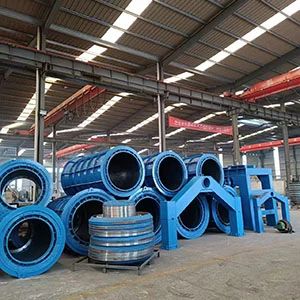

Top Concrete U-Shaped Water Channel Equipment Supplier for Durable Infrastructure Projects
2026-11-21
Most concrete channel failures don’t start with a dramatic collapse—they begin with a slight misalignment that quietly shortens a project’s lifespan. That’s why the choice of U-shaped water channel equipment matters more than it seems. In this article, we break down what actually separates dependable suppliers from the rest, and why Qianfeng Electromechanical Equipment has become a reference for infrastructure teams that can’t afford rework.
Why U-Shaped Concrete Usually Wins in High-Flow Drainage
U-shaped concrete channels hold an edge in high-flow drainage because their continuous curved invert keeps water moving with fewer slow spots than box or trapezoidal sections. In a rectangular channel, corners tend to trap sediment and debris, but a U-section pushes flow toward the centerline and reduces the dead zones where material would otherwise settle. That means the channel does more self-cleaning during moderate storms, which is a real advantage when maintenance crews cannot reach every run after each rain event.
The structural behavior also works in favor of the U-shape under heavy runoff and surcharge conditions. The curved wall and bottom act together as a compressive shell, so the concrete resists lateral soil pressure and live loads without the sharp stress concentrations common in rectangular structures. Precast U-shaped units add another practical benefit: they arrive as single pieces, limit the number of field joints, and shorten the time a trench has to stay open in unstable ground or high groundwater.
For a given drainage capacity, a U-shaped section can often be kept narrower because it has a lower wetted perimeter relative to its flow area. That allows engineers to carry the same storm volume with less excavation, fewer utility relocations, and a smaller surface footprint in tight urban corridors. The shape also tends to resist long-term abrasion better since fast water is not constantly hammering the same corner geometry, which keeps hydraulic performance steadier over the life of the channel.
The Quiet Engineering Behind a Dependable Precast Supply Chain
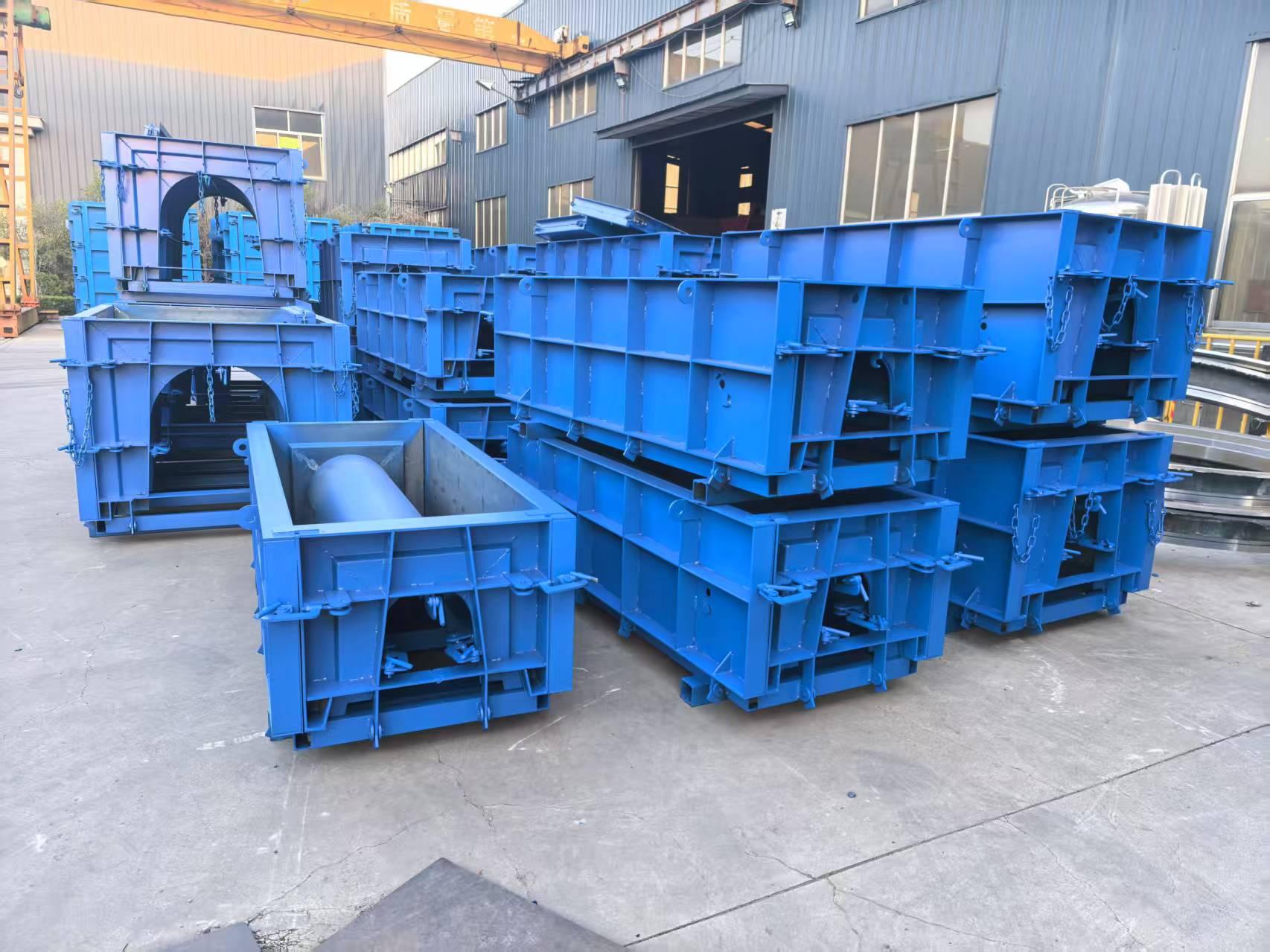
A dependable precast supply chain rarely announces itself. It lives in the small, unglamorous choices: sequencing pours so a beam cures long enough before the trailer arrives, checking a weather window against crane availability, and holding a panel back an hour because the site isn’t ready to take it. These are not dramatic decisions, but each one prevents the kind of downstream delay that turns a tidy erection schedule into overtime and finger-pointing.
The people who keep the chain moving tend to talk in specifics—pour times, turnaround distances, hook positions, and driver hours. A precast element with the wrong lifting anchors or an outdated revision can sit on a truck while crews scramble. Strong suppliers track every piece from the casting bed to the hook, not as paperwork theater but because a single mislabeled panel can stall an entire elevation. That quiet discipline is what allows a site to receive forty pieces in a morning and still know exactly where each one belongs.
Weather, traffic, and last-minute field changes will always test the schedule. What separates a dependable chain from a fragile one is how calmly those variables are absorbed. It might be a dispatcher rerouting a truck before an accident closes a route, or a plant manager shifting curing times overnight so a pour can still make the morning delivery window. None of this shows up in a brochure, but on site it is the difference between a project that stumbles and one that simply moves forward.
Joints, Load Ratings, and the Details That Get Overlooked
Most load charts get a quick glance, but the joint itself rarely receives the same scrutiny as the beam, bracket, or hoist it connects. That is a mistake because a joint can become the first point of failure once you introduce vibration, side loading, or thermal movement. A connection rated for a clean static pull often behaves very differently when the force arrives at an angle or cycles repeatedly through a shift.
Installation habits account for more failures than undersized hardware. Bolt preload, hole clearance, surface flatness, and even the order in which fasteners are tightened can shift the stress distribution enough to invalidate a published load rating. Small misalignments tend to get dismissed as close enough, yet they create localized stress that no catalog value can protect against.
Environmental exposure and maintenance routines also deserve attention. Corrosion, fretting, and fatigue gradually lower the effective capacity of a joint even when the original rating remains stamped on the drawing. Checking the connection during service, not just at installation, gives a far better picture of what the assembly can actually handle on a given day.
What Dimensional Drift Means Once the Rains Arrive
Dimensional drift stops being an abstract concern the moment the first heavy drops hit the pavement. Moisture softens the edges of things, and the usual coordinates of street, sky, and reflection start trading places. A puddle becomes a door, a wet wall holds a second city, and the distance between where you stand and where you think you are loses its old reliability.
Once the rains settle in, the drift moves from the background to the skin. Sounds arrive wrapped in water, voices bend around corners, and familiar paths seem to lengthen or fold without warning. It is not that the world changes shape so much as your sense of position inside it becomes porous. You begin to notice that the rainy air carries a slight lag, as if each step happens a half-second before the street agrees to meet it.
The practical effect is subtle but persistent. People caught in the drift tend to arrive at destinations feeling they have walked through a version of the neighborhood that only exists while the surface is wet. Conversations overlap, landmarks repeat, and decisions made in the rain often carry the logic of a place that will not quite hold once the sun returns.
From Plant to Trench Without the Usual Bottlenecks
Moving pipe from the coating yard to the right-of-way often grinds to a halt because yard layout, truck schedules, and unloading crews are treated as separate problems. When those pieces work in unison, the same volume can flow with fewer trucks and far less standing time. The key is to stage coated joints so a trailer never waits on the crane and a trench crew never waits on the trailer.
On projects where haul routes pass through small towns or tight switchbacks, the real bottleneck is rarely the plant output. It is the gap between what the plant produces and what the spread can actually receive. Short, predictable delivery windows beat large, erratic batches. Some crews now use small side-load trailers and dedicated offload spots to keep the trench advancing without stockpiling joints beside busy roads.
Field supervisors who track lead time from coating completion to stringing often find two or three hours lost in handoffs, not in travel. Removing those handoffs changes the rhythm of the entire spread. When the plant ships what the trench needs next, rather than what happens to be ready, the pipeline moves forward in a steady line instead of a series of stops and starts.
A Decade In: How U-Shaped Channels Hold Their Shape
Most U-shaped channels keep their profile because the corners do more work than they get credit for. A tight inside radius distributes stress along the bend instead of letting it concentrate at one crease, so the flanges resist splaying even after years of repeated loading. The cold-forming process also stiffens the edges, which helps the channel spring back to its original section when a temporary overload is removed.
Corrosion is usually what changes a channel's shape, not raw force. On galvanized or powder-coated sections, the protective layer stops moisture from wedging into the steel at the web and flange junction. That matters because rust swells and slowly pushes the legs outward. Once the coating is intact, thermal cycling tends to produce only minor, even movement across the whole part rather than local deformation.
Fastening habits play an equal role. Channels that stay straight over a decade are typically bolted or clamped through the web at regular intervals, not just at the ends. That spacing prevents twist from accumulating between attachment points, and the open cross-section can drain water instead of trapping it. The result is a shape that remains usable and predictable long after most lighter profiles would have needed shimming or replacement.
FAQ
A dedicated U-shaped channel forming machine does the main job. It feeds the concrete, shapes it, vibrates it, and compacts it in one continuous pass. The key difference from basic molds is that vibration and compaction are built into the moving form, so the finished channel comes out denser and more uniform.
The curved cross-section makes water flow more smoothly and leaves fewer corners where sediment and debris can collect. It also handles lateral soil pressure well, which reduces the chance of wall cracking over time.
Look at the availability of interchangeable mold sections, spare parts, and how quickly they can ship wear items. Ask for project references and find out whether they offer installation support or at least detailed setup guidance. These factors usually determine whether the equipment stays productive.
It comes down to consistent compaction and accurate dimensions. When the concrete is properly vibrated and shaped, the channel has fewer weak spots, better freeze-thaw resistance, and less need for repairs. That matters for irrigation networks, highway drainage, and other long-life projects.
Many machines are built with interchangeable forms or adjustable plates that allow changes in width and depth. You still need to confirm the exact range with the supplier, especially if you are working in tight spaces or on narrow access roads.
Cleaning the form after each pour is the biggest one. After that, check vibrator mounts, hydraulic fittings, wear plates, and sensor alignment on a regular schedule. Keeping the mold surfaces clean and lightly oiled also prevents concrete buildup and dimensional drift.
Yes. A capable supplier can produce custom molds based on your flow calculations and cross-section drawings. The tradeoff is usually longer lead time and higher cost, so it makes sense only when a standard profile cannot meet the hydraulic or structural needs.
A supplier that has handled similar projects will usually spot problems before they happen. They are more likely to keep critical spare parts in stock, give practical setup advice, and help you avoid common delays with concrete mix settings or form adjustments.
Conclusion
A dependable supplier of concrete U-shaped water channel equipment is rarely just a manufacturer of molds and machinery. The best ones understand why this profile tends to outperform alternatives in high-flow drainage: the uninterrupted curve keeps water moving fast, reduces sediment buildup, and avoids the corner stress points that often crack in box or rectangular designs. Behind that hydraulic advantage sits a precast supply chain that has to remain boringly consistent. Batch after batch, the internal dimensions must stay within tight limits, because even small variations in wall thickness or channel slope change flow capacity and create uneven load transfer. Joints and load ratings usually decide whether the system survives real conditions, not the concrete strength alone. A well-designed joint allows minor thermal movement and ground settlement without opening a path for water to escape into the subgrade.
What matters even more is how the supplier manages the gap between factory and trench. Dimensional drift during storage or curing can go unnoticed until the first heavy rain, when mismatched sections show up as ponding, erosion, or joint leakage. Top suppliers treat logistics as part of the product: lifting points, stacking supports, and delivery sequencing are planned so that edges do not chip and trenches are not blocked by unnecessary handling. Over a ten-year life, U-shaped channels hold their shape when the concrete mix, curing method, and reinforcement match local soil and traffic loads, not just a generic specification. That is why projects with durable infrastructure look beyond the equipment price and ask how the supplier controls dimensions, protects sections in transit, and supports installation details before the rains arrive.
Contact Us
Contact Person: Bill
Email: [email protected]
Tel/WhatsApp: 8615063653526
Website: https://www.qianfengjd.com