

Shock Absorber Jounce Bumper Maker: Essential Traits of a Trusted Manufacturer
2026-11-16
Finding a shock absorber jounce bumper maker you can actually rely on isn’t just about comparing spec sheets or price lists. It’s about knowing which traits separate a manufacturer who cuts corners from one who builds components that survive real-world abuse. At XIAYI, that difference shows up in material selection, production consistency, and a stubborn refusal to let minor defects slide. In this post, we’re breaking down the non-negotiable qualities of a trusted jounce bumper manufacturer—so you can spot the real deal before your next order.
Why the Best Jounce Bumper Makers Obsess Over Compression Set
A jounce bumper that takes a permanent set after a few hard hits is no longer doing its job. Compression set isn't just a lab curiosity—it's the difference between a suspension that stays progressive and predictable after 50,000 miles and one that bottoms out harshly because the bumper forgot its original shape. Top-tier manufacturers run accelerated aging tests at elevated temperatures, then measure how much thickness the material fails to recover. If that number creeps above a certain threshold, the entire batch gets rejected, no matter how pretty the molding looks.
The real obsession comes from understanding how compression set interacts with real-world abuse. A jounce bumper lives in a nasty environment: heat from the exhaust and brakes, ozone from the atmosphere, and cyclic loading that never really stops. Cheap formulations might pass a single compression set test at room temperature, then fall apart after a summer of desert heat or a winter of road salt. The best makers tweak polymer blends—often using microcellular polyurethane or carefully cured rubber compounds—to keep rebound high while resisting the chemical crosslink breakdown that drives permanent deformation.
There's also a geometry factor that separates the amateurs from the specialists. A bumper's shape, wall thickness, and internal voids all influence how stress distributes during compression. Smart designers run finite element analysis against compression set data, not just load-deflection curves. That's why you'll see odd-looking ribs, holes, or variable density zones in premium bumpers—each feature is there to lower local strain and keep the part fighting back even after millions of cycles. Obsessing over compression set isn't about chasing a spec sheet; it's about making sure the suspension still feels new when the odometer says otherwise.
From CAD Model to Curb Impact: Inside a Maker's Validation Loop
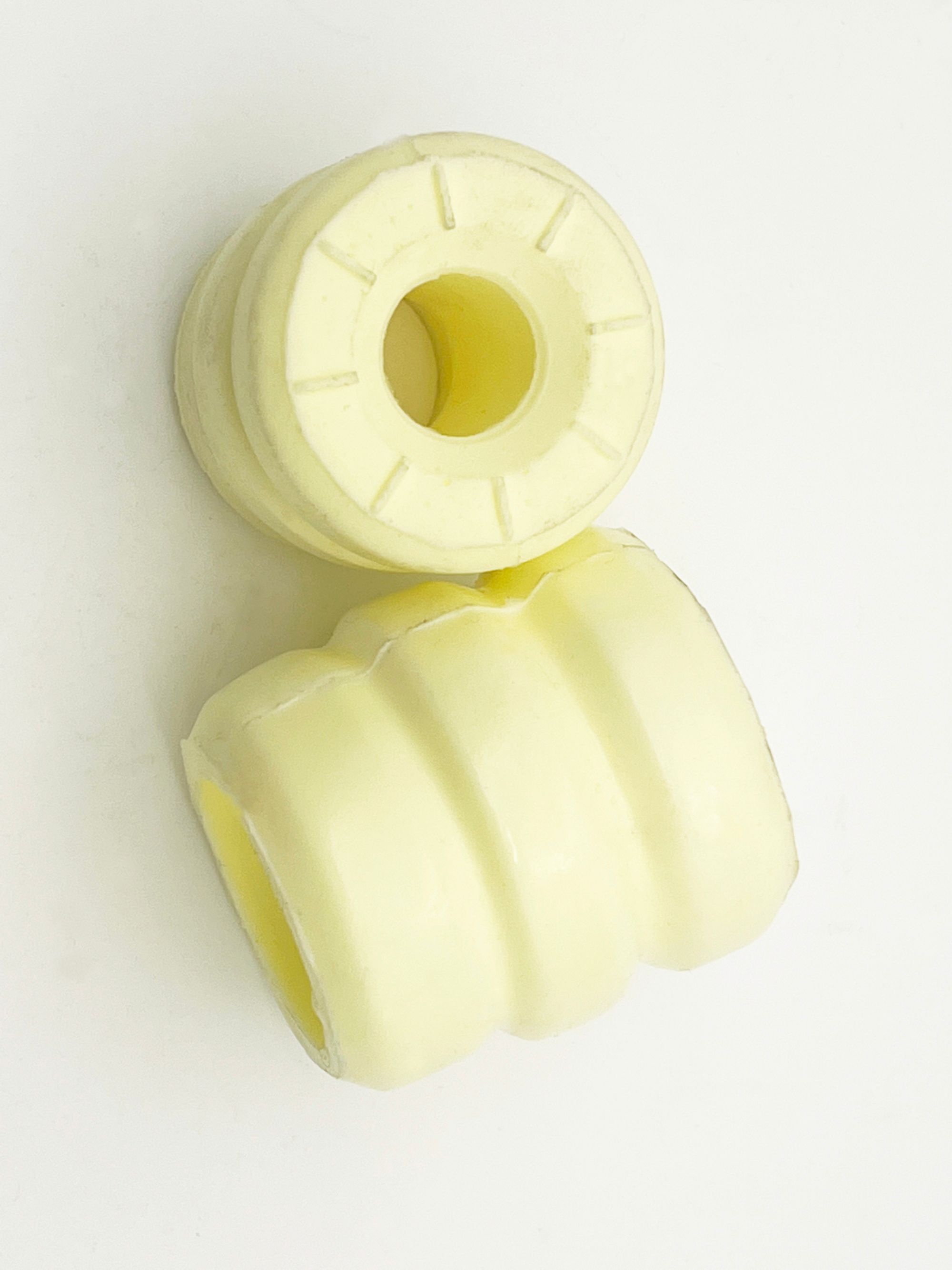
The jump from a clean CAD model to a part surviving a real curb impact is where most designs quietly fail. A maker's validation loop starts with digital assumptions that rarely survive first contact with asphalt. You tweak wall thicknesses, fillet radii, and material choices on screen, but the actual test comes when a prototype meets a 6-inch curb at speed. That first fracture or deformation isn't a setback—it's data. It tells you which stress concentration the simulation missed or where the layer adhesion was weaker than the datasheet promised.
Iteration becomes a rhythm: print, mount, strike, inspect, adjust, repeat. Each loop shrinks the gap between the virtual model and the physical scar. Some makers build a small test rig with a weighted pendulum or a drop tower to simulate the impact consistently, while others rely on the brutal honesty of a parking lot curb and a GoPro. The key is closing the loop quickly. A validation loop that takes two weeks per cycle lets problems fester; one that takes two hours forces you to confront every weak point before it becomes a habit.
After enough loops, the CAD model stops being a guess and starts becoming a mirror. You learn which fillets actually distribute load, which walls need an extra 0.4 mm not for strength but for printability under real-world clamping, and which impact angle the part will never survive—so you design around that constraint instead of fighting it. The final validation isn't a successful test; it's a part that fails predictably only under conditions you've already accepted as beyond spec. That's when the loop has done its job.
The Rubber Compound Secrets Most Suppliers Won't Show You
Ask most suppliers for their rubber compound datasheets and you'll get a tidy one-page PDF with tensile strength, elongation, and maybe a heat-aging figure. What you won't see is the story behind those numbers—the cheap filler that stiffens the batch just enough to pass spec, the reclaimed rubber secretly blended in to shave cost per kilogram, or the curing package that works great in the lab but drifts badly after six months on a warehouse shelf. The real secret is that rubber compounding is as much about what gets left out as what goes in, and the omissions are never listed.
One of the quietest tricks involves process oils and plasticizers. A compound might show identical hardness and rebound on paper, yet one version uses a volatile aromatic oil that slowly evaporates, causing the part to shrink and crack long after the warranty expires. Another supplier might switch from a premium carbon black to a lower-grade furnace black with a wider particle size distribution—same loading level, lower price, but far worse abrasion resistance and fatigue life. These substitutions rarely change the headline properties, so buyers only discover the difference when products fail in the field.
The compounds that perform reliably for years share an invisible discipline: tight control over raw material lots, consistent mixing energy and time, and careful rheology testing at multiple stages. You'll never see that level of detail in a typical quote. But if you press a supplier to explain why their EPDM seal holds compression set at 150°C while a competitor's looks identical on the spec sheet, the answer usually comes down to those hidden choices—the ones that never make it onto a marketing brochure.
How Tooling Design Shapes a Bumper's Real-World Lifespan
The real-world lifespan of a bumper starts long before it leaves the assembly line—it's baked into the tooling. Gate placement and runner sizing dictate how the molten polymer fills the cavity, and that flow pattern controls fiber orientation and weld line locations. A gate tucked behind the license plate area might leave the lower corners starved for material, creating thin sections that crack under a parking lot tap instead of bouncing back.
Cooling channels inside the mold are just as decisive. Uneven heat removal locks in residual stresses that can surface months later as warpage or stress whitening around mounting tabs. Tooling that balances cooling rates across thick and thin areas produces a bumper with more uniform crystallinity, so it keeps its shape and ductility through freeze-thaw cycles and long sun exposure.
Even the texture and draft angles cut into the tool have a lifespan story. Overly shallow draft forces ejector pins to push harder, leaving micro-cracks that grow with every minor impact. A deliberate texture depth not only hides scratches but also helps the paint adhere longer, delaying the chalky, brittle surface that turns a fender bender into a shattered bumper.
Small Batch, Big Difference: When Prototypes Expose Design Gaps
A CAD model can look flawless on screen, every dimension locked and every surface smooth. Then you 3D print a dozen parts, try to snap two of them together, and realize the clip you designed actually shears off because the layer lines run perpendicular to the load. That moment is worth more than a hundred design reviews. Small batch prototyping has a way of forcing the conversation away from how things should work and toward how they actually behave when real materials, real tolerances, and real hands get involved.
The value isn't in the parts themselves; it's in the mismatch they reveal between intent and execution. With only a handful of units, you can afford to test edge cases that would be impossible or expensive at full production scale. A slightly warped housing, a friction point that only appears after repeated assembly, a sealing surface that holds fine on a polished prototype but leaks on a textured finish—these are the gaps that stay hidden until you build something you can hold, drop, flex, and break. Small batches turn those gaps into visible, fixable problems instead of expensive recalls later.
There's a mindset shift that comes with this approach. Instead of asking "will this design work?" you start asking "what will fail first?" That single change in framing turns a prototype run from a box-ticking exercise into a genuine learning loop. You stop protecting the design and start interrogating it. The result is rarely a perfect first article, but it is almost always a clearer understanding of where the real risks live—and that clarity is what keeps a small batch from becoming a big problem.
What Field Returns Teach a Maker That Lab Tests Can't
Lab tests give you numbers, not stories. When a batch of returns arrives with scuffs, snapped clips, and mystery residue, you start seeing how products actually live in the world. Someone dropped it on concrete, jammed it into an overstuffed bag, left it in a humid bathroom. No test rig can reproduce that exact chaos of daily use.
Returns also expose the assumptions baked into your design. In the lab, a load limit is a clean threshold. In the field, the same joint fails after hundreds of tiny flexes you never considered because people fiddle, twist, and carry things in ways no manual ever predicted. Each returned unit is a user telling you where your mental model broke.
Most of all, field returns force you to confront unknown unknowns. You can optimize for every parameter you can measure, but real-world failures don't respect your test plan. The returned item becomes an unedited signal from the messy edge of your product's life—one that no simulated environment can honestly replicate.
FAQ
Look beyond marketing language. A reliable maker will openly discuss the elastomer compounds they use, explain how they validate durability under repeated compression, and share real-world data from suspension testing. If they can't walk you through their material sourcing and failure analysis process, that's a red flag.
Jounce bumpers act as a secondary spring and cushion during suspension bottom-out. If the elastomer is too stiff, ride harshness increases; too soft, and it won't protect the shock. Trusted manufacturers use engineered microcellular polyurethane or high-grade rubber blends, tuned for the specific vehicle's weight and travel. They also run accelerated aging tests to prevent premature crumbling.
Instead of offering a one-size-fits-all part, they start with vehicle-specific load and travel data. Then they model the bumper's progressive compression curve, often using FEA, and produce prototypes for on-car validation. The best manufacturers will iterate quickly and suggest geometry changes that improve bottom-out control without adding harshness.
Testing is where cheap suppliers fall apart. A trusted maker performs cyclic compression tests, environmental exposure cycles, and full suspension rig testing. They measure hysteresis, rebound height, and permanent set after thousands of cycles. Without this data, a bumper may look fine on day one but collapse after a few months of real roads.
Yes. Look for traceability from raw elastomer batches to finished parts, clean molding areas with controlled humidity and temperature, and a documented calibration schedule for test equipment. A trustworthy manufacturer will also have a clear non-conformance process and won't hesitate to show you rejected parts, because that demonstrates they actually catch defects.
It's a strong indicator of reliability. Trusted manufacturers ask detailed questions about the vehicle platform, expected loads, and even driving conditions. They provide regular updates, share test results proactively, and flag potential design conflicts early. If a maker goes silent after the PO or only responds to basic inquiries, expect surprises later.
Yes, but not by cutting corners. A well-designed jounce bumper can protect expensive shock absorbers from extreme bottom-out forces, extending their service life and reducing warranty claims. Manufacturers that understand the full suspension system will optimize the bumper's energy absorption so you don't need to overbuild other components. This gives long-term cost savings without sacrificing reliability.
Conclusion
A jounce bumper maker worth trusting rarely leads with marketing claims. Instead, you will see an almost stubborn focus on compression set—how well the rubber recovers after being crushed repeatedly under suspension load. That single property drives much of the part's real-world durability, and the best suppliers test it across temperatures, frequencies, and aging cycles. Their validation loop starts with a detailed CAD model but does not end at a pretty simulation. Prototypes get punished on rigs that mimic curb strikes, potholes, and full compression events, then the design gets revised until failure modes show up in the lab before they show up on the road.
Tooling design quietly decides whether a bumper survives five years or fifty thousand miles. Sharp corners, uneven wall thickness, or a poorly placed parting line can concentrate stress and shorten lifespan in ways that look trivial on a drawing. A capable maker also leans on small-batch prototypes to expose design gaps that are invisible on a screen—fit issues, noise, or progressive load spikes only appear when you mold and mount a real part. But perhaps the strongest signal is how the manufacturer treats field returns. Those worn, torn, or collapsed bumpers carry information no accelerated lab test can replicate. The willingness to learn from actual failures and feed that data back into compounding, tooling, and validation is what separates a true partner from a catalog supplier.
Contact Us
Contact Person: Leela
Email: [email protected]
Tel/WhatsApp: 8613586885132
Website: https://www.xiayishockparts.com