

Residue Free Protective Film for OEM Exporters Delivers Clean Removal Without Damage
2026-08-22
When OEM exporters ship high-value surfaces, the last thing they need is a protective film that leaves behind sticky residue or peels away paint. That frustration ends with Shire's residue free protective film. Designed for clean removal without damage, Shire's film keeps components pristine from factory to final installation—no ghosting, no adhesive transfer, no costly rework. If you're tired of fighting leftover adhesive on your exports, it's time to see how Shire delivers protection that comes off as cleanly as it goes on.
Clean Peel Is the First Thing Buyers Check
A clean peel tells buyers more than any spec sheet ever could. They run a fingernail under the edge, lift slowly, and watch what stays behind. If the adhesive splits, leaves a ghostly film, or forces them to scrape, trust drops before the product even gets a fair look. Most people won't complain aloud; they'll just reach for the next option on the shelf.
The real test is the pause between lifting and fully removing. Buyers want that steady, low-tack release that comes away in one intact piece—no tearing, no curling, no surprise residue on the surface underneath. When that moment feels effortless, the item reads as higher quality, even if the label itself is plain. Sloppy removal, on the other hand, plants a small doubt that lingers long after the bin lid closes.
Why Some Protective Films Fail the Dock Test
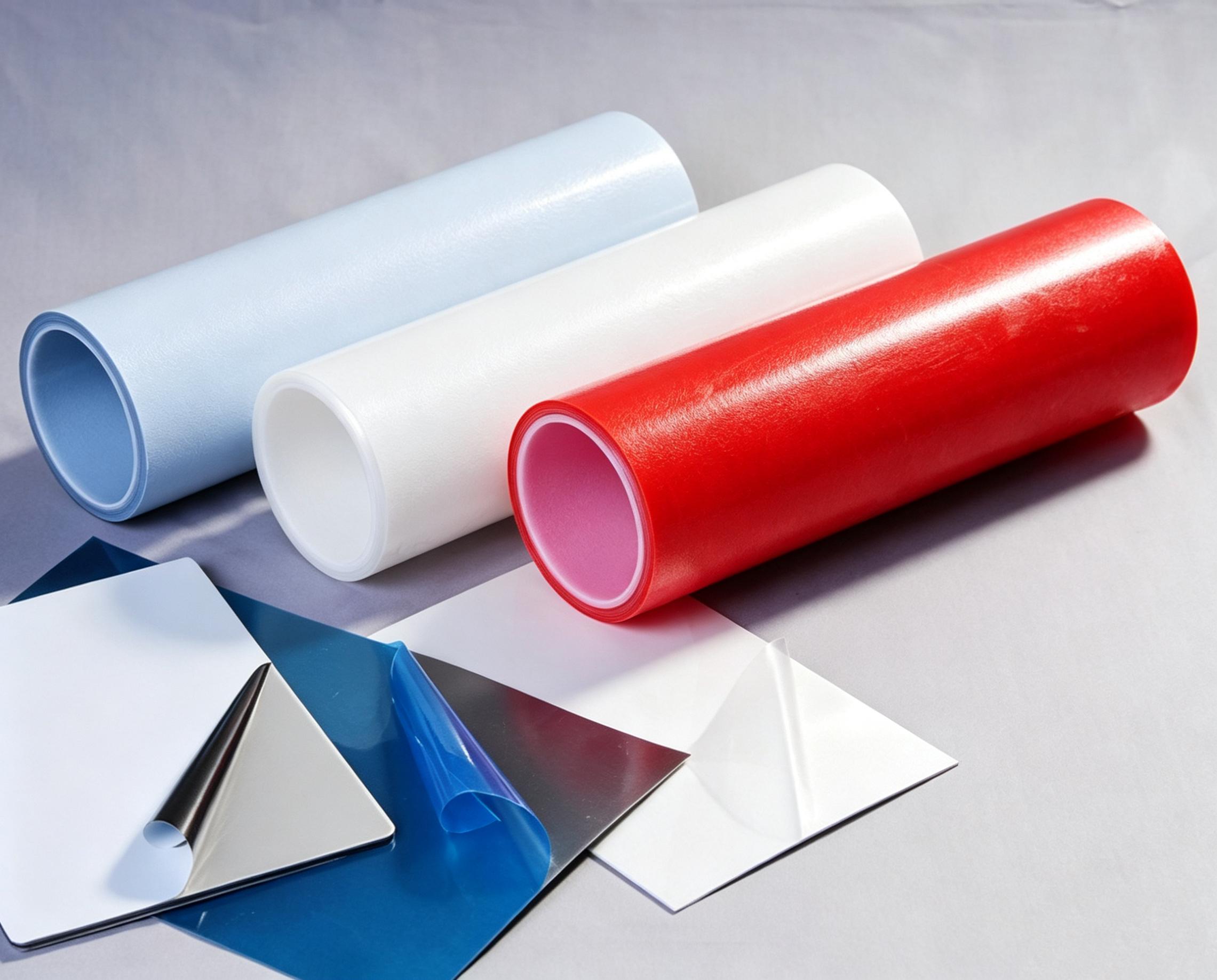
The dock test punishes protective films in ways that standard lab adhesion tests rarely replicate. Failures often trace back to the bonding interface rather than the film itself tearing. A film can pass a simple peel test on clean glass yet delaminate within minutes of dock handling because the adhesive was selected for initial tack instead of long-term resistance to shear, vibration, and edge lift on contaminated or slightly textured substrates. Even microscopic amounts of dust, moisture, or release agent left on the surface act as a weak boundary layer that quietly undermines the bond until a corner lifts and the film begins to peel away under repeated impact.
Flexibility and thickness choices also separate films that survive from those that fail. Dock operations involve tight bends, corner impacts, and abrasive contact with ropes, pallets, or metal edges. A film that is too rigid concentrates stress at cut edges and fold lines, creating hairline cracks that spread under cyclic loading. On the other end, an overly soft film can stretch and tear when snagged, exposing the surface it was meant to protect. The elastic recovery of the film matters just as much as its tensile strength; if the material permanently deforms after a bump, it no longer hugs the substrate, leaving loose areas that invite further peeling.
Environmental conditions at the dock are frequently overlooked in product selection. Humidity, salt spray, and direct sunlight change the viscoelastic behavior of pressure-sensitive adhesives, sometimes softening them to the point of oozing or hardening them until they lose conformability. UV exposure can break down polymer chains near the film surface, causing embrittlement and microcracking long before the bulk material shows signs of wear. Protective films formulated for indoor or short-term transit simply cannot maintain their mechanical and adhesive properties when faced with the combined assault of moisture, temperature swings, and abrasive handling that a dock environment delivers.
No Adhesive Ghosting on Gloss or Matte Finishes
Some adhesives leave a faint outline behind once the sticker comes off, especially on high-gloss panels or smooth matte surfaces. That ghosted mark isn't just a cleaning nuisance—it undermines the whole look. With this film, you won't see that residue line. The bond releases cleanly, so the surface stays as it was before application.
Gloss finishes tend to highlight every trace of leftover adhesive, while matte surfaces can trap residue in their micro-texture. The backing here is designed to lift away without transferring sticky residue, even after long-term adhesion or exposure to temperature shifts. Whether it's a lacquered cabinet or a low-sheen laminate, the removal path stays invisible.
OEM Lines Don't Have Time for Rework
On a fast-moving OEM line, every second counts. Rework isn't just a minor inconvenience—it's a direct hit to throughput, labor allocation, and already tight margins. When a component fails inspection, the ripple effect can stall downstream stations, force unplanned line stoppages, and leave operators scrambling to rebalance workloads.
The reality is that most OEM production schedules are built on the assumption that each part will be right the first time. There's no slack built in for disassembly, re-testing, or re-validation. A single rework loop can consume the same time as producing several good units, which is why quality engineers push so hard for process capability and error-proofing upstream.
Suppliers who think they can "fix it later" are often the ones who end up causing the most disruption. The lines simply don't have the buffer time to absorb their mistakes. The best way to keep an OEM line moving is to make sure defective parts never reach it in the first place.
Long-Haul Humidity Won't Break the Bond
Long-haul travel has a way of testing every adhesive, every seal, every promise of permanence. The cabin air dries to a desert whisper, then the destination greets you with a wall of tropical damp. You'll watch other bonds fail: stickers peel at the corners, laminated tags curl, cheap glue turns to soup. But this bond doesn't care about the humidity gauge. It's not built on convenience or weather. It's built on the kind of grip that laughs at condensation on a cold window and holds steady when the monsoon rolls in off the tarmac.
Think of the hidden truths inside your luggage: a photo tucked into a journal, a note pressed flat under the insole of a shoe, a tiny keepsake wrapped in a sock. The plastic might fog, the paper might soften, but the bond it represents stays crisp. That's the quiet magic of a connection that has already crossed continents—it doesn't need a climate-controlled room to survive. It has learned to breathe in thin air and heavy air alike, to flex instead of snap when the boarding gate is a sauna and the plane is a freezer.
So go ahead, let the humidity do its worst. Let the windows sweat and the hair frizz and the leather bag smell like a rainforest floor. The bond won't break, won't warp, won't loosen its grip. Long-haul humidity is just weather. It has nothing on the force that keeps two people stitched together across every time zone, every layover, every sweaty, beautiful mile.
Slit to Spec, Still Tears Off in One Piece
Precision cutting usually comes with a compromise—you either get the exact dimensions or the material holds together. This one manages both, and it feels almost accidental. The slit follows the spec line closely enough that you'd assume the next step is separating it by hand. Instead, a clean tear runs the full length in a single motion, leaving no ragged edges or partial hangs.
What's interesting is the way the fibers give way. Most die-cut or blade-slit pieces snap unevenly once the tension shifts, especially near corners or cross-grain areas. Here, the tear line stays true from start to finish, suggesting the initial cut depth was tuned just right—not too shallow to fight back, not so deep that it separates in the tray. It's the kind of detail that only shows up after a few dozen pulls.
For anyone working with repetitive assembly or packaging, that reliability matters more than it first appears. No half-stripped tabs, no extra peeling pass, no torn scrap left underfoot. The part comes away whole, every time, without needing a tool or a second thought.
FAQ
Instead of leaving adhesive ghosting or breaking into small pieces, the film peels away in one continuous sheet. The adhesive is designed to release cleanly from glass, coated metals, and painted surfaces even after extended UV exposure.
Export shipments often sit in containers or warehouses for weeks under changing temperatures. A film that holds up during transit but still comes off clean at the destination prevents costly rework, rejected batches, or time spent removing sticky residue before final assembly.
We run peel adhesion tests on stainless steel, powder-coated panels, and acrylic sheets after accelerated aging. The film must maintain its hold during simulated transport but release with no visible residue when pulled at a steady angle.
It works on smooth, non-porous surfaces such as anodized aluminum, painted metal, glass, polycarbonate, and some laminates. For textured or low-energy plastics, a quick compatibility check is recommended because surface chemistry affects release behavior.
Yes. The adhesive system is formulated to tolerate temperatures commonly seen inside shipping containers, typically up to around 60°C for short periods. It will not soften enough to transfer adhesive or become difficult to remove.
It means the protected part arrives looking untouched: no adhesive haze, no lifted paint, no scratches from aggressive films. End users can move directly to installation or further processing without cleaning steps.
Most OEM orders can be slit to specific roll widths, cut to length, or supplied as die-cut sheets. Custom log lengths and core sizes are also possible, which helps reduce changeover time on automated lines.
Look for evidence of real aging tests, not just immediate peel tests. Ask for samples to run on your actual substrate after heat cycling. A dependable supplier will also provide technical data on adhesive type, thickness, and UV resistance rather than broad marketing claims.
Conclusion
When a shipment of protective film reaches an overseas buyer's warehouse, the very first thing inspectors do is peel back a corner and check how it releases. If the film grabs, tears, or leaves a cloudy imprint on the panel, the whole lot can be rejected before it even reaches the production floor. Many films pass initial adhesion tests but break down under real dock conditions—heat cycling inside containers, stacked pallets, or slight surface variations. The difference with a residue-free film is that it was formulated to release cleanly from both glossy and matte finishes, so there's no adhesive ghosting that would force a repaint or polish. That matters because OEM export customers rarely have spare hours to fix surface defects caused by the wrong protective layer.
On a fast-moving OEM line, operators need film that slits to their exact width and still pulls away in a single continuous piece—no snapping mid-roll, no leftover strips that slow down assembly. Long-haul humidity and temperature swings are another common killer: cheaper adhesives can soften and migrate, making removal harder after weeks at sea. A properly designed residue-free film keeps its bond stable through those conditions, so the protective function stays intact without becoming permanent. Exporters who switch to this type of film typically see fewer claims, fewer rework hours, and a smoother handoff to the end customer, because the surface underneath looks exactly as it did when it left the factory.
Contact Us
Contact Person: Jack Xu
Email: [email protected]
Tel/WhatsApp: 8615257328825
Website: https://www.temporaryprotectivefilm.com/