

Reliable TUV Class 0 Oil-Free Air Compressor: What Sets It Apart in Industrial Applications
2026-07-31
In the demanding world of industrial compressed air, reliability and purity are non-negotiable. Enter the TUV Class 0 oil-free air compressor—a game-changer that eliminates even the tiniest risk of oil contamination. But what truly distinguishes this technology from the sea of options? It’s not just about zero oil; it’s about how innovation meets uncompromising standards to protect sensitive processes. At Seize Air, we’ve seen firsthand how the right compressor can transform operations, slashing downtime and ensuring product integrity. In this blog, we’ll peel back the layers of what makes a reliable TUV Class 0 oil-free air compressor stand out—and why it might be the smartest investment your facility ever makes.
Why Oil-Free Air Matters in Critical Industrial Processes
Contamination in compressed air can quietly compromise entire production lines. Even trace amounts of oil mist can ruin sensitive surface finishes, disrupt pneumatic controls, or spoil batches in food and pharmaceutical manufacturing. When air comes into direct contact with products, the cost of a single filtration failure often far exceeds the investment in oil-free technology from the start.
Oil-free compressors eliminate this risk at the source by design. They rely on precision coatings and advanced rotor profiles instead of oil injection, delivering air that meets stringent purity standards without relying on downstream filtration. This simplicity reduces maintenance surprises—there are no separator elements to clog or condensate management systems that fail, making operations more predictable in demanding environments.
Beyond product safety, the shift to oil-free air preserves delicate instrumentation and avoids the gradual fouling of valves and actuators. In sectors like electronics manufacturing or paint spraying, the financial drain of rework, rejected goods, and unplanned downtime from contaminated air can rapidly escalate. Choosing oil-free technology is less about compliance alone and more about building a stable, efficient process that engineers and quality managers can trust day after day.
Understanding the TÜV Class 0 Certification and Its Value
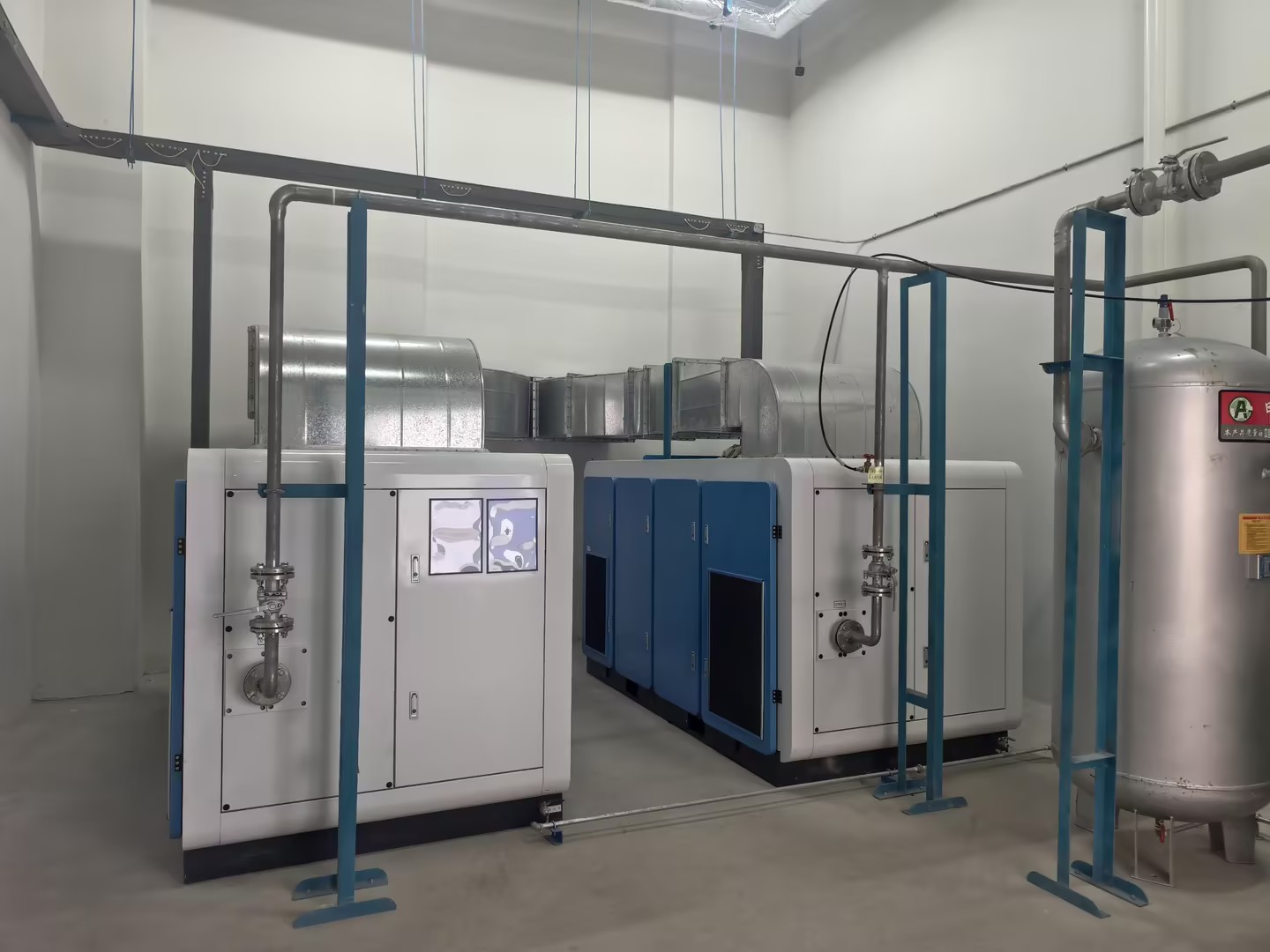
The TÜV Class 0 certification isn’t just another badge—it’s a rigorous endorsement of oil-free compressed air purity. Unlike generic industry labels, this certification specifically targets the elimination of oil contamination, guaranteeing that the air output meets the most stringent quality standards. Industries like pharmaceutical manufacturing, food and beverage processing, and electronics production rely on this assurance to protect sensitive processes and consumer safety. What sets it apart is the independent, third-party validation that leaves no room for ambiguity: if a compressor carries the Class 0 mark, you know there’s truly zero oil present—not just “technically oil-free,” but quantifiably clean.
Achieving Class 0 status demands more than just meeting a numerical limit. TÜV’s testing protocol goes beyond ISO 8573-1 Class 1, which still allows trace oil levels measurable in parts per billion. Class 0 requires proving that the compressed air system introduces no oil at all, through stringent measurement of oil vapor, aerosols, and liquids under real-world operating conditions. The certification process examines every component—from air intake to discharge—ensuring that materials, coatings, and lubricants don’t compromise purity. This depth of scrutiny is why facility managers and risk assessors see the certification as a gold standard for applications where even the tiniest contaminant could lead to product recalls or equipment damage.
The value of TÜV Class 0 extends far beyond a compliance checkbox. It acts as a strategic asset for companies navigating tightening regulations and heightened customer expectations. In highly competitive markets, having this certification can differentiate a brand by demonstrating an uncompromising commitment to quality. It reduces the need for downstream filtration and monitoring, cutting operational costs over time, while also minimizing the risk of contamination-related liability. Ultimately, investing in Class 0 certified equipment is a proactive step toward building trust and resilience, turning a technical specification into a tangible business advantage.
How This Compressor Eliminates Contamination Risks
Contamination in compressed air can wreak havoc on sensitive processes, introducing moisture, oil, and particulates that compromise product quality or damage equipment. This compressor addresses the issue at its source, employing a meticulously sealed system that isolates the compression chamber entirely from external pollutants. By eliminating common points of ingress, it ensures that only clean air moves through the line, giving operators confidence even in the most demanding environments.
Rather than relying on after-the-fact filtration, the unit integrates an oil-free, non-lubricated compression mechanism. This design completely removes the risk of lubricant carryover, a persistent headache in traditional systems. Every component that touches the airstream is crafted from corrosion-resistant materials, which also prevents the shedding of particles that could taint the output. The result is air that meets stringent purity standards without the need for extensive downstream treatment.
Real-world use highlights its effectiveness: in pharmaceutical packaging, where even trace amounts of oil can lead to batch rejection, this compressor has consistently delivered air that meets ISO 8573-1 Class 0 for oil content. The sealed design also keeps moisture and atmospheric dust at bay, ensuring a dry, particle-free supply that protects sensitive instruments and final products alike.
Energy Efficiency Without Compromising Performance
Achieving energy efficiency used to mean accepting slower speeds or reduced functionality, but that trade-off is no longer necessary. Modern hardware and intelligent software work together to cut power consumption without dragging down performance. For example, adaptive voltage scaling lets processors dial back energy use during lighter workloads, then instantly ramp up to full speed when demanding applications need it. This means a laptop can handle heavy video editing just as smoothly as it sips battery during web browsing.
On the software side, efficient coding and smarter resource scheduling ensure that background tasks don't waste cycles. Instead of running at maximum clock speed all the time, today's systems target exactly the performance required for each task, eliminating overhead. The result is a device that runs cooler and lasts longer on a charge, yet never feels sluggish. You get all the responsiveness you expect, without the hidden cost of wasted energy.
Built to Last: Durability in Demanding Conditions
When equipment faces relentless vibration, extreme temperatures, or abrasive environments, longevity isn't a luxury—it's the baseline expectation. Components engineered for demanding conditions start with material selection that actively resists fatigue. Instead of simply hardening surfaces, metallurgy focuses on grain structure refinement and inclusion control, creating a core toughness that absorbs shocks without micro-cracking. Every weld joint, seal, and fastener is scrutinized under simulated stress cycles that replicate years of field abuse, ensuring that weak links are eliminated before a single unit ships.
The real test often comes through protection against the invisible threats: moisture ingress causing corrosion, cyclical thermal expansion breaking seals, or fine dust grinding away at moving parts. Effective durability engineering layers defenses—from multi-stage labyrinth seals that actively eject contaminants to conformal coatings that withstand thermal swings without peeling. Field data from installations in coastal, desert, and arctic sites continuously feeds back into design iterations, turning survival stories into refined specifications. This feedback loop means each generation doesn't just meet published ratings; it carries the accumulated wisdom of what actually keeps systems running when they're pushed far beyond the manual's careful cautions.
Quiet Operation Redesigns the Workplace Environment
Noise has always been the invisible architect of workplace chaos. When office equipment roars like a freight train, concentration fractures, phone calls become shouting matches, and the subtle rhythm of collaboration is lost. But dialing back that mechanical racket does more than spare eardrums—it rewires how people move through their day. Spaces once avoided because of the din from printers or ventilation suddenly reclaim their purpose, morphing into informal meeting nooks or quiet zones where deep work actually happens. The shift isn’t just acoustic; it’s behavioral. Without a constant hiss or hum, people lower their own voices, pace their steps, and linger a little longer in common areas. What emerges is a workplace that coaxes out thoughtfulness simply by creating room for it.
The ripple effect touches equipment design itself. Engineers tackling noise aren’t just slapping on thicker casings—they’re rethinking airflow, motor mounts, and material resonance from scratch. The result? Machines that hum at frequencies so low they blend into the background like modern jazz rather than demanding attention. This precision-born quietude changes the perception of the tools themselves. A printer that doesn’t clatter feels less like a relic and more like a trusted sidekick. Users start treating these muted devices with a care they never afforded their louder predecessors, as if the reduced noise signals a higher caliber of engineering. Maintenance cycles extend, not because of some technical breakthrough, but because staff actually hear—and heed—the subtle warning beeps before a jam turns catastrophic.
Perhaps the most overlooked shift happens in the realm of well-being. Low-decibel operation chips away at the constant, low-grade stress many don’t realize they carry until it’s gone. It’s the workplace equivalent of discovering you’d been clenching your jaw for years. When the mechanical soundtrack of the office fades, heart rates dip, and the psychological safety net widens. Brainstorming sessions stretch longer not because of caffeine, but because the space finally feels capable of holding fragile, half-formed ideas without shattering them. In this redesigned soundscape, the office ceases to be a place you endure and becomes one that actively restores—one decibel drop at a time.
FAQ
It's the highest purity standard for compressed air, guaranteeing zero oil contamination. This makes it safe for sensitive processes where even trace oil could spoil products or damage equipment.
Because any oil in the air stream can contaminate products, leading to health risks, recalls, and regulatory violations. Oil-free compressors eliminate that risk entirely.
Through robust engineering - premium components, efficient cooling, and durable coatings on rotors and housings. Minimal wear parts mean consistent performance without frequent breakdowns.
No oil changes, no oil filters to replace, and no condensate treatment. That cuts routine maintenance tasks and disposal costs, while also reducing downtime.
You'll find it in pharmaceutical manufacturing, food processing, electronics assembly, beverage bottling, and textile production - anywhere product purity is non-negotiable.
Not at all. Advanced airend design and variable speed drive options allow it to match output to demand precisely, often resulting in energy savings compared to older oil-injected models.
These compressors use efficient air or water cooling systems, along with specially designed intercoolers and aftercoolers, to keep operating temperatures in check even during continuous duty.
While upfront cost may be higher, you save on oil, filters, condensate treatment, and unscheduled repairs. Over the lifecycle, it often proves more economical, especially in high-demand settings.
Conclusion
In industries where compressed air comes into direct contact with final products, even trace amounts of oil can cause costly defects or safety hazards. The Reliable TUV Class 0 Oil-Free Air Compressor eliminates this risk entirely, delivering pure air that meets the strictest quality standards. Its TÜV Class 0 certification is more than just a label—it represents rigorous testing that proves no oil is present in the air stream, safeguarding sensitive processes like food packaging, pharmaceutical manufacturing, and electronics assembly. Without oil to worry about, filtration systems face less stress, and the threat of ruined batches or recalls fades away, making this compressor a critical asset in contamination-sensitive applications.
Beyond purity, the machine redefines what a compressor can be by blending energy efficiency with robust construction. Advanced airend design and reduced internal friction let it deliver high performance without wasteful power consumption, shaving operational costs over its lifespan. Built to endure harsh environments, from dusty factory floors to humid processing rooms, its components resist corrosion and wear, ensuring consistent uptime. Noise levels are kept remarkably low, which transforms the work environment—fewer distractions and less strain on personnel improve overall productivity. This oil-free compressor isn't merely a piece of equipment; it's a strategic investment in reliability, compliance, and long-term operational excellence.
Contact Us
Contact Person: Mia
Email: [email protected]
Tel/WhatsApp: +86 19821985894
Website: https://www.seize-air.com