

Recloser Company Innovations for Reliable Power Distribution
2026-11-16
What if your grid could shrug off a tree branch, a lightning strike, or a squirrel-induced fault without customers ever noticing? That's the promise of next-generation reclosers—and it's closer than you think. Traditional reclosers simply open and reclose on a timer, but today's innovations are rewriting the playbook: adaptive protection, real-time fault location, and edge intelligence that isolates problems before they cascade. As we dive into the technologies redefining reliable power distribution, you'll see why utilities are turning to Deepwill to build a grid that heals itself.
Smart Reclosers That Predict Faults Before They Spread
Most reclosers still act like circuit breakers with a memory: they interrupt a fault, pause, and try again. The newer generation works differently. By sampling voltage and current waveforms thousands of times per second and comparing them against baseline signatures, these devices spot early symptoms—partial discharge, repeated inrush spikes, or the faint distortion caused by a tree limb brushing a conductor on windy days. That turns a reactive device into something closer to a watchtower.
Once a risky pattern is identified, the recloser can either tighten its protection curve for that specific feeder section or work with adjacent units to reroute power before a transient becomes a permanent fault. Some utilities pair this with short-range mesh radio so that a cluster of reclosers shares local observations instead of waiting for a central controller. The result is not just fewer outages but shorter ones: maintenance crews get a head start with a probable cause and location, rather than driving the line after the damage is already done.
Grid Resilience Through Adaptive Interruption Timing
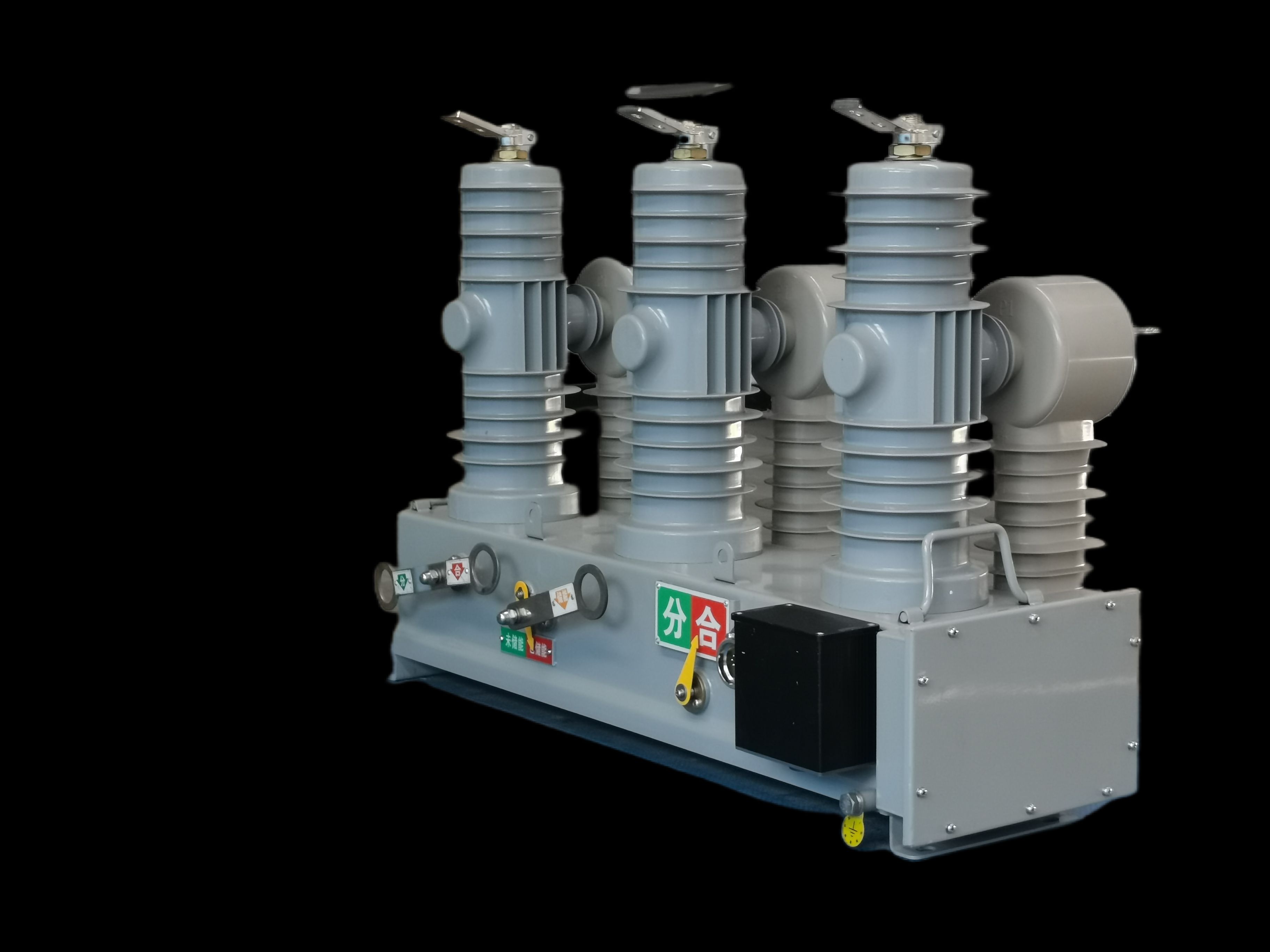
When a fault hits the grid, the instinct is to cut power as fast as possible. But speed alone doesn't guarantee resilience. Adaptive interruption timing flips this logic: instead of a fixed trip curve, protective devices weigh the actual stress on the network, the nature of the fault, and the local load pattern before deciding when to open the circuit. A momentary dip in voltage near a residential feeder may tolerate a half-second delay, while a fault near a critical substation demands near-instant isolation. This tuning reduces unnecessary outages and keeps the system stable under strain.
The real advantage emerges during cascading events. By coordinating interruption timing across multiple nodes, operators can slow down a propagating disturbance without sacrificing protection. For example, a recloser closer to the fault might interrupt first, giving upstream breakers time to assess whether the fault is transient or permanent. If the fault clears, the downstream device recloses automatically—no sustained outage. If it persists, upstream isolation follows, but only after downstream failure is confirmed. This staged approach avoids the all-at-once trip that often turns a local issue into a wide-area blackout.
Adaptive timing also pays off in everyday operations. Grid edge devices, like smart switches and sectionalizers, can learn from historical outage data and adjust their response thresholds by season, time of day, or even weather forecast. A line serving an industrial park at 2 p.m. on a weekday might need faster fault clearing than the same line at 4 a.m. on Sunday. Encoding that flexibility into protection logic means fewer customers experience a blink, and those who do face shorter restoration times. In the end, resilience is not about reacting faster—it's about reacting at the right moment.
How Modular Recloser Design Cuts Outage Minutes
When a fault trips a conventional recloser, line crews often spend valuable time replacing entire units or untangling hardwired control schemes. A modular recloser flips that script. By separating the interrupter, control module, and power supply into independently testable blocks, utilities can isolate failures fast. Instead of pulling a whole assembly off the pole, a technician swaps one compact module and restores service in minutes—no crane, no re-termination, no guesswork.
The real time savings show up under storm conditions. With modular gear, a crew can carry spare modules in a pickup bed and handle multiple outage sites in a single run. Field diagnostics happen through a plug-in test set rather than dismantling sealed housings. Even firmware upgrades or protection-setting changes become a module swap rather than a laptop session at arm’s length. Each minute saved compounds across dozens of feeders, turning hours of outage time into a fraction of what legacy designs allow.
Beyond raw speed, modularity shifts the maintenance model from reactive to preemptive. Depot-level testing becomes as simple as rotating stock: pull a suspect module, bench-test it while a spare remains online, and schedule refurbishment without forcing an outage. The grid stays energized longer, and when interruptions do occur, they end before customers notice the lights flickered twice.
Field-Proven Arc Suppression for Safer Line Work
Line crews have long accepted arc flash as an unavoidable hazard, but the latest suppression systems are changing that calculus. Instead of relying on bulky barriers or procedural workarounds, field-hardened arc quenching modules now clamp fault energy within milliseconds—often before a lineman can react. Utilities that deployed these units on rural feeders and crowded urban tie points report fewer burn incidents and less equipment charring, with some crews describing the difference as night and day when working hot secondary racks.
What makes a suppressor genuinely field-proven is not just a lab test, but hundreds of switching operations under rain, dust, and voltage sags. The best designs use passive triggering tied to current rise, so there is no controller to fail or battery to replace. In one Midwest cooperative, a three-year trial across 14 substations cut arc-related damage claims by over half, and lineworkers began requesting the units on their trucks by name.
For safety managers, the appeal is straightforward: the technology slots into existing cutouts and recloser bays without rewiring the entire circuit. Training is minimal because the suppression unit does the heavy lifting. As more crews log hours beside these devices, arc suppression is moving from a niche retrofit to a standard line-work safeguard.
Data-Driven Maintenance Alerts From Recloser Analytics
Reclosers keep generating operational data long before visible faults appear. Instead of waiting for a field crew to notice irregular trip counts or slow reset times, analytics platforms scan those streams for subtle shifts. A rise in close-open cycles during mild weather, for instance, often points to degraded insulation or a weak vacuum interrupter. The alert is built around that pattern, not a generic threshold. It tells the maintenance team which device is drifting, what parameter moved, and how far it has departed from its own baseline. This transforms a routine inspection into a targeted visit.
Good maintenance alerts don't just flag anomalies; they attach context. Recloser analytics can correlate fault current magnitude, operating time, and event timing with nearby feeder conditions. When a unit starts taking slightly longer to clear a fault or its counters advance faster than similar devices on the same circuit, the system issues a notice that includes likely fault locations and recommended checks. Crews then arrive with the right spare parts and a clear test plan, reducing repeat truck rolls and preventing unplanned outages.
The real value shows up over months. By tracking each recloser's response after maintenance, the analytics engine learns which alerts matter and which ones fade as normal variation. False positives drop because the model adjusts to seasonal load patterns and known switching operations. Over time, a utility builds a ranked list of devices that genuinely need attention, and the maintenance backlog becomes a proactive schedule rather than a reactive scramble. That steady refinement is what turns raw recloser data into dependable field guidance.
Rugged Enclosures Built for Storm-Prone Regions
Storm-prone regions don’t forgive flimsy housings. We design every enclosure with gasketed, overlapping seams and reinforced corner posts so wind-driven rain can’t find a way inside. The latch system uses compression cams instead of simple snaps, keeping the seal tight even when pressure fluctuates during a squall. Powder-coated marine-grade aluminum shrugs off salt spray, and our polycarbonate viewing windows are thick enough to take a branch strike without cracking.
Beyond the static ratings, we cycle test for thermal shock and repeated impact, because real storms don’t come once. Hinges are stainless, through-bolted rather than welded on, so you can swap a panel in the field without compromising the cabinet’s integrity. Drain channels at the base handle any condensation or minor weepage, while a pressure-equalization vent prevents vacuum lock that can pull water past seals. It’s not over-engineering; it’s just what a coastline or tornado alley actually demands.
FAQ
Modern reclosers now incorporate solid dielectric insulation and vacuum interrupters that eliminate the need for oil or SF6, reducing environmental risk and maintenance. Microprocessor-based controls add adaptive protection, allowing utilities to adjust trip curves remotely as network conditions change. Condition monitoring sensors track contact wear, temperature, and mechanical operations, enabling predictive maintenance instead of fixed-interval servicing.
Smart reclosers provide real-time fault data and event logs that pinpoint the exact location and nature of a disturbance, so crews can be dispatched with the right equipment immediately. They support automatic network reconfiguration, isolating a faulted section and restoring power to healthy feeders within seconds. This reduces both the duration and the number of customers affected by an outage.
Reclosers with adaptive protection can handle bidirectional power flow from distributed generation, preventing nuisance trips when power flows back toward the substation. They coordinate with inverter-based resources by using voltage and frequency ride-through settings that avoid unnecessary disconnection. This keeps the feeder stable during fluctuations in solar or wind output while still clearing genuine faults.
Vacuum interrupters offer exceptionally long contact life because the arc extinguishes quickly in a vacuum with minimal contact erosion. They require no gas refilling or oil handling, which lowers lifetime operating costs and eliminates greenhouse gas concerns. Their compact size also allows recloser designs that fit more easily on existing poles or in pad-mounted cabinets.
Reviewing event logs and fault records after each operation helps identify developing issues like increasing clearing times or unusual trip patterns. Battery health checks for the control unit are critical, since a dead battery can leave the recloser unable to operate during an outage. Periodic infrared thermography and contact resistance testing catch loose connections and worn contacts before they cause failures.
Communication-enabled reclosers can share fault information with neighboring devices and a central control system to run self-healing schemes. They allow operators to change protection settings remotely, avoiding site visits for routine adjustments. Built-in cybersecurity features such as encrypted protocols and role-based access protect the network from unauthorized changes.
Look for sealed enclosures with no external moving parts, which resist dust, ice, and wildlife intrusion. Materials like stainless steel or UV-stabilized polymers prevent corrosion in coastal or industrial areas. Wide operating temperature ranges and hydrophobic insulation ensure the recloser continues to function reliably through extreme weather and pollution.
Conclusion
Smart reclosers are shifting from reactive devices to proactive grid partners. Instead of waiting for a fault to cascade, they read subtle current and voltage signatures and flag trouble early—often before a feeder locks out. Adaptive interruption timing adds another layer: the equipment learns from local conditions and adjusts trip curves on the fly, so temporary faults clear without unnecessary outages. Meanwhile, modular recloser design is quietly transforming line work. A failed module can be swapped in minutes, not hours, trimming outage time and keeping crews safer.
Field-proven arc suppression now goes beyond lab claims; line workers see real reductions in arc flash energy during switching and testing. Recloser analytics feed maintenance teams with targeted alerts—no more routine inspections based on a calendar. Instead, sensors flag worn contacts or degrading insulation before they become emergency calls. And for regions hammered by storms, rugged enclosures with sealed connectors and corrosion-resistant frames keep these brains online when the weather turns violent. Together, these innovations make reliable power distribution less of a promise and more of an everyday result.
Contact Us
Contact Person: Julion
Email: [email protected]
Tel/WhatsApp: 8617351370631
Website: https://www.deyunelectric.com