

Programmable Power Supply Factory Insights: Precision and Efficiency in Modern Production
2026-05-15
In today's fast-paced manufacturing landscape, precision isn't just a goal—it's a necessity. As industries push the boundaries of innovation, the role of programmable power supplies has never been more critical. From ensuring flawless performance in sensitive electronics to streamlining complex test procedures, these intelligent systems are redefining what's possible on the factory floor. At TPS, we've witnessed firsthand how the right power supply transforms production—boosting efficiency, reducing downtime, and delivering the kind of accuracy that separates leaders from the rest. Yet, many manufacturers still grapple with choosing the right solution. What if your power supply could adapt in real time, anticipate failures, and optimize energy use without human intervention? In this post, we'll pull back the curtain on the latest insights shaping modern production, and show you how programmable power supplies are quietly powering the future of manufacturing.
Crafting the Core: Inside a Programmable Power Supply Factory
Stepping onto the production floor, the hum of precision equipment fills the air—a subtle reminder that every programmable power supply begins with raw components and ends as a finely tuned instrument. Here, engineers don't just assemble; they sculpt the electrical heart of countless devices, blending decades of analog design with modern digital control. Each unit is more than a box of circuits; it's a promise of stability, efficiency, and adaptability, whether destined for a lab bench or a high-stakes industrial environment.
The assembly line moves with a quiet rhythm, where surface-mount technology places tiny resistors and capacitors onto boards with microscopic accuracy. Instead of a one-size-fits-all approach, the factory runs multiple build configurations simultaneously, each tailored to specific voltage ranges or communication protocols. Workers pause to double-check a custom toroidal transformer winding—these aren't off-the-shelf parts. Every detail, from the choice of MOSFETs to the layout of the ground plane, reflects choices made to minimize ripple and maximize thermal performance, long before the first front-panel button is pressed.
Testing is where the power supplies truly prove themselves. Automated racks cycle each unit through load steps, transient responses, and prolonged burn-in periods, while data-logging systems track every millivolt of deviation. It's not unusual to see a technician manually verifying a particularly stubborn prototype, probing test points with a thoughtful frown. In this environment, quality isn't enforced by a checklist; it emerges from a culture where engineers take pride in creating something that will quietly outperform expectations, hidden inside racks or under workbenches for years to come.
Precision Engineering: How Clean Assembly Shapes Reliable Outputs
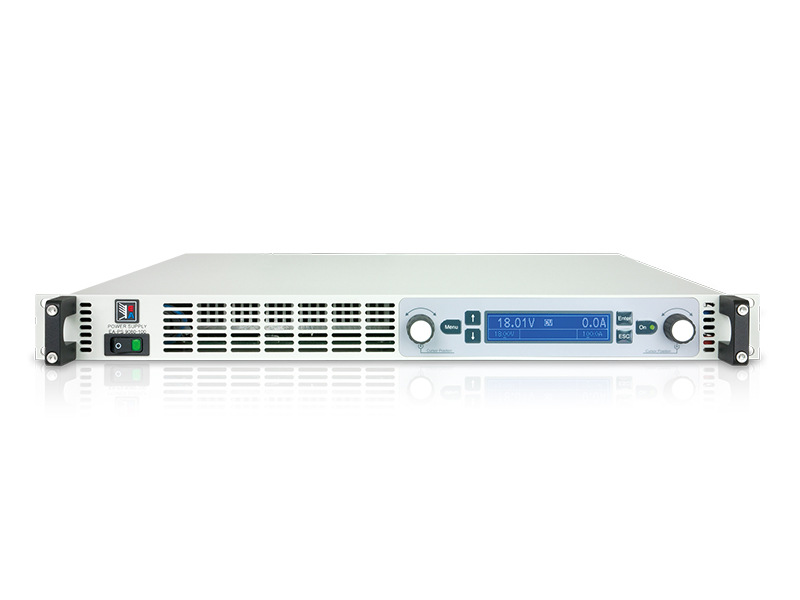
In high-stakes manufacturing, the line between a flawless product and a field failure can come down to a speck of dust. Precision engineering isn't just about micron-level tolerances in machining; it extends deeply into assembly environments where airborne particulates, outgassing, and even electrostatic discharge can compromise sensitive components. The clean assembly process is the silent guardian of reliability, ensuring that every bond, every electrical contact, and every moving surface meets its design intent without contamination-induced degradation. This is where controlled environments, rigorous material handling, and operator discipline converge to protect the integrity of the final assembly.
The impact of clean assembly echoes across industries that demand zero failure margins. In semiconductor fabrication, a single particle smaller than a bacterium can destroy a wafer's functionality. In aerospace actuators and medical implants, remnant lubricants or microscopic debris can lead to premature wear or catastrophic malfunction. The meticulous protocols—ranging from HEPA-filtered cleanrooms to precision cleaning techniques and real-time contamination monitoring—turn the abstract goal of reliability into measurable outcomes. Each step, from the preparation of surfaces to the final seal, is a deliberate act of risk mitigation, directly influencing mean time between failures and end-user safety.
Modern clean assembly practices are not defined by sterile repetition but by an adaptive mindset that integrates human skill with automated precision. Engineers fine-tune assembly sequences based on contamination risk assessments, often customizing tooling and workflows for specific product architectures. The outcome is a traceable, repeatable process that elevates output quality beyond normal expectations, giving manufacturers the confidence that their products will perform in situ just as they did under the microscope. When clean assembly is treated as a core engineering discipline rather than an afterthought, it becomes the cornerstone of sustained reliability and customer trust.
Efficiency Unleashed: Modern Production Lines Meet Advanced Testing
The marriage of high-speed assembly with intelligent inspection systems has reshaped what’s possible on the factory floor. Instead of treating testing as a separate downstream chore, it now unfolds in real time—every component being checked, every joint verified, without ever breaking the pace of output. This tight integration means that defects are caught the moment they emerge, not hours later in a rework bay.
What makes this synergy powerful is the shift from reactive spotting to proactive tuning. Modern lines don’t simply flag failures; they feed data back into the process, automatically adjusting torque, temperature, or placement pressure to keep every unit within spec. The result isn’t just faster throughput, but a steady climb in first-pass yield that quietly erases the hidden costs of scrap and delay.
On the human side, operators are no longer gauging by eye or chasing intermittent faults. They orchestrate a living loop where machines and tests converse, freeing their expertise for fine-tuning and innovation. In this environment, efficiency isn’t a target on a dashboard—it’s a natural rhythm that turns variability into predictability, shift after shift.
From Circuit Boards to Final Units: A Look at Quality Control
Before a single component is soldered in place, quality control begins with a meticulous inspection of the raw circuit boards. Every trace, pad, and via is scrutinized under magnification to catch etching defects, hairline fractures, or contamination that could compromise performance down the line. This early gatekeeping ensures that only pristine substrates move forward, because a flawed foundation is nearly impossible to correct once assembly starts.
As the boards populate and pass through reflow ovens, automated optical inspection systems take over, comparing each solder joint and component placement against a digital master. These machines flag even microscopic inconsistencies—a slightly lifted lead, insufficient wetting, a tombstoned capacitor—that human eyes might miss at speed. Boards that raise red flags are set aside for manual review, where technicians use decades-old tricks like tapping a suspect joint with a dental pick or applying a cold spray to isolate an intermittent fault.
Once the housing encloses the electronics, the final unit faces a barrage of functional tests that simulate real-world use: thermal cycling from freezing to scorching, vibration tables that mimic years of road travel, and burn-in periods that push components to their aging limits. Only after passing these trials does a unit earn its serial number and a place in the shipping carton. It's a rigorous, sometimes tedious process, but it's what stands between a customer and an early failure.
The Human Element: Skilled Technicians Behind the Automated Lines
Behind every smoothly humming automated production line, there’s a team of technicians whose expertise keeps the machinery in tune. These professionals don’t just press buttons and watch screens—they listen to the subtle changes in sound, feel for vibrations that signal wear, and interpret data streams to prevent hiccups before they happen. Their deep familiarity with each machine allows them to blend intuition with technology, ensuring that the system’s rhythm never misses a beat.
When unexpected issues crop up, it’s the skilled hands and sharp minds of these technicians that bring everything back on track. They know that automation doesn’t run on logic alone; it depends on the human capacity to adapt, improvise, and find solutions outside the standard playbook. Whether it’s recalibrating a sensor, tweaking a robotic arm’s trajectory, or teaching a vision system to recognize a new part, their work is part craft, part science, and wholly essential.
Beyond the daily maintenance, these individuals are also the bridge between the factory floor and the engineering teams. They provide real-world feedback that shapes better processes and sparks innovation, turning raw data into practical improvements. In a landscape obsessed with lights-out manufacturing, it’s worth remembering that the human element isn’t a weakness to eliminate—it’s the very thing that makes automation resilient, responsive, and brilliantly effective.
Evolution in Action: Adapting Manufacturing for Next-Gen Power Solutions
As power requirements evolve, manufacturing processes are undergoing a quiet but decisive shift. Traditional assembly lines, once optimized for standardization, now incorporate modular stations that can pivot between product variants without lengthy downtime. This isn't just about adding robots—it's about rethinking material flow, real-time quality checks, and the digital thread that connects design to final testing. The goal is twofold: minimize energy waste during production and build units that handle higher densities with fewer thermal compromises.
One compelling example lies in the use of advanced dielectrics and embedded cooling. Instead of treating thermal management as an afterthought, factories now integrate it directly into the substrate layering process. This demands precise control over deposition rates and curing profiles, something off-the-shelf systems rarely deliver. So, line engineers are co-developing custom tools that blend screen printing with laser ablation, allowing feature sizes that were once confined to the lab. The result is not just a power module—it's a physically optimized architecture born from a manufacturing line that behaves more like a high-precision instrument.
Material traceability has also jumped from a compliance checkbox to a core enabler. By logging every batch of magnetic powder, copper foil, and solder paste at the point of use, manufacturers can fine-tune process parameters in near real time. When a power converter’s efficiency drifts by even half a percent, engineers can correlate it with a specific lot of core material and adjust the winding tension accordingly. This closed-loop learning transforms the factory floor into an adaptive system, where the line itself contributes to the next design iteration. In this way, manufacturing isn't just reacting to next-gen power demands—it's actively defining what those solutions can achieve.
FAQ
They allow engineers to set voltage and current levels with extremely fine granularity, often down to millivolts or microamps, and switch between multiple parameters instantly. Built-in feedback loops continuously monitor output and compensate for load changes, ensuring that the delivered power matches the programmed values even under fluctuating conditions. This level of control helps replicate real-world power scenarios accurately, which is crucial for validating sensitive electronics.
Recent designs use advanced switching topologies like resonant converters and gallium nitride (GaN) transistors that reduce switching losses dramatically. Instead of dissipating excess energy as heat through linear regulation, they convert power at high frequencies with minimal waste. Additionally, intelligent sleep modes and dynamic output adjustment mean the supply only draws what's needed, cutting idle consumption significantly compared to legacy units that often ran at full capacity regardless of load.
It starts with SMT assembly of control and power boards, followed by rigorous automated optical inspection. Boards then go through functional testing where firmware is loaded and initial calibrations are performed. The unit gets assembled into its enclosure with custom heatsinks and fans, then moves to a burn-in chamber where it operates under maximum load for hours to weed out early failures. Finally, each output channel is calibrated against traceable standards using automated scripts that adjust internal offsets, and a full safety test including hipot and ground bond verification is conducted before the unit is signed off.
Beyond standard in-circuit testing, we run every unit through a multi-point calibration routine using 8.5-digit reference multimeters to guarantee accuracy across the entire operating range. Temperature chambers cycle the supplies from -20 to 70°C while monitoring drift. Load transient response tests check recovery time with sudden current swings. For production consistency, we also use guard-banding: setting internal acceptance limits tighter than published specs so that even units that drift slightly over time will remain within their guaranteed performance window.
Customization usually begins with a deep-dive conversation between our applications engineers and the client's design team to map out exact requirements: maybe they need ultra-low ripple for sensitive RF gear, or specific sequencing for automotive ECU testing. On the production line, we can swap standard firmware for tailored versions that include unique protection thresholds or communication protocols. Mechanical changes like different connectors or conformal coating for harsh environments are handled in dedicated assembly cells. Before shipping, each custom unit goes through a validation procedure that mirrors the customer's specific use case to ensure it behaves as expected in their hands.
Heat is the enemy of both precision and longevity. Components like reference voltage sources and ADCs can drift significantly with temperature changes, degrading accuracy. In production, we pay close attention to heatsink mating surfaces, apply thermal paste precisely, and verify fan performance under worst-case conditions. Good thermal design allows a supply to maintain its rated performance up to its full operating temperature without derating, which is often a differentiator between an entry-level unit and one built for demanding applications like semiconductor characterization.
We're redesigning power paths to achieve 90%+ efficiency across wider load ranges, which directly reduces wasted energy and cooling requirements. On the factory floor, we're implementing regenerative test systems that feed burned-in energy back into the grid instead of dissipating it. Production processes are also being refined to minimize waste—selective soldering cuts flux usage, and remanufacturing programs give end-of-life units a second life by replacing only worn components. These shifts aren't just about meeting regulations; they're driven by customers who now include sustainability metrics in their procurement scorecards.
Conclusion
Stepping into a programmable power supply factory reveals a world where precision isn't just a goal—it's built into every process. The journey starts in clean assembly areas where technicians, despite the hum of automated systems, rely on trained eyes and steady hands to place delicate components. It’s not just about following blueprints; it’s about understanding why a minute particle of dust could distort a unit’s output for years. Alongside them, automated optical inspection systems whir quietly, catching flaws that human eyes might miss, but it’s the collaborative rhythm between people and machines that truly crafts the core of each supply. This fusion ensures that from the initial placement of a capacitor to the final bolting of a chassis, the design’s intent survives intact, forming the bedrock of reliable, precise power that industries depend on.
Yet, consistency in production only matters if it translates into real-world resilience. That’s where modern test bays come in—not sterile stopwatches, but dynamic gauntlets. Units are pushed through thermal extremes and simulated load spikes that mirror years of operation compressed into minutes. Racks of prototypes often sit humming in endurance chambers, silently collecting performance data that engineers pore over to refine control algorithms. Quality control extends far beyond pass/fail checklists; it’s an ongoing conversation between the assembly floor and the design lab. As next-gen demands—from ultra-fast EV chargers to quantum computing rigs—reshape expectations, the factory’s ability to adapt quietly evolves. New production cells interleave seamlessly with legacy lines, and technicians retrain not because a manual says so, but because curiosity drives them. This organic blend of vigilance, skill, and seamless innovation is what keeps a modern power supply factory not just relevant, but indispensable.
Contact Us
Contact Person: Lily
Email: [email protected]
Tel/WhatsApp: +49 (0) 2161 49526-0
Website: https://tps-elektronik.com/en/