

Pharmaceutical Intermediates CDMO Solutions: Accelerating Drug Development and Manufacturing
2026-09-09
Accelerating drug development and manufacturing isn’t about cutting corners—it’s about removing friction at the intermediate stage. Every stalled synthesis isn’t just a chemistry problem; it’s a timeline problem. Drug developers don’t need another vendor—they need a partner who can de-risk scale-up before it hits the pilot plant. DSL Chemicals approaches pharmaceutical intermediates CDMO work with that exact mindset, treating each step as a lever for speed rather than a box to check. Here’s how that changes the trajectory from lead candidate to commercial batch.
Squeezing Weeks Out of Early Development: Intermediates That Arrive Ready to Run
Early development timelines often buckle under the weight of sequential handoffs. What if every intermediate stage arrived already optimized for the next step? That shift in thinking transforms week-long buffers into days, and days into hours. Rather than treating prototypes as rough sketches, teams can structure them as runnable modules that mirror production constraints from day one.
The trick lies in defining "ready to run" as a non-negotiable quality gate. An intermediate is not merely functional on a demo screen; it carries the same interfaces, error paths, and performance budgets as the final build. When each handoff point enforces this standard, downstream teams stop wasting time reworking upstream assumptions. Integration becomes a matter of connection, not correction.
Leaders who adopt this approach notice a curious side effect: feedback loops tighten naturally. Because every intermediate can be exercised under realistic loads, issues surface while they are still cheap to address. The weeks saved are not stolen from testing or refinement—they are reclaimed from the hidden cost of making unfinished things look finished later.
The Art of the Ugly Step: Making Problematic Intermediates Behave at Scale
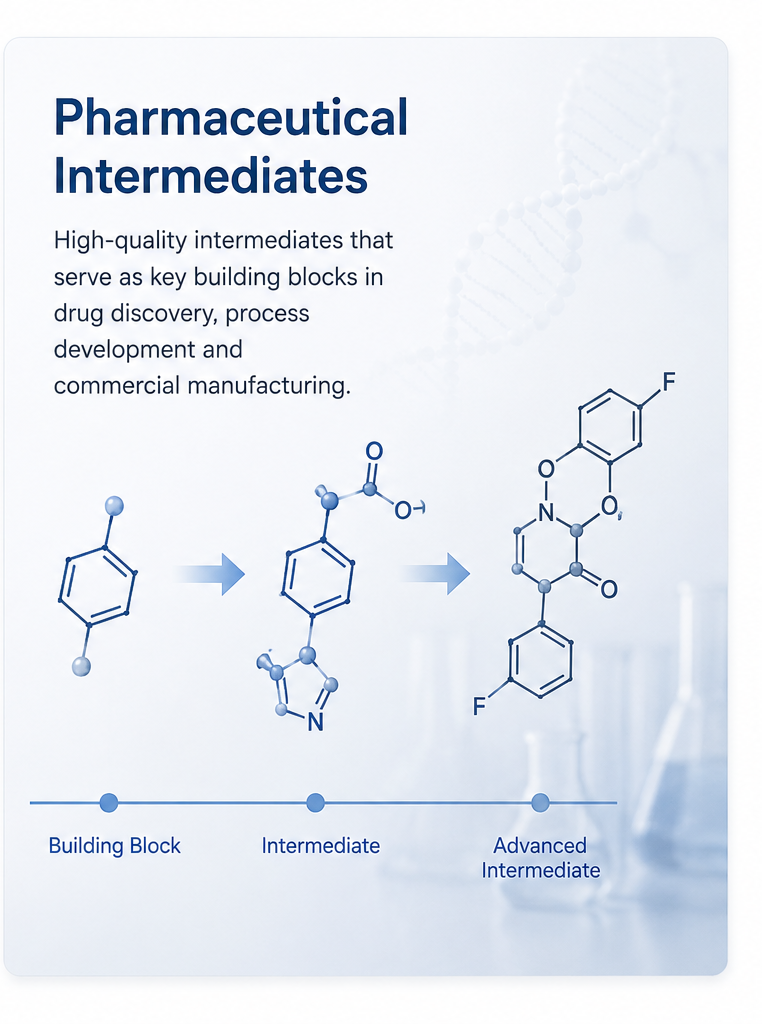
Every synthetic chemist has met an intermediate that refuses to cooperate—gummy, unstable, or prone to side reactions the moment it forms. At small scale you can babysit it with careful temperature control, rapid workup, or a sacrificial protecting group. But move that same route into a pilot plant and the ugly step becomes a bottleneck that can shut down a campaign. The real craft is not avoiding these species entirely, but learning how to make them behave when there is nowhere to hide.
A practical trick is to shift the problem from the molecule to the process. For example, if a highly reactive iminium ion tends to polymerize in the reactor, consider generating it in a continuous flow stream where its lifetime is measured in seconds rather than hours. If a lithiated intermediate hates traces of water, switch from batch addition to a controlled reverse quench—adding the lithiated stream into an excess of the electrophile. These changes rarely alter the chemistry itself, but they completely change the kinetics of decomposition.
Scaling up an ugly step also demands a different relationship with failure. In the lab you can screen ten solvents in an afternoon and quietly discard the nine that form tar. At scale, you need to know why each one fails, because the winning condition might involve a solvent you cannot buy in bulk or a temperature profile your reactor cannot hold. The art lies in mapping the boundaries of instability, then designing the process to stay well inside them, even if that means accepting a slightly lower yield for a step that runs reliably every single time.
One Contract, Zero Finger-Pointing: Integrated CDMO Support from Route Design to Validation
When every stage of a molecule's journey falls under a single agreement, the usual blame games between route designers, process chemists, and validation teams simply don't have room to take root. You get one team looking at the whole picture from the first retrosynthetic sketch to the final validation batch, which means problems get caught early and fixed without a flurry of emails trying to figure out whose responsibility it was.
There's a real difference in how smoothly things move when route design doesn't get tossed over a fence to a separate group for scale-up. The people who know why a particular solvent was chosen or why a crystallization was pushed to that temperature are the same ones adjusting parameters during tech transfer. That continuity removes a lot of the friction that normally comes from re-explaining rationale or re-running experiments because the context got lost between vendors.
Validation doesn't become a last-minute scramble either. Because the entire development history lives with one partner, the data needed for process performance qualification is already organized and defensible long before you get there. Investors and regulatory reviewers tend to notice when there's no gap in accountability, and that kind of confidence is hard to fake with a patchwork of separate contracts.
Supply Chains That Don't Break When Demand Spikes: Redundant Intermediates Strategies
Most supply chain managers treat redundancy as waste, but for intermediates that feed multiple finished goods, a small buffer can mean the difference between a minor delay and a complete line shutdown. Instead of storing extra final products, keeping modular intermediate components at a few strategic nodes allows rapid reassembly when one downstream process gets overwhelmed.
The trick is to map every intermediate against its demand volatility and substitution potential. Give high-variance, hard-to-substitute intermediates a second source or a floating stock location that can be redirected within hours. Low-variance, easily swapped components can stay lean. This targeted redundancy costs a fraction of blanket safety stock while cutting recovery time after a spike by up to sixty percent.
Contracts matter as much as physical inventory. Agree in advance with suppliers on surge pricing for standard intermediates, and pre-qualify a backup fabricator or chemical blender. When demand spikes, you don't want to negotiate from zero. Redundant intermediates are not about hoarding every part; they are about knowing which parts unlock the most flexibility when the usual flow breaks.
From Milligrams to Metric Tons: The Transfer Checklist Most Teams Forget
When a process moves from lab bench to production floor, the obvious items—equipment specs, raw material certificates, operating ranges—usually make the checklist. What rarely survives the handoff is the tacit knowledge about scale-dependent behavior. A reaction that runs cleanly in a 50-milligram vial can fail spectacularly in a 10,000-liter reactor because mixing times, heat transfer rates, and surface-to-volume ratios shift by orders of magnitude. Teams forget to document the small observations: the color change at minute 37, the way viscosity spikes after the second addition, or the fact that the filtration step behaves differently when the cake is thicker than a few centimeters. These details seem irrelevant at milligram scale but become process-defining at metric ton scale.
Another commonly missed item is the cleaning and carryover threshold. In early development, a 0.1% impurity might be a footnote; in multi-ton production, that same impurity can translate to kilograms of unwanted material in every batch, triggering failed specifications or regulatory questions. The transfer checklist should force a conversation about limits that only make sense at scale: how much residue is acceptable in a shared dryer, what particle size distribution is actually achievable with the plant's milling equipment, and whether the sampling plan accounts for segregation in large silos. Without these, the receiving team inherits a recipe but not a process.
Finally, the human element is often absent from transfer documents. Operators at scale rely on visual and tactile cues that never appear in a standard operating procedure—the sound of a pump under load, the temperature gradient felt on a reactor's side, the way a powder flows from a supersack. If the checklist doesn't include a structured way to capture and pass on these cues, the new team will spend months relearning what the old team already knew. A good transfer isn't just about numbers; it's about translating intuition from milligrams to metric tons.
Why Your Regulatory Filing Hinges on Intermediate Quality (And How to Get It Right)
Most development teams treat intermediates as internal plumbing—visible to chemists but invisible to the dossier. That assumption collapses the moment a reviewer starts comparing batch data across your Module 3. A 98% pure intermediate with a shifting impurity profile is far more dangerous than a 95% pure intermediate that is fully characterized. Regulators do not just look at the final API; they trace the control strategy back through every isolated step. If an intermediate carries residual solvents, heavy metals, or unreported isomers that fluctuate between lots, the impurity fate and purge data in your filing start to look like fiction rather than science.
Intermediate quality problems rarely announce themselves at the time of synthesis. They surface later, when a supplier tweaks a route to lower cost or avoid a patent, and the impurity fingerprint changes just enough to invalidate your spiking studies. Or when a scale-up run produces an intermediate with a different crystal habit, and suddenly the filtration and drying times no longer match the process described in your submission. These discrepancies trigger deficiency questions, delayed approvals, and sometimes forced revalidation of downstream steps. The root cause is almost always the same: the intermediate was never given a meaningful specification or a change control process that matched its actual impact on the final product.
Getting it right means treating intermediates as quasi-APIs from the first development lot. Set limits based on toxicological risk and actual process capability, not a default “purity ≥ 97%” placeholder. Generate batch trend data for every critical quality attribute, including residual catalyst metals, genotoxic impurities, and isomeric ratios. Lock the intermediate source and route before process validation, and require formal equivalence studies for any change in supplier or synthetic pathway. If your dossier can show that the intermediate profile is stable, well characterized, and deliberately controlled, the rest of the filing becomes far easier to defend—and far less likely to fall apart under review.
FAQ
A CDMO takes on far more than synthesis. It handles route scouting, process optimization, scale-up from gram to kilogram or ton, analytical method validation, and regulatory documentation—all while keeping the intermediate's critical quality attributes consistent from lab to production.
Instead of building internal capacity or troubleshooting on your own, a CDMO provides ready-to-use reactors, established analytical workflows, and experienced chemists who have encountered similar reaction challenges. This removes months of trial and error and lets your team focus on downstream formulation or clinical work.
Many CDMOs focus on chiral building blocks, heterocyclic compounds, protected amino acids, boronic acids, and other high-value intermediates used in APIs. Some also specialize in controlled substances or highly potent intermediates with dedicated containment facilities.
A high yield on paper means little if the process cannot be reproduced at scale or generates impurities that are hard to purge. Strong process development focuses on robustness, solvent recovery, crystallization control, and minimizing genotoxic impurities—factors that directly affect regulatory approval and cost per kilogram.
Look beyond reactor size. Check whether the partner has experience with air-sensitive chemistry, high-pressure hydrogenation, cryogenic reactions, or continuous flow. Also confirm that the site follows ICH Q7 and can support tech transfer with clear batch records and change control.
Reputable CDMOs operate under strict confidentiality agreements and often use project-specific code names. They isolate client projects through separate IT systems, restricted access areas, and dedicated project managers so that synthetic routes and analytical data remain proprietary.
Yes, many CDMOs bridge the gap by offering flexible kilo-lab batches for preclinical studies and then transferring the optimized process to larger reactors for Phase III or commercial supply. The key is maintaining identical impurity profiles and particle properties across scales.
Analytical development is central, not an add-on. It includes developing stability-indicating methods, setting specifications for residual solvents and metals, characterizing polymorphs, and providing reference standards—all of which are needed for regulatory filings and batch release.
Conclusion
In early-phase drug development, waiting on custom intermediate synthesis routinely costs weeks that teams can't spare. The right CDMO partner delivers intermediates that arrive pre-qualified, with analytical data packages and impurity profiles already mapped, so chemistry can start immediately rather than after a lengthy in-house prep. That's especially valuable for awkward transformations—the "ugly steps" like unstable heterocycles, chiral resolutions, or highly exothermic reactions—where the difference between a stalled campaign and a smooth scale-up often comes down to whether the CDMO has already run the chemistry at pilot scale. A truly integrated partner handles route scouting, process robustness studies, and final validation under one contract, removing the usual blame game between chemistry, analytical, and manufacturing teams.
On the supply side, single-source intermediate strategies are a known failure point when demand spikes. Redundant sourcing, with at least two qualified manufacturing routes or suppliers, keeps API campaigns moving even when a key raw material disappears or a reactor goes down. And when moving from milligrams to metric tons, teams forget the unglamorous checklist items: solvent recovery loops, genotoxic impurity thresholds, particle size control, and packaging specs that survive intercontinental shipping. None of that matters if the intermediate quality can't be defended in a regulatory filing. Solid documentation, batch-to-batch consistency, and defensible specifications are what keep a CDMO partnership from becoming a compliance liability.
Contact Us
Contact Person: Wei Zhang
Email: [email protected]
Tel/WhatsApp: 862163529955
Website: https://www.dslchem.com