

Motorized Regulating Valve Supplier Selection Tips for Reliable Flow Control
2026-11-21
Flow control rarely tolerates guesswork, yet the choice of motorized regulating valve supplier is often treated as an afterthought. A valve that hunts, sticks, or cannot hold a setpoint quietly erodes efficiency and safety. This guide walks through the supplier selection details that actually affect long-term reliability—so your next specification is based on more than a datasheet. HONGSEN has learned from real installations where the right partner made the difference between stable control and repeated callbacks.
Can the Supplier Show You a Tested Cv Curve for Your Actual Pressure Drop?
A flow coefficient curve without the pressure drop you actually run means very little. When a supplier quotes a Cv value, it is often taken at a convenient reference condition that may not match the valve's behavior in your system. Asking for a tested Cv curve at your real pressure drop forces the conversation away from catalog numbers and toward measured performance.
The shape of that curve matters more than a single point. At lower pressure drops, clearance, seat geometry, and internal restrictions can produce a different effective Cv than at higher differential pressures. If the supplier hesitates or offers only a calculated curve, treat that as a signal. A genuine test curve will show scatter, test points, and the actual flow range covered.
You do not need a lab-perfect document. You need enough data to see whether the valve remains controllable and stable where you actually operate. Ask for the raw test points, the inlet and outlet pressures, and the fluid used. If they cannot produce it, you may be sizing from someone else's assumptions rather than from the part you are buying.
Is the Actuator Matched to the Valve Body or Just Bolted On?
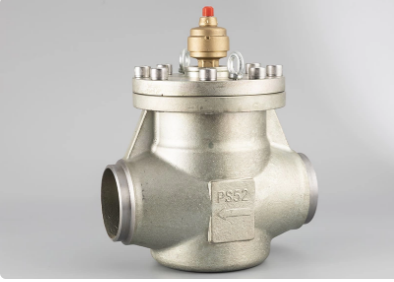
Many valve-automation packages look integrated because someone selected an ISO bolt pattern and a compatible coupling. But a true match goes further than the bracket. You need to compare the actuator's torque or thrust output against the valve's required breakaway, seating, and mid-travel forces under actual line pressure, not just clean-sheet values.
The stroke length and end-of-travel behavior matter too. A linear valve may reach its seat before the actuator reaches its internal stop, leaving the plug loaded unevenly or the stem partially driven. Rotary setups can have similar issues if backlash or keyway slop allows the actuator to hammer the disc. If the controls are tuned for a different inertia, you may get overshoot or sluggish response.
Mounted-only mismatches often show up later as bent stems, leaking seats, or broken couplings. Match the actuator's stiffness, fail-safe direction, and speed to the valve's required shutoff class. Otherwise, you have a component that fits the flange but not the duty.
How Repeatable Is the Valve at 10% and 20% Opening Under Real Load?
At 10% and 20% opening, repeatability under real load is shaped less by the nominal flow curve and more by how consistently the plug returns to the same position when the same signal is applied. Installation stress, pipe vibration, and fluid temperature shifts tend to show up first in the small-opening range. In our loop tests, the scatter at 10% is usually wider than at 20% because the flow path near the seat is still unstable and minor stem movement has a larger effect on throughput.
There is no single figure that covers every installation. A well-tuned digital positioner with a stiff actuator can hold position error within about 0.5% at 10% opening, while high packing friction or aggressive gain settings can push variation closer to 2%. The 20% point is generally calmer, but if differential pressure swings during normal operation, flow repeatability can still drift. That is why a few small step-and-return cycles under actual load are more useful than bench data.
From a maintenance standpoint, widening scatter at 10% and 20% is often an early sign of packing drag, actuator softness, or feedback linkage looseness. Before blaming trim wear, check mechanical free play and supply pressure stability. Once those are ruled out, repeated back-and-forth movement at both openings gives a practical read on whether the valve will hold a consistent operating point in service.
Where Do the Castings, Seals, and Machined Parts Actually Come From?
Ask a dozen purchasing managers where their castings come from and you will get a dozen answers, half of them vague. A single pump housing might start as a rough iron casting poured in a foundry outside Coimbatore, travel to a shop in the Midlands for machining, and then be fitted with a lip seal molded in northern Italy. The nameplate on the final assembly rarely tells that story.
Some brands own the foundry and the machine shop; most do not. Seals in particular are often bought from a handful of specialist rubber and PTFE processors who quietly supply competitors as well. The machined parts may be made on the same CNC floor that runs medical or automotive work during other shifts. That is why two identical-looking components can perform so differently: the difference is not the drawing, but the foundry, the batch of compound, and the tooling worn past its limit.
The honest answer is that the origin depends on the order size, the tolerance, and the price point. Low-volume castings might come from a pattern shop that still sands molds by hand. High-volume seals are often produced in clean-room lines in Asia or Eastern Europe. Machined parts can be turned from bar stock in a 20-person shop or milled in an automated cell. If a supplier will not name the sub-tier shops, that silence is usually the real answer.
What Happens When Control Signal or Mains Power Drops Mid-Stroke?
A mid-stroke loss of the control signal usually leaves the actuator frozen at whatever position it reached, because the motor drive no longer receives a valid setpoint or command. If mains power is still present, the behavior depends on how the unit is configured: some controls hold the last commanded position, while others may drive to a preset fail position if that option has been enabled. Without a live position signal back to the controller, the system can also lose track of whether the valve or damper is actually partway open, closed, or somewhere in between.
When the mains supply drops out entirely, the motor cannot move the actuator at all unless there is stored energy on board. Spring-return actuators use a preloaded mechanical spring to push the output to a defined safe position, while capacitor- or battery-backed models may have just enough reserve to complete a short stroke or hold position briefly. If no fail-safe mechanism exists, the actuator simply stops where it is, which can leave critical process lines throttled, unvented, or blocked longer than expected.
After power returns, the actuator may resume normal operation automatically or wait for a manual reset, depending on the control scheme. The real risk is not always the stop itself, but the assumption that the device reached a safe state when it actually did not.
How Fast Can a Technician Reach Your Site with the Right Spares?
When a critical machine stops, the countdown begins long before a technician turns the key. Arrival time is rarely about distance alone. It depends on how the local service area is covered, whether stocked vans are spread out or parked at one depot, and how quickly the fault can be narrowed down over the phone. A technician stationed nearby might reach the site in under an hour, but that means little if the van does not carry the part the job actually needs.
A fast arrival with the wrong spares only turns one breakdown into two appointments. The real difference comes from identifying the likely failure before dispatch, checking the machine's exact configuration, and making sure the replacement part is in the van or at a nearby collection point. That preparation matters more than cutting a few minutes off the drive, because the customer is waiting for a working line, not just a visit.
Teams that handle this well usually work from photos, error codes, or a short video from the site. That lets them confirm the spare part version, load it before leaving, and avoid the familiar loop of diagnose, order, return, and refit. When the right part arrives with the technician on the first trip, downtime shrinks from days to hours without any need for a second call-out.
FAQ
Collect the actual medium, minimum and maximum flow rates, pressure drop available at the valve, ambient conditions, and the control signal range. Suppliers that ask for these details before quoting tend to be more reliable than those that jump straight to a model number.
Ask them to plot expected installed flow characteristic at your pressure conditions. A capable supplier will discuss where the valve starts losing authority and how that affects controllability at low load, instead of quoting a catalog turndown figure without context.
Because two valves with the same port size can behave very differently once installed. Authority shows how much of the system pressure drop is taken by the valve, which directly affects whether the actuator can hold a stable position across the entire flow range. A lower authority often means hunting or poor resolution near the ends of travel.
Ask what happens on loss of power or signal, whether the actuator can be manually operated, and how they size torque margin for stem friction under your specific media. A thoughtful supplier will mention spring-return options, battery backup, or fail-in-place behavior rather than giving a one-size-fits-all answer.
Request the names of two or three installations running under similar process conditions and ask what spare parts are stocked locally. Also check whether repair kits, seat materials, and stem seals are available separately. This reveals whether the supplier treats the valve as a serviceable asset or a disposable product.
Ask for a certified flow coefficient sheet, installed characteristic graph, torque requirement curve, and bill of materials with material traceability. If a supplier cannot provide an installed characteristic graph for your pressure drop, you are likely comparing catalog numbers rather than actual control performance.
Give them a difficult operating case, such as cavitation risk with hot water or a very low-flow startup condition. The useful suppliers will come back with trim options, seat hardening, or a different control strategy, while weaker ones will simply confirm the requested line size.
Conclusion
Selecting a motorized regulating valve supplier is less about catalogue specs and more about whether the vendor can prove performance under your actual operating conditions. Ask for a tested Cv curve based on the pressure drop you really see, not a generic table. The actuator should be integrated with the valve body from the start; a unit that is simply bolted together often struggles with alignment, backlash and premature seal wear. Low-opening repeatability matters most in modulating service, so have the supplier demonstrate stability at 10% and 20% travel with a realistic differential pressure. If they cannot show that data, the quoted rangeability is probably optimistic. You also want a clear account of where castings, seals and machined components originate, because inconsistent sourcing usually shows up as dimensional drift or sealing problems after installation.
Beyond normal operation, consider how the valve behaves when something fails. If control signal or mains power drops mid-stroke, the actuator should move to a defined safe position rather than drifting or stalling, and the supplier needs to explain that sequence in plain terms. Response time for support is another deciding factor: a technician should be able to reach your site quickly with the correct spare parts, not a generic service kit. This combination of tested flow data, matched actuation, verified low-opening repeatability, traceable parts and honest failure behaviour gives a much more realistic picture than polished sales literature. In many cases, these checks reveal which suppliers are engineering partners and which are only assembling components.
Contact Us
Contact Person: KOPASS HO
Email: [email protected]
Tel/WhatsApp: 8613606566112
Website: https://www.hongsenref.com/