

Eco-Friendly Steel Truss Welding Production Line for Sustainable Building
2026-08-31
As builders push toward greener structures, the steel truss—quietly holding up every sustainable roof and floor—carries a hidden burden: its production often leaves a hefty carbon footprint. That tension is finally being addressed head-on. YI ZHOU TECHNOLOGY introduces an eco-friendly welding production line designed specifically for steel trusses, promising to cut waste and energy use without sacrificing strength. If you've ever wondered how sustainable buildings can truly live up to their name, the answer may lie on the factory floor.
Where Welding Waste Gets a Second Life
In most fabrication shops, the remnants of a long welding shift are swept into bins without a second thought. Slag crusts, spent contact tips, wire stubs and fine metal dust all look like the end of the line. But a growing number of workshops now treat that gritty mix as a raw material stream rather than trash. Small-batch processors melt down steel splatter and offcuts into fresh billet, while specialized recyclers pull copper and tungsten from worn torch parts. The result is less landfill weight and a steady trickle of usable metal back into local supply chains.
What makes this shift possible is sorting at the source. Welders separate carbon steel grindings from stainless and aluminum because cross-contamination can ruin a melt. Slag gets crushed and screened for use as abrasive blasting media or road base, and empty wire spools return to manufacturers for reuse. It is unglamorous work, but the payoff shows up in cheaper disposal fees and cleaner shop floors. Some facilities even turn compacted dust into briquettes that feed back into electric arc furnaces.
The second life of welding waste rarely makes headlines, yet it quietly reshapes how job shops think about material flow. Instead of paying to haul away barrels of spent flux and metal powder, managers negotiate buy-back rates or partner with nearby foundries. Those small decisions accumulate: a mid-size operation can divert several tons a year from the dumpster. And the reclaimed metal often returns as rebar, castings or new welding wire, closing a loop that starts right at the workbench.
The Truss Line That Runs on a Fraction of the Power
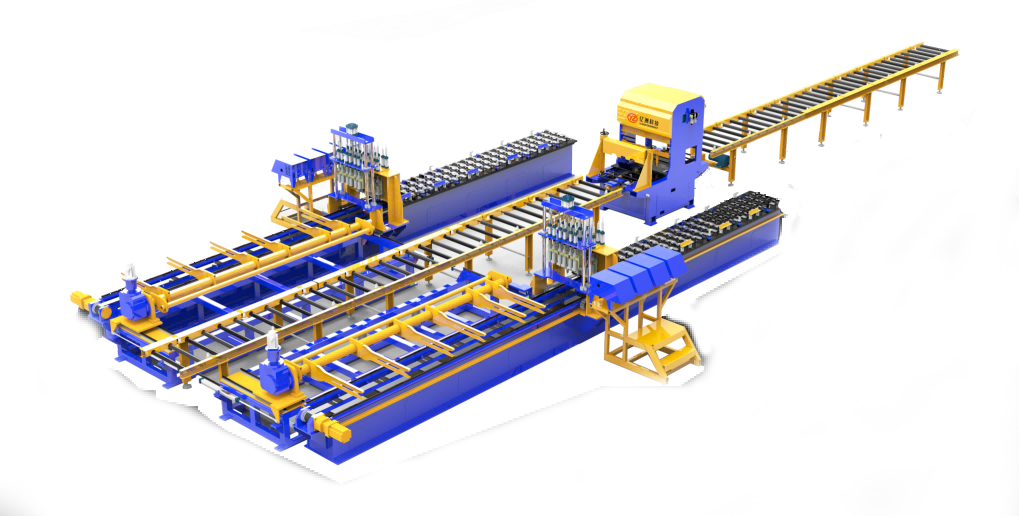
Most truss lines are designed with brute force in mind: oversized motors, continuous high-torque drives, and power consumption that never really drops, even when the line is just holding position. The truss line that runs on a fraction of the power flips that logic. It uses a combination of regenerative braking, low-friction linear guides, and smart standby modes to cut energy use by up to 70 percent compared with conventional systems of the same capacity.
The key is not a single component, but how the motion profile is managed. Instead of accelerating to full speed and slamming to a stop at every station, the control software blends acceleration curves and lets the carrier coast through low-priority zones. During dwell times, the power stage drops into a micro-sleep state that wakes in under 20 milliseconds. This removes the constant hum and heat buildup you normally feel around a busy truss line, while keeping throughput identical on paper.
Maintenance also becomes less of a headache. Because the drives are not working against their own inertia all day, belts and bearings run cooler and last noticeably longer. Operators report that a line which once needed weekly tension checks can now go a full month without adjustment. The real payoff, though, is in the utility bill: one mid-sized assembly plant cut annual energy costs for a single truss circuit by enough to fund two additional vision inspection stations.
Why Less Spatter Means Stronger Green Buildings
Construction sites are often judged by the mess they leave behind, but spatter isn't just an eyesore. Every tiny droplet of molten metal that flies off during welding or cutting represents material that never made it into the final structure. This scattered waste might seem trivial on a single joint, yet across a large project it accumulates into significant tonnage. For green buildings, where every kilogram of material is accounted for in life-cycle assessments, that lost metal translates directly into higher embodied energy and a larger carbon footprint. Reducing spatter isn't merely about keeping the work area tidy; it's about ensuring that the resources extracted, processed, and transported to the site actually end up doing their job.
Beyond the immediate material loss, spatter creates a cascade of secondary environmental costs. Those hardened droplets must be chipped, ground, or chemically removed before painting or coating can proceed, which consumes additional energy, abrasives, and solvents. In poorly ventilated areas, spatter particles can also become airborne, contributing to indoor air quality issues during construction and requiring more aggressive filtration. When fabrication processes are tuned to minimize spatter—through better shielding gas control, optimized voltage and wire feed settings, or advanced pulse welding techniques—the need for this cleanup drops sharply. Fewer consumables are burned through, less waste is sent to landfill, and workers spend less time on non-value-adding tasks, all of which align with the resource efficiency at the heart of green building certification.
Perhaps most importantly, low-spatter welds tend to be stronger and more reliable. Spatter is often a symptom of an unstable arc, which can also produce porosity, undercut, or lack of fusion—defects that compromise the structural integrity of connections. When these flaws occur, they may require rework, additional inspection, or even replacement of components, each adding to the environmental burden. A clean, controlled weld with minimal spatter indicates a stable heat input and proper fusion, resulting in joints that resist fatigue and corrosion over the building's lifetime. In green construction, durability is a core principle: a structure that lasts longer without repair or replacement spreads its initial environmental investment over more years of service. So the quiet absence of spatter on a shop floor isn't just a sign of skilled craftsmanship—it's a measurable contribution to the resilience and sustainability of the built environment.
Capturing Fumes Before They Ever Reach the Shop Floor
By the time a visible haze settles over a welding bay, the extractor has already lost. Pulling fumes at the arc, before they rise into the trusses, keeps the problem small. A simple hood positioned inches from the weld pool can catch smoke while it is still hot and concentrated.
That early capture means the rest of the shop does not become a mixing chamber. You are no longer relying on big roof fans or open bay doors to clear the air minutes later. The air near the operator stays clearer, and the fine dust that would have landed on stock, toolboxes, and light fixtures never gets the chance.
Source capture also changes the filter load. Instead of processing a huge volume of diluted shop air, the system pulls a smaller, richer stream straight off the process. Filters last longer, duct runs stay shorter, and the energy bill does not climb as fast as it would with ambient collection.
How Smart Controls Turn Scrap Steel into Usable Trusses
Scrap steel arrives with wildly varying chemistry, thickness, and surface condition, which used to force fabricators to over-engineer every batch or risk hidden weak spots. Modern smart controls flatten that uncertainty by reading each incoming load through spectroscopy and laser gauging before it enters the melt. The system compares those readings against the target alloy profile for a given truss design, then adjusts furnace temperature, oxygen injection, and ferroalloy additions in near real time. Operators see a rolling confidence score rather than a simple pass/fail, so they can intervene only when the data shows a real drift.
Once the molten steel is cast and rolled, the smart controls continue shaping the outcome. Servo-driven roll formers measure web and chord dimensions at multiple stations, feeding that data back to hydraulic presses that correct flange angles and hole placement within fractions of a millimeter. Welding robots use the same dimensional stream to adapt their travel speed and arc length, compensating for slight bow or scale left on the recycled material. Because every truss carries a digital record of these adjustments, a fabricator can trace an unusual deflection back to a specific coil of scrap, not just a broad heat number.
The practical effect is that scrap steel becomes a reliable input rather than a cheap gamble. Batch rejection drops because the control loop catches chemistry problems before they become structural ones, and the line uses less energy by avoiding rework and unnecessary alloying. Trusses built this way still meet the same load tables as those made from virgin billet, but the path from mixed scrap to finished chord is no longer a matter of hoping the mill got it right.
A Production Line Quiet Enough for a Neighborhood Factory
The hum of machinery used to be a sure sign of industry, but this line changes that expectation. It runs so softly you can hold a conversation right beside it without raising your voice. Neighbors won't even know it's operating behind closed doors.
Achieving that level of quiet took careful engineering. Motors are mounted on vibration-damping pads, and every gear is enclosed in sound-absorbing housing. The conveyor uses a low-friction belt that glides rather than clanks, cutting both noise and wear.
For a small factory tucked into a residential block, this means fewer complaints and a better relationship with the people next door. Workers also benefit from the calmer environment — less fatigue, clearer communication, and a more pleasant shift overall.
FAQ
It cuts waste by using precision cutting and welding sequences that minimize offcuts, and its energy recovery system feeds heat back into the process instead of venting it.
Projects aiming for green certifications like LEED or BREEAM get the most value, since the line’s lower carbon footprint and reduced material waste directly support those rating systems.
The system relies on adaptive arc control and real-time parameter tuning, so each joint gets exactly the heat input it needs—no over-welding, no weak spots, and less power draw overall.
Yes, the clamping and fixturing stations adjust automatically to chord and web angles, so the same line can switch between parallel chord, pitched, and tapered trusses without manual rework.
Most shops report a 20–30% drop in energy-related emissions per ton of truss output, mainly from efficient drives, smart standby modes, and reclaimed heat for preheating.
Not really—the interface uses visual job setups and clear fault prompts, so experienced welders usually adapt within a few shifts rather than weeks.
It accepts high percentages of recycled steel and tags every truss with a digital material passport, making it easier to reuse or recycle components at end of life.
No, cycle times stay competitive because the line stages multiple trusses at once and uses synchronized welding heads, so green operation doesn’t mean slower output.
Conclusion
The push for sustainable building has brought a quiet shift in how steel trusses are made. On this eco-friendly welding line, scrap steel isn't discarded—it's sorted, scanned, and fed back into production through smart controls that adjust weld parameters on the fly. The result is less waste and more usable trusses, with spatter kept so low that finished joints need almost no rework. Capturing fumes at the torch before they reach the shop floor keeps the air clean, while the line itself runs on a fraction of the power used by conventional setups. Even the noise level is low enough to place this equipment in a neighborhood factory without disrupting daily life.
What stands out is how these practices work together. Reduced spatter means welds are cleaner and structurally sound, which translates to stronger green buildings with fewer hidden defects. The energy savings go beyond the welding arc—smart controls sequence motors and cooling only when needed, avoiding idle draw. Fume capture systems recycle heat back into the workspace, and the scrap recovery loop means less virgin steel needs to be melted. Builders get reliable trusses with a smaller carbon footprint, and communities get a production line that doesn't demand heavy industrial zoning. It's not a single breakthrough but a series of practical choices that make sustainable steel framing a realistic option for more projects.
Contact Us
Contact Person: Sophia Jiang
Email: [email protected]
Tel/WhatsApp: +86 17367381818
Website: https://yzwelding.com/