

Downstream Petrochemical Industry Events: Key Trends and Innovations Shaping the Future
2026-05-12
The downstream petrochemical landscape is shifting faster than ever. From circular feedstocks to digital plant operations, the innovations unveiled at recent industry gatherings are rewriting the rules of production and sustainability. ICIF has been at the heart of these conversations, showcasing how breakthroughs in catalysis, process intensification, and green chemistry are turning today's challenges into tomorrow's competitive advantages. In this blog, we zero in on the pivotal events and trends that are not just shaping the future but already reshaping plant floors and boardroom strategies worldwide.
Feedstock Flexibility: Adapting to a Shifting Resource Landscape
The ability to switch between diverse raw materials without sacrificing output quality has become a quiet superpower in modern production. Relying on a single, predictable feedstock is no longer a safe bet when supply chains are constantly tested by weather extremes, geopolitical tensions, or sudden demand spikes. Operations that can seamlessly pivot from virgin materials to recycled alternatives, or from one crop variety to another, are the ones staying afloat without constant firefighting.
There’s a practical art to this, though—it’s not just about having a list of approved inputs. Real feedstock flexibility means understanding the subtle ways a different source changes reaction kinetics, impurity profiles, or mechanical handling. It takes upfront investment in sensor systems that adjust in real time, smart inventory strategies, and a workforce trained to spot early warning signs before off-spec product piles up. When it’s done well, the shift is almost invisible to the customer, even as the back end deals with wildly variable incoming streams.
This kind of agility also opens doors to regional supply advantages that rigid setups simply can’t touch. One quarter might mean tapping into agricultural residues that are locally abundant; the next could leverage a competitor’s waste stream, turning a disposal problem into a cost advantage. The real story is no longer about which feedstock is best in isolation, but how quickly and cleanly a facility can dance between them without breaking stride.
Circular Economy Integration: From Waste to Value in Petrochemicals
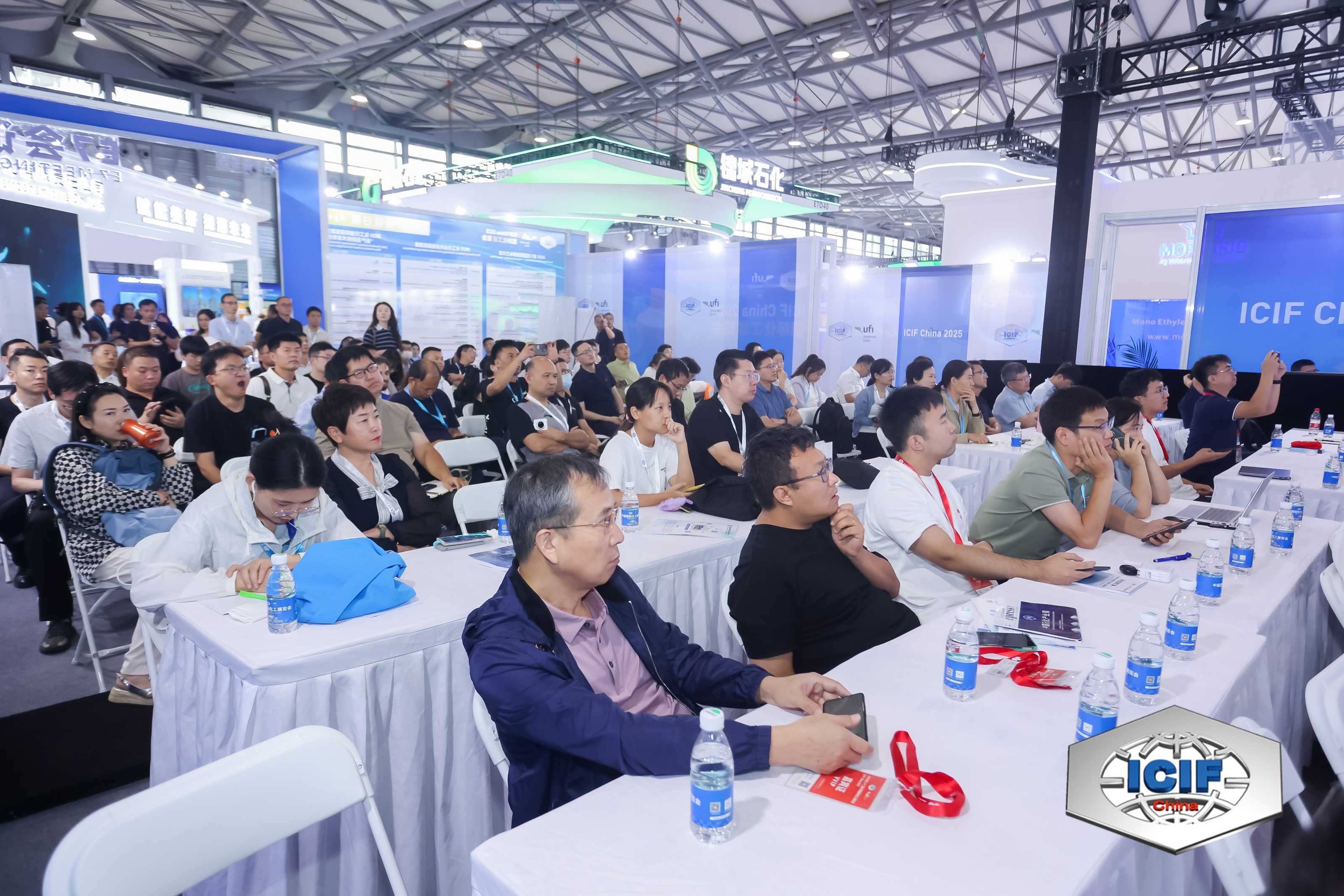
Petrochemical plants are rethinking waste streams not as endpoints but as starting materials. By integrating circular economy principles, off-gases, spent catalysts, and polymer residues are captured and reprocessed into valuable feedstocks. Advanced cracking technologies now convert mixed plastic waste back into naphtha-range hydrocarbons, closing the loop between disposal and production. This shift moves the industry from linear consumption to a regenerative model where byproducts fuel new chemical cycles.
Refineries are coupling with chemical recycling facilities to synchronize material flows. For instance, pyrolysis oils derived from post-consumer plastics are co-fed into steam crackers alongside conventional feedstocks, displacing virgin fossil resources. Meanwhile, solvent-based purification recovers monomers from multi-layer packaging, preserving polymer quality without downcycling. These integrated hubs reduce reliance on incineration and landfilling, transforming regional waste into locally sourced chemical building blocks.
Value creation extends beyond material recovery to include carbon utilization. Carbon capture systems channel CO2 from process emissions into methanol synthesis or mineralization for construction aggregates. Digital platforms now track material provenance, allowing downstream buyers to verify recycled content and incentivizing responsible sourcing. This systemic approach turns circularity into a competitive edge, where every waste molecule becomes a revenue opportunity aligned with decarbonization goals.
Digital Twins and AI: Revolutionizing Plant Operations
Imagine a control room where every valve, pump, and heat exchanger has a living digital counterpart. These aren’t static simulations but dynamic models that breathe with real-time data—constantly mirroring the physical plant. Pair that with AI that doesn’t just crunch numbers but understands patterns like a seasoned operator, and you start to see why the old boundaries of efficiency are being redrawn.
The real magic happens when these twins stop being passive mirrors and start being proactive partners. By feeding AI with centuries of operational history in seconds, plants can now predict a bearing failure before it hums its last tune, or tweak a catalyst cycle to save millions while nobody’s watching. It’s not about replacing the human touch—it’s about giving engineers a sixth sense for what’s about to break, or where the next performance leap is hiding in plain sight.
What often goes unsaid is how this duo reshapes the mundane. Shift logs become obsolete when the twin captures every whisper of a turbine’s health. Training stops being a PowerPoint ordeal and turns into a sandbox where failures can be triggered without real-world consequences. In the long run, it’s those small, accumulated nudges—not just the grand overhauls—that turn a conventional plant into something that learns, adapts, and quietly outperforms its spec sheet.
Bio-based Feedstocks: The Rise of Green Chemistry
The shift toward bio-based feedstocks marks a decisive turn in modern manufacturing, driven by the need to reduce reliance on finite fossil resources. Unlike petroleum-derived inputs, these renewable materials—ranging from agricultural residues and forestry byproducts to algae and organic waste—offer a way to produce chemicals with a lighter environmental footprint. What makes this transition particularly compelling is not just the renewable origin, but the potential to redesign entire supply chains around materials that can be replenished within a human timescale, rather than geological ages.
Green chemistry has risen alongside this feedstock evolution, championing principles that go beyond simple substitution. It demands that processes be inherently safer, less wasteful, and energy-efficient from the start. By applying these tenets, bio-based routes often sidestep the toxic intermediates and harsh conditions typical of conventional synthesis. For instance, enzymatic reactions at ambient temperatures can replace high-pressure, metal-catalyzed steps, trimming both energy use and hazardous byproducts. This holistic approach is reshaping how industries think about molecular design—embedding sustainability not as an afterthought, but as a core criterion.
Real-world adoption is gaining momentum across sectors. Bio-based succinic acid now competes with its petrochemical counterpart in polyurethanes and coatings, while lignin-derived aromatics are edging into epoxy resins and adhesives. Even high-volume solvents like ethyl lactate are carving out niches in paints and cleaners, proving that performance need not be sacrificed. These examples hint at a future where industrial chemistry is no longer tethered to crude oil—a future built on feedstocks that grow, rather than ones that are extracted.
Advanced Recycling Technologies: Unlocking Plastic's Full Potential
Traditional mechanical recycling can only go so far—mixed, contaminated, or multilayered plastics often end up in landfills or incinerators. Advanced recycling technologies are changing that narrative by breaking polymers down to their molecular building blocks. Processes like pyrolysis, gasification, and chemical depolymerization convert hard-to-recycle waste into virgin-quality feedstocks, enabling a truly circular lifecycle for plastics that were once considered unrecyclable.
What sets these methods apart is their ability to preserve material value across multiple cycles. Unlike mechanical grinding, which gradually degrades polymer chains, chemical recycling can regenerate monomers identical to those derived from petroleum. This means food-grade packaging, medical equipment, and automotive components can be produced from post-consumer waste without compromising performance. The technology not only diverts plastic from oceans and soil but also slashes the carbon footprint of new plastic production by displacing fossil resources.
The real breakthrough lies in integration. Advanced recycling doesn't compete with mechanical systems—it complements them. By handling the 40% of plastic waste that conventional plants reject, these technologies fill a critical gap. Pilot facilities are already scaling up, with solvent-based purification and enzymatic depolymerization showing commercial promise. As collection infrastructure improves and policy incentives align, we're not just managing plastic waste; we're unlocking a global resource stream that keeps carbon in circulation for decades.
Carbon Capture and Utilization: Turning Emissions into Opportunity
The conversation around carbon emissions often centers on reduction, but a parallel pathway is gaining momentum: capturing carbon dioxide before it reaches the atmosphere and transforming it into valuable products. This shift reframes CO₂ from a waste problem into a feedstock for industry. From concrete that mineralizes captured carbon for strength, to synthetic fuels that recycle emissions into energy, the practical applications are expanding beyond niche research.
One standout approach involves using captured CO₂ to create polymers and chemicals, reducing reliance on fossil feedstocks. Companies are now producing plastics, foams, and even textiles with a lighter carbon footprint, closing a loop that used to leak into the atmosphere. Meanwhile, agricultural innovations harness CO₂ to boost greenhouse crop yields, turning a pollutant into a growth enhancer without synthetic chemicals.
The economic logic is becoming harder to ignore as policy incentives and market demand for low-carbon goods grow. Instead of burying CO₂ deep underground indefinitely, utilization creates revenue streams that can offset capture costs. Yet scaling these technologies demands careful energy accounting—if the conversion process itself creates more emissions than it traps, the promise evaporates. Still, with thoughtful integration, carbon capture and utilization offers a tangible way to weave climate action into the fabric of everyday products.
FAQ
It covers the processing and conversion of basic petrochemical feedstocks into finished products like plastics, synthetic fibers, solvents, and fertilizers. This segment is closest to end consumers and turns raw materials from upstream operations into practical everyday items.
Advanced catalysts are enabling more efficient chemical reactions, while digital twin simulations and AI-driven process control are optimizing plant operations. Innovations in membrane separation and bio-based feedstocks are also reshaping production methods.
Companies are actively shifting toward circular economy models, emphasizing mechanical and chemical recycling. Many events now feature dedicated tracks on reducing carbon footprints, developing biodegradable polymers, and aligning with net-zero commitments.
They act as catalysts for cross-sector partnerships, allowing technology providers, plant operators, and researchers to exchange pilot project results and co-develop scalable solutions. Face-to-face demos often spark collaborations that might not emerge from remote communication.
Southeast Asia, India, and the Middle East are seeing massive capacity expansions due to rising domestic demand for packaging and construction materials. These regions are also leapfrogging older technologies by adopting newer, more efficient processes from the start.
One standout is the use of blockchain for tracing recycled content in polyolefin supply chains. This transparency tool, demonstrated at the last Gulf Petrochemicals and Chemicals Association forum, helps brand owners verify sustainability claims and build consumer trust.
Conclusion
The downstream petrochemical sector is undergoing a profound transformation, driven by the urgent need to reconcile industrial output with environmental responsibility. A key shift is the growing feedstock flexibility, as producers pivot from traditional naphtha to lighter ethane, bio-based alternatives, and even recycled feedstocks, cushioning themselves against crude oil volatility. This adaptability converges with the circular economy's ascent—waste plastics are no longer an end-of-life liability but a valuable resource, thanks to advanced recycling technologies that break polymers down to their molecular building blocks. Concurrently, carbon capture and utilization is turning effluent streams into feedstock for chemicals, closing the carbon loop in ways unthinkable a decade ago. Digital twins and AI are the silent orchestrators, optimizing every step from cracking to polymer extrusion, slashing energy use and downtime. Meanwhile, the rise of green chemistry is fostering bio-based routes to monomers and polymers, carving a path toward a genuinely low-carbon future. These innovations are not siloed experiments; they are converging to redefine plant operations, product portfolios, and the industry's license to operate in a carbon-constrained world.
Collectively, these trends illustrate an industry making a decisive break from its linear, fossil-dependent legacy. By embracing hybrid feedstocks, intelligent operations, and waste-to-value loops, downstream players are forging a resilient, net-zero-ready ecosystem. The events unfolding today signal that the petrochemical landscape of tomorrow will be built on agility, circularity, and sustainable chemistry, positioning the sector to thrive amid tightening regulations and shifting consumer expectations.
Contact Us
Contact Person: Shaozhen Zhou
Email: [email protected]
Tel/WhatsApp: 0086-18612117599
Website: https://en.icif.cn/