

Corn Curls Cheetos Chips Extruder Machine Factory: A Behind-the-Scenes Look at Snack Production
2026-07-22
Ever wondered how those airy, crunchy corn curls and Cheetos come to life? Step inside the world of high-tech snack production, where precision engineering meets irresistible taste. At MINGDE, we craft the machines that turn simple cornmeal into the puffed, curly treats you can't stop munching. This behind-the-scenes look reveals the innovation and craftsmanship that power every bite—and why MINGDE is the name trusted by factories worldwide.
Inside the Factory Where Cheetos Take Shape
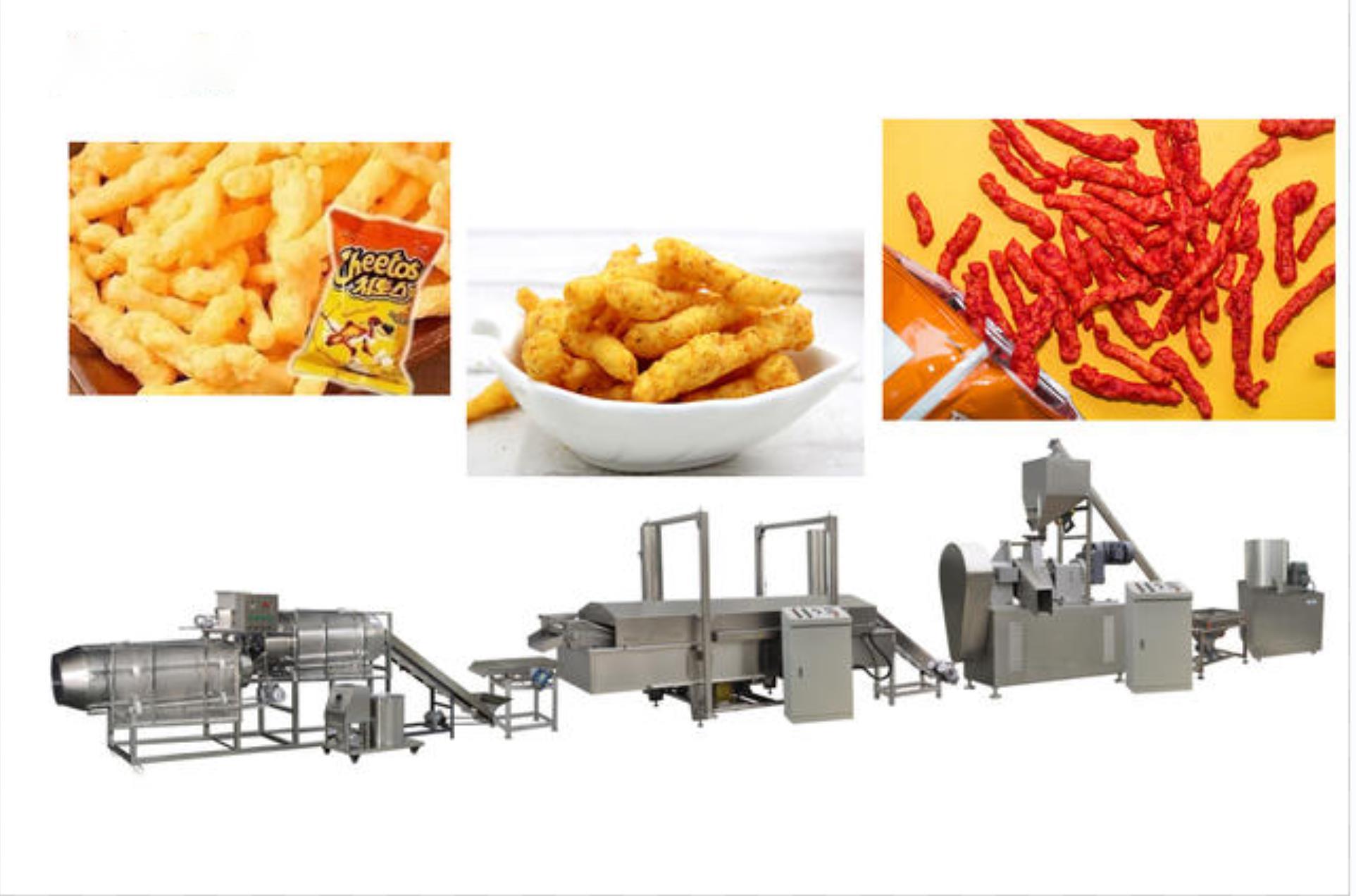
Walking through the factory floor, the first thing that hits you is the warm, earthy aroma of cornmeal being transformed under intense pressure. Vast hoppers feed a steady stream of golden grits into hulking extruders, where heat and friction work together to gelatinize the starch in seconds. The real magic happens at the die plate—a thick metal disc riddled with precisely machined holes. As the dough bursts through, it expands instantly into those familiar, knobby curls. A set of rotating knives slices each noodle at just the right length, sending the still-soft pieces tumbling onto a conveyor in a noisy, chaotic dance.
Freshly formed, the Cheetos are nothing like the crunchy snacks we know. They’re puffy, delicate, and still damp from internal steam. Immediately, they enter a cavernous dryer that roars like a jet engine, tumbling the pieces through blasts of hot air until their moisture drops to exactly the right level. From there, they take a ride on a vibrating conveyor that shakes off any broken bits before the real personality injection: the seasoning tumble. A curtain of bright orange powder cascades down as the Cheetos somersault through a long rotating drum, emerging completely coated in that iconic cheesy dust.
Quality control here is relentless. Workers stationed along the line grab handfuls at random, checking for color consistency, texture, and that unmistakable crunch. Automated scales weigh each batch, while metal detectors and optical sorters scan for imperfections at speeds that blur the eye. Wandering through the packaging hall, you see the final product racing into bags, each one inflated with just enough nitrogen to keep the Cheetos from turning into crumbs during their journey to store shelves—a perfectly engineered balance of chaos and precision from raw corn to finger-staining snack.
The Science Behind That Perfect Crunch
The satisfying crackle you hear when biting into a crispy snack isn’t just a happy accident—it’s a carefully orchestrated union of physics and food chemistry. At its core, crunchiness stems from the rapid fracture of rigid, brittle structures within foods. These structures often contain tiny air pockets or layers of starch, protein, or sugar that have been dehydrated or expanded through cooking. When pressure from your teeth causes these walls to snap abruptly, the sudden release of stored mechanical energy creates sound waves that travel through your skull to your inner ear, amplifying the sensation. The wetter and softer the surrounding matrix, the sharper the contrast—think of a potato chip’s glass-like snap or the crackle of a fried wonton.
Moisture content is the arch-nemesis of a good crunch. Even subtle humidity can transform a brittle matrix into a leathery disappointment because water molecules act like tiny plasticizers, slipping between polymer chains and allowing them to deform instead of shatter. This is why crisp foods are often coated in hydrophobic fats or double-fried—the Maillard reaction and caramelization create a moisture-resistant outer shell that temporarily guards against sogginess. Temperature also plays a role: hot, freshly fried foods feel crunchier because the heat partially dries your mouth’s surfaces, sharpening the contrast. Mastering these variables is a form of edible engineering, where chefs and food scientists tweak drying curves and fracture mechanics to design that fleeting, sensorially explosive moment between the first bite and the melt.
Modern gastronomy takes crunch a step further by playing with structural geometry. The thickness and curvature of a chip, the randomness of a brittle’s shatter pattern, or the layered micro-porosity of a cracker all dictate how sound frequencies travel and how our brains interpret “crispness.” Some manufacturers even use acoustic analysis to quantify the decibel profile of an ideal snap, aligning it with consumer expectations. Yet for all this precision, the experience remains deeply personal—your own bone conduction pathway and dental shape color the perception uniquely. So that perfect crunch is less a universal standard and more a momentary, multisensory magic trick conjured by science, tailored for your ears alone.
From Raw Cornmeal to Golden Curls
The transformation begins with coarse cornmeal, mixed into a thick dough that's forced through tiny holes under immense pressure. As the ribbons of dough hit the hot oil, they instantly puff and spiral, taking on those signature golden curls. The sizzle and crackle tell you something magical is happening—what was once humble grain is now a crispy, airy snack.
Temperature and timing are everything. Too cool, and the curls absorb too much grease, turning heavy and limp. Too hot, and they scorch on the outside while staying raw within. Skilled makers know the sweet spot by sight and sound, adjusting the flame to keep the curls uniformly golden, with just the right crunch that shatters between your teeth.
Once drained and cooled, the curls are showered with seasonings that cling to every ridge and crevice. Whether it's a dusting of salt, a cloak of cinnamon sugar, or a fiery chili-lime blend, the crisp curls are ready to be piled high—simple ingredients turned street-side treasure through heat, motion, and a touch of patience.
How Quality Checks Keep Every Bite Consistent
From sourcing ingredients to final packaging, every step is scrutinized. We don’t just taste-test once—our team checks texture, aroma, and flavor at multiple stages. Raw materials undergo rigorous screening before they even enter the kitchen, and recipes are followed with scientific precision. This layered approach means that a bite taken in Tokyo tastes exactly like one in Toronto, no matter the season.
Consistency isn’t about being robotic; it’s about nailing the details. Our production line uses calibrated equipment paired with sensory panels of trained chefs who notice if the crunch isn’t right or the spice blend has shifted. Real-time adjustments happen on the spot, not days later. That’s why your favorite dish never feels off—because behind every serving is a system that treats flavor as a promise, not a probability.
Batch records and daily audits create a feedback loop that catches drift before it becomes a problem. We track everything from frying temperatures to resting times, building a flavor fingerprint for each product. If something strays by even a hair, the batch is pulled and corrected. It’s obsessive, but that’s the point. When you bite into our food, you’re tasting the result of thousands of small checks that most people will never see—they just know it’s consistently delicious.
Machinery Innovations That Power Snack Production
Modern snack production lines have come a long way from the manual, labor-intensive processes of the past. Today, a suite of interconnected machinery forms the backbone of high-volume output, with each piece playing a critical role in transforming raw ingredients into perfectly seasoned, ready-to-eat treats. From precision dough sheeters that ensure uniform thickness across every cracker to continuous fryers that maintain exact oil temperatures for consistent crispiness, these systems work in harmony. Advanced extruders can shape and cook everything from puffed corn snacks to protein-packed chips in a single step, while multi-head weighers portion each bag with remarkable accuracy, minimizing waste and maximizing efficiency.
One of the most transformative shifts has been the integration of intelligent control systems. Sensors and real-time monitoring now allow operators to adjust parameters on the fly, compensating for variations in ingredient moisture or ambient conditions. Machine learning algorithms begin to predict optimal settings, reducing startup time and cutting down on substandard product. Vision inspection systems equipped with high-speed cameras identify and reject misshapen snacks or those with off-color spots, ensuring only the best pieces move forward to seasoning and packaging. This level of oversight not only boosts quality but also slashes giveaway rates, directly impacting the bottom line.
Looking ahead, the snack machinery landscape is being reshaped by sustainability and flexibility. Manufacturers are designing equipment that handles alternative proteins and plant-based ingredients without cross-contamination, catering to shifting consumer demands. Energy-efficient motors and heat recovery systems are becoming standard, lowering operational costs while shrinking environmental footprints. Perhaps most exciting is the rise of modular machine platforms that can be swiftly reconfigured to switch between product formats—say, from ridged chips to tortilla rounds—without lengthy changeovers. This agility empowers brands to experiment with limited-edition flavors and respond rapidly to market trends, turning production lines into engines of innovation rather than just tools of repetition.
The Secret Ingredients That Make Cheetos So Addictive
Dig into a bag of Cheetos and it’s almost impossible to stop at just one handful. The crunch hits first, a delicate but distinct shatter that dissolves into a powdery, savory coating. That coating is where the magic really happens. It’s a carefully engineered mix of salt, fat, and umami—often from monosodium glutamate, yeast extract, and hydrolyzed proteins—that fires up multiple pleasure centers in the brain at once. Pair that with a light, airy texture derived from cornmeal that’s been puffed and fried, and you get a snack that practically disappears on the tongue, leaving behind nothing but the urge for more.
Beyond basic flavor, the recipe leverages what food scientists call “vanishing caloric density.” Because Cheetos melt so quickly in your mouth, your brain gets tricked into thinking you’ve consumed fewer calories than you actually have, dialing down the natural satiety signals that would normally tell you to stop eating. The bright orange dust—a combination of real cheese, whey, and colorants like annatto—adds a visual cue of richness, while the powdery residue on your fingers reinforces the experience through texture and ritual. It’s a multisensory loop designed to keep your hand moving back and forth from bag to mouth.
There’s also a subtle interplay of sweet and salty notes that keeps your palate guessing. While you might not consciously register the sweetness, a touch of sugar or dextrose in the seasoning blend balances the salt and sharp cheese tang, creating a moreish quality that doesn’t fatigue the taste buds. This carefully calibrated ratio, combined with the snack’s melt-in-your-mouth architecture, forms a kind of hedonistic feedback loop. Every bite delivers an immediate burst of gratification that almost instantly dissolves, prompting you to reach for the next one in pursuit of that same fleeting hit.
FAQ
It cooks, shapes, and textures the dough all in one go. For corn curls and Cheetos, it forces moistened cornmeal through a die under high pressure and heat, which makes the snack puff up instantly when it exits.
The secret is in the extrusion conditions—mainly temperature, pressure, and moisture. When the superheated dough hits normal air, water flashes into steam, creating that airy, crunchy structure. Slight tweaks to the die and cutting speed give each snack its unique feel.
The core ingredient is degermed cornmeal, often mixed with water, oil, and flavorings. Depending on the desired taste, the recipe may include cheese powder, salt, or other seasonings added right before or after extrusion.
It starts with mixing the dry ingredients and precisely metering in water. The moist mixture feeds into the extruder, where rotating screws cook and propel it toward the die. As the rope of puffed corn comes out, a rotary knife slices it into curls or balls. They’re then dried, sometimes fried or baked, and finally coated with seasonings before packaging.
A good machine offers precise control over screw speed, barrel temperature, and moisture—letting operators dial in the exact texture and shape. Durability and easy cleaning matter a lot too, since snag production often runs 24/7. Some advanced models even allow quick die changes to switch between curl sizes or shapes without long downtimes.
It’s a combination of automated sensors, regular sampling, and strict recipe management. Temperature probes and moisture meters feed data back to the extruder’s control system, which adjusts on the fly. Teams also manually check texture and color at set intervals to catch anything the sensors might miss.
Corn curls get their signature twist from a specially designed die and a high‑speed cutter that spins as the dough exits. The curvature isn’t accidental—the die slots are angled, and the cutter’s motion creates a slight hook. For Cheetos‑style puffs, the die holes are simpler, and the cut happens straight across for a more uniform shape.
It’s often a behind‑the‑brand operation, producing bulk snacks that other companies package under their own labels. These factories supply everything from store‑brand cheese curls to niche, high‑protein puffs. They act as innovation hubs too, testing new shapes and flavors before they hit supermarket shelves.
Conclusion
Stepping inside the Cheetos extruder machine factory feels like entering a world where precise engineering meets snack-time joy. Rows of stainless steel extruders hum steadily, transforming raw cornmeal into the iconic golden curls that fans crave. The journey begins with carefully selected cornmeal, mixed with water and a blend of seasonings that give Cheetos their signature flavor—a guarded combination of cheese powders, salt, and umami enhancers that spark that addictive quality. Under high pressure and heat, the dough is forced through specially designed dies, where it puffs instantly into light, airy spirals. It’s a delicate dance of moisture, temperature, and timing, honed by food scientists who obsess over achieving the perfect crunch—crisp enough to shatter satisfyingly but not so hard that it loses its melt-in-the-mouth feel.
Quality checks happen continuously along the line, with sensors and trained staff examining color, size, and texture to ensure every piece meets strict consistency standards. Any curl that falls outside the narrow specification is diverted for reprocessing, keeping waste minimal. What truly sets this factory apart is its machinery innovations: automated systems adjust in real time to slight variations in raw ingredients, and hygienic design simplifies cleaning, making production faster and safer. From mixing to packaging, the process is a testament to how modern engineering supports large-scale snack production without sacrificing the simple pleasure of a Cheetos curl. The secret might just be that perfect balance of science, machinery, and a dash of indulgence.
Contact Us
Contact Person: LILY SUN
Email: [email protected]
Tel/WhatsApp: 0086-13969103791
Website: https://www.snackfoodmachinery.com/