

China HVAC Fan Motor Innovations Driving Global Comfort and Efficiency
2026-11-16
A quiet revolution is reshaping the way the world cools and ventilates—and it’s coming from China. At the heart of today’s most energy-efficient HVAC systems, a new generation of fan motors is pushing boundaries in silent operation, intelligent control, and lasting durability. Among the pioneers driving this shift, Retek is turning bold engineering into real-world comfort, one precisely balanced rotor at a time. So what exactly sets these next-generation motors apart, and why are global OEMs paying close attention? This post unpacks the innovation story redefining indoor climates everywhere.
Redefining Airflow with Advanced Brushless DC Motors
The quiet hum of a modern fan barely hints at the engineering leap happening inside. Advanced brushless DC motors have turned airflow management from a brute-force task into a refined art. Instead of relying on older brushed designs that waste energy as heat and friction, these motors use intelligent electronic controllers to constantly adjust magnetic fields. The result is a stream of air that can shift from an imperceptible whisper to a brisk, room-filling breeze without the abrupt surges or mechanical whine we’ve learned to tolerate. It’s an invisible upgrade, until you notice how evenly temperature settles across the room.
What makes this redefinition possible is the way the motor interacts with its surroundings. Sensors track backpressure, thermal load, and rotational speed dozens of times per second, allowing the system to compensate before the user ever feels a draft or a hot spot. Air no longer blasts through a single pathway—it is shaped, guided, and softened through impeller geometries that would have been impractical with less responsive drives. The motor becomes a central nervous system for the appliance, learning the rhythm of a room rather than simply running at two or three fixed speeds.
That same precision also changes how we perceive noise. Without commutator brushes scraping and sparking, the dominant sounds drop into lower, less intrusive frequencies. Engineers can then tune the remaining airflow signature, dampening the whistles and hollow tones that cheap fans carry. The quiet isn’t just a marketing claim; it’s a deliberate acoustic outcome of a motor that spins smoothly from a near standstill all the way to its peak. In that silence, airflow becomes something you feel and inhabit, not something you hear—redefining what comfort actually means in living spaces, data centers, and cleanrooms alike.
Silent Performance Gains from Precision Rotor Balancing
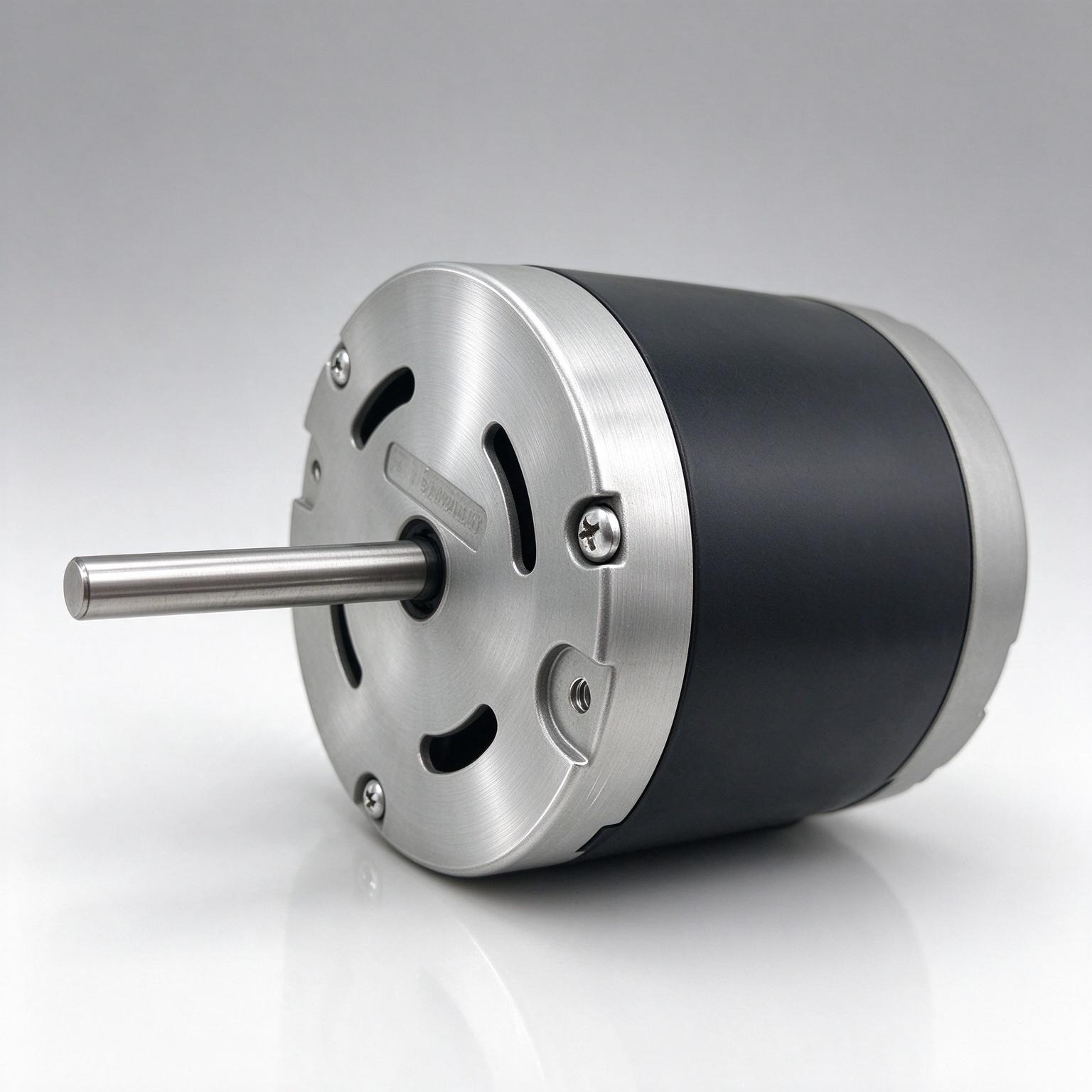
The quiet hum of a well-tuned engine often goes unnoticed, but it’s the direct result of precision rotor balancing. When every component spins in near-perfect equilibrium, the micro-vibrations that sew noise and drag into the system simply fade. This isn't about chasing theoretical perfection—it's about shaving off those subtle disruptions that build up over hours of operation, turning what could be a fatiguing drone into a smooth, almost silent performance uplift.
Mechanics tend to focus on horsepower gains or component longevity, overlooking the fact that imbalance steals energy in the form of heat and sound. A rotor that’s out by just a few grams can excite sympathetic frequencies in the housing, making an assembly sound louder and feel rougher than it actually is. Proper balancing shifts the resonant point away from normal operating ranges, so the machine doesn't fight itself. The result is more power reaching the output shaft and a cabin that feels surprisingly settled.
There’s a feedback loop at play too: less vibration means less wear on bearings, seals, and mounts, which in turn maintains alignment and balance over a longer service life. It’s a gain that compounds silently with every revolution. Instead of chasing down noise complaints or premature part failures, technicians who invest in precise balancing upfront find their equipment just works better—quieter, cooler, and with a refinement that parts catalogs never mention.
Smart Motors Adapting to Real-Time Thermal Loads
When a motor runs harder, it gets hotter. Traditional designs treat thermal limits as a fixed wall—if you hit it, you stop. Smart motors flip that logic by reading temperature, current, and even predicted load changes on the fly. They don’t just shut down; they reshape their own performance curve moment by moment, pulling back torque or adjusting switching frequencies to shed heat without losing meaningful work. It’s a continuous conversation between physics and firmware, letting the motor run right up against its true limit instead of a worst-case assumption.
This real-time adaptation matters most in environments where load swings are unpredictable—think robotic joints grabbing unknown weights, or a conveyor that might suddenly pile up material. Instead of derating the motor for a scenario that happens 2% of the time, the drive logic watches temperature rise and subtly dials back peak current only when it’s actually needed. The result is more throughput, less downtime, and a motor that feels almost intuitive, like it understands the difference between a brief surge and a genuine overload.
Integrating this kind of thermal agility means rethinking protection, too. Rather than tripping on a single sensor threshold, the control algorithm fuses data from multiple points—winding sensors, ambient air, bearing temperature, even modeling the thermal time constants of copper and iron. It can decide, for instance, to tolerate a short spike because the stator mass hasn’t saturated yet, or proactively cool down by modulating a fan ahead of a known heavy cycle. That shift from reactive shutoff to graceful management quietly extends the life of insulation and bearings, often by years, simply because the motor never pushes itself into a corner it can’t back out of.
Eco-Friendly Designs Reducing Energy Waste Worldwide
Around the globe, architects and engineers are quietly reshaping how buildings consume energy. Rather than relying solely on complex mechanical systems, many are turning to passive design principles that take advantage of natural light, airflow, and thermal mass. For example, orientation-specific window placements and shading overhangs can reduce the need for artificial cooling by harnessing prevailing breezes and blocking harsh midday sun. This return to context-sensitive design is not just about cutting kilowatt-hours—it’s about creating spaces that feel naturally comfortable while leaving a lighter touch on the grid.
Material innovation is playing an equally critical role in slashing energy waste. From phase-change materials embedded in walls that absorb and release heat throughout the day, to high-performance aerogel insulation thinner than a wool sweater but far more effective, the focus has shifted toward smarter building envelopes. Smart glass that tints automatically in response to sunlight intensity is eliminating the need for blinds and cutting cooling loads in office towers. These technologies are moving out of the lab and into everyday construction, turning homes and workplaces into active participants in energy conservation rather than passive consumers.
Beyond individual buildings, community-scale projects are proving that eco-friendly design can thrive when systems thinking is applied. District heating networks that capture waste warmth from data centers or industrial processes, coupled with neighborhood-scale battery storage, allow residential blocks to share energy resources dynamically. Meanwhile, rooftop gardens and green corridors don’t just provide insulation—they mitigate the urban heat island effect, indirectly lowering air conditioning demand across entire postcodes. By redesigning how energy flows through the built environment, these strategies show that reducing waste isn’t about sacrifice, but about weaving efficiency into the fabric of everyday life.
How Integrated IoT Controls Extend System Lifespan
When components are equipped with integrated IoT sensors, the system no longer relies on fixed maintenance schedules. Instead, it continuously reads subtle shifts in vibration, temperature, and power draw, flagging only the parts that actually need attention. This precision prevents unnecessary servicing that can introduce errors, and catches wear before it cascades into a major failure—directly stretching the operational life of machinery.
Real-time data also lets the system adjust its own working parameters on the fly. A motor running slightly hotter than normal can be automatically throttled back, or a pump facing unusual resistance can change its cycle timing, avoiding stress that accumulates over years. This self-tuning behavior keeps components within their ideal operating envelope, dramatically reducing the fatigue that leads to early replacement.
The less obvious longevity gain comes from eliminating blind spots. With integrated controls, environmental factors like humidity spikes or voltage fluctuations are detected and compensated for long before they cause corrosion or electrical damage. Operators see a complete picture, not just isolated alarms, which helps them prioritize small fixes today instead of facing a catastrophic, system-wide rebuild tomorrow.
Crafting Reliable Comfort for Extreme Climate Zones
Designing for extreme climates means treating comfort not as a luxury, but as a precision tool. In regions where temperatures can swing from blistering heat to bone-chilling cold within hours, the margin for error vanishes. Every material, seal, and insulation layer must work in concert to create a steady indoor environment—one that remains untouched by the chaos outside. This isn't just about keeping the heat in or out; it's about crafting a living space that feels instinctively right, no matter what the thermometer reads.
Reliability in these zones hinges on redundancy and rigorous testing that goes far beyond standard building codes. We integrate multiple fail-safes: backup heating sources that kick in silently, ventilation systems that adjust air exchange rates based on real-time humidity, and structural solutions designed to handle thermal expansion without compromising airtightness. The goal isn't simply to survive a harsh winter or a scorching summer, but to ensure that decades from now, the inhabitants feel the same unwavering comfort they did on day one.
What sets truly dependable design apart is how it disappears into daily life. The systems become invisible—no cold drafts sneaking past window frames, no sudden temperature drops in the hallway, no dry air that irritates the skin. It’s achieved through obsessive attention to the building envelope and on-site craftsmanship that leaves nothing to chance. When done right, the result feels effortless, as though the home itself understands what you need before you do.
FAQ
Recent advances center on electronically commutated (EC) motors with integrated smart controls, permanent magnet synchronous motor (PMSM) technology scaled for residential and commercial units, and ultra-thin axial flux configurations that pack higher torque into compact housings. Chinese R&D teams have also cracked the challenge of wide-range sensorless field-oriented control, letting motors adapt seamlessly to duct pressure shifts.
The motors deliver near-silent operation below 20 dB(A) and finer speed modulation—some units offer stepless adjustment from 0 to 100%—which eliminates abrupt temperature swings and drafts. Predictive algorithms built into motor drives can pre-empt airflow changes, maintaining a steadier indoor climate even as external conditions fluctuate.
Manufacturers are achieving IE5 and ultra-premium efficiency tiers by combining grain-oriented silicon steel laminations with hairpin windings and optimized rare-earth magnet circuits. In practice, a modern EC fan motor from China can cut HVAC fan energy consumption by up to 70% compared to traditional shaded-pole or PSC motors, directly lowering whole-building power loads.
Many units now ship with embedded Bluetooth or Wi-Fi modules and CAN/Modbus interfaces that feed real-time performance data to building management systems. This enables predictive maintenance alerts—like bearing wear detection—and automatic commissioning that matches motor curves to ductwork characteristics without manual tuning.
Beyond cost competitiveness, Chinese suppliers have shortened development cycles dramatically, often prototyping custom motor designs within weeks. They also offer vertically integrated production—stamping, winding, magnet bonding, and PCB assembly under one roof—which ensures consistent quality and faster scalability for global OEMs.
When millions of units are deployed, the cumulative effect is massive; every 10% efficiency gain in a mid-range fan motor avoids roughly 15-25 kilograms of CO₂ per unit annually. Chinese factories are also pushing the use of recycled magnets and biodegradable insulation materials, reducing lifecycle environmental footprint.
Expect wider adoption of gallium nitride (GaN) power stages for even lower drive losses, magnet-free synchronous reluctance designs that eliminate rare-earth dependency, and digital twin simulations that let manufacturers validate motor performance against actual climate data of the installation city before production.
Advanced sealing techniques—vacuum impregnation with Class H varnish, IP66-rated encapsulated electronics, and corrosion-resistant bearings—are tested in accelerated life chambers mimicking salt mist, sandstorms, and 95% humidity. Field data from millions of units running in the Middle East, Southeast Asia, and South Asia validate that these motors can exceed 60,000 hours of maintenance-free operation.
Conclusion
China’s HVAC fan motor sector has quietly shifted from a low-cost supplier to an innovation driver, reshaping indoor climates across the globe. The shift begins with advanced brushless DC motors that completely rethink airflow delivery, using digitally controlled commutation to eliminate the friction and electrical noise inherent in older AC designs. This same pursuit of refinement extends into what you hear—or rather, what you don’t hear. Engineers have achieved near-silent performance through precision rotor balancing that removes even micron-level vibrations, a detail that turns a commercial building’s ventilation from a constant hum into a barely noticeable presence. These hardware leaps are matched by a growing focus on eco-friendly design. New fan motors incorporate optimized magnetic circuits and low-loss laminations that slash idle power draw, meaning that the energy waste once accepted as normal in ventilation systems is now being engineered out at the component stage. Together, these advances deliver an immediate gain: systems that move more air with less electricity, all while operating so quietly that occupants forget they exist.
But the real story of China's HVAC motor evolution isn’t just about better hardware; it’s about intelligence woven into every rotation. Smart motors now continuously read real-time thermal loads—from a sudden influx of sunlight to a packed conference room—and adjust their speed and torque instantly, avoiding the chilled drafts and wasted energy of stop-start cooling. This adaptive logic becomes even more powerful when paired with integrated IoT controls that track each motor’s health, flagging bearing wear or rising current draws months before a failure would occur, effectively extending the system’s lifespan without scheduled downtime. The attention to extremes is equally striking. Engineers are crafting fan units specifically validated for brutal climate zones, from salt-heavy coastal air that corrodes standard alloys to sub-zero cold starts that challenge lubricants and electronics. In these demanding environments, reliability isn’t a warranty term—it’s a daily vindication of design choices that keep server farms, hospitals, and factories running no matter what the thermometer reads. What emerges is a coherent picture: China’s fan motor innovations are no longer discrete components being shipped in bulk, but fundamental building blocks for global comfort that feels effortless and efficiency that runs deep.
Contact Us
Contact Person: Sean
Email: [email protected]
Tel/WhatsApp: +86-13338694967
Website: https://www.retekmotion.com