

China Grinding Machine Supplier: Your Guide to Precision and Reliability
2026-05-20
In the demanding world of manufacturing, even the slightest deviation can spell disaster. You need more than just a grinding machine—you need a partner that guarantees precision and unwavering reliability. But with countless suppliers vying for your attention, how do you cut through the noise? This guide peels back the layers of China’s industrial sector, spotlighting what truly matters. At the heart of this exploration lies WINNRUI CNC, a name synonymous with excellence in grinding solutions. Dive in to discover how the right choice can transform your operations.
Unpacking the Edge in Accuracy with Chinese Grinding Technology
Precision grinding in China has evolved far beyond basic material removal. It now embodies a blend of centuries-old metallurgical understanding and modern innovations in machine dynamics. Workshops integrating vibration-dampening granite beds with direct-drive spindles are achieving surface finishes that rival optical polishing, often at tolerances once deemed impractical for production environments.
A key differentiator lies in the adaptive control systems developed by domestic engineers. These systems leverage high-resolution acoustic emission sensors and sub-micron linear encoders to adjust wheel speed and feed in real time, compensating for thermal drift and wheel wear without interrupting the cycle. The result is not just dimensional accuracy but a consistent compressive stress profile on the workpiece surface, enhancing fatigue resistance in critical components.
Rather than pushing for a single universal solution, Chinese grinding specialists prioritize a materials-centric approach. Whether it’s diamond grinding of advanced ceramics for semiconductor tooling or creep-feed grinding of nickel alloys for turbine blades, the process parameters are tuned to the grain structure and fracture toughness of the stock. This tailored methodology delivers edge retention and form accuracy that directly translate into longer service intervals for the final product.
What Makes a Grinding Machine Supplier Truly Dependable
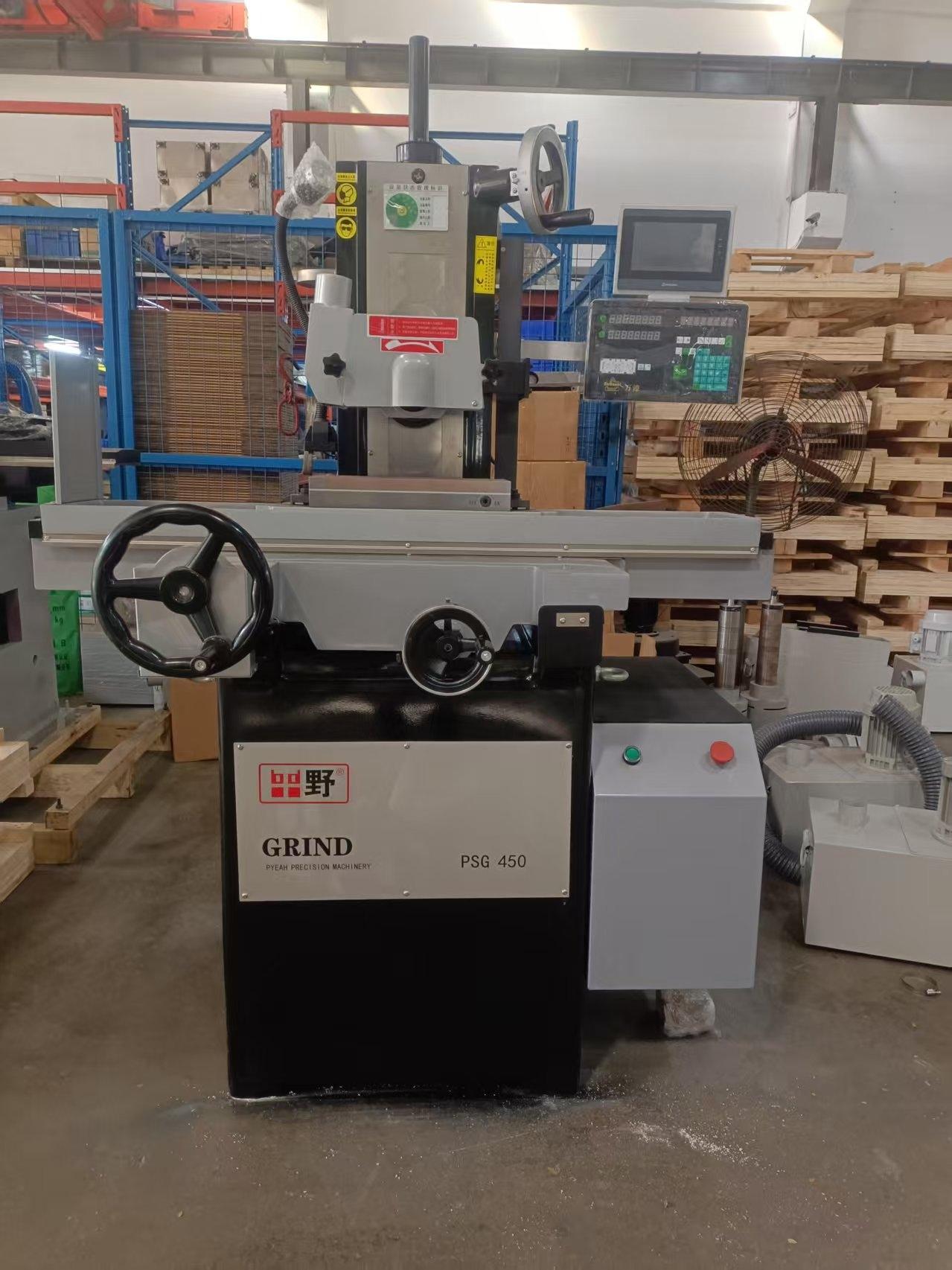
Dependability in a grinding machine supplier goes far beyond the initial sale. It starts with a proven track record of delivering machines that maintain precision under demanding conditions. A supplier worth their salt has deep engineering expertise, not just a catalog of specs. They understand how vibration, thermal drift, and tool wear interact in real-world production, and they design their equipment to mitigate these issues before they surface on your shop floor.
Another cornerstone is transparent, responsive support. When a machine goes down, you need more than a voicemail—you need a partner who treats your downtime as an emergency. This means having regional service teams that show up with diagnostic tools and critical spare parts, not just a willingness to troubleshoot over the phone. The best suppliers also maintain backward compatibility for older models, ensuring that a ten-year-old grinder can still be upgraded rather than scrapped.
Finally, a truly dependable supplier invests in your success long after installation. They offer training that goes beyond button-pushing, helping your operators understand the nuance of wheel dressing, coolant management, and surface finish optimization. They stay ahead of industry shifts—whether it’s new abrasive technologies or tighter tolerances for electric vehicle components—so your investment doesn’t become obsolete. This blend of technical depth, rapid support, and forward-thinking partnership is what separates a reliable vendor from a transactional one.
Behind the Scenes of Quality Control at Leading Workshops
Walking through the production floor of a top-tier workshop, you won't see flashy signs or hear grand claims about quality—instead, you'll notice quiet rituals. Technicians pause at each station, running fingers over seams, holding parts up to calibrated light sources, and jotting notes on worn clipboards. It's a blend of instinct honed over decades and rigorous checklists that nobody skips, no matter how tight the deadline. The atmosphere isn't tense, but there's an unspoken understanding that every pair of eyes is a gatekeeper.
In one corner, a senior craftsperson might be dismantling a randomly selected finished piece for a full autopsy, measuring tolerances with tools that cost more than a small car. Colleagues gather around, not because they have to, but because these sessions often spark debates about grain direction, adhesive curing times, or the subtle warp introduced by seasonal humidity. These conversations reshape tiny details in the workflow, often without a single memo being sent—just a shared nod and an updated jig the next morning.
Technology plays a supporting role, not the lead. Laser scanners and digital logs track consistency, but the real backbone is a culture where apprentices are taught to trust their senses before the readout. A faint chatter in a bearing or an almost imperceptible drag in a drawer slide might never flag on the automated report, yet it's exactly what gets flagged, discussed over coffee, and fixed before the next batch. That's where the magic happens—where human attention fills the gaps machines can't see.
Standout Traits of China’s Most Respected Equipment Makers
What sets the most admired equipment makers apart isn’t just their technical specs—it’s an almost obsessive relationship with precision. Walk into a factory run by one of these firms and you’ll find engineers arguing over micron-level deviations that most competitors would shrug off. One CNC machine builder, for instance, spent four years refining a spindle that could maintain thermal stability within two microns across a 16-hour shift, a feat their German counterparts considered excessive until they saw the finished product. That sort of patience is rare in markets driven by quarterly targets, but it defines the top tier.
Another unmistakable trait is how deeply they embed themselves in their customers’ operations. Instead of selling standard machines from a catalog, these companies send teams to live on factory floors, sometimes for months, to understand the specific rhythms and headaches of a production line. A packaging equipment manufacturer in Guangdong co-developed a bottle-filling system with a beverage company only after their engineers personally ran night shifts alongside the client’s operators. The resulting machine handled irregular bottle shapes without jams—a problem that had stumped bigger, more famous brands. This hands-on, almost proprietary approach turns transactions into partnerships that competitors find hard to replicate.
The final ingredient is a blend of old-school craftsmanship and a fearless embrace of digital tools. You’ll still see master toolmakers scrutinizing finishes with a loupe, yet the same workshop will be running real-time vibration analysis on a tablet to predict bearing wear weeks in advance. A textile machinery firm in Zhejiang, for example, uses AI-trained vision systems to inspect fabrics for flaws while their veteran weavers continue refining loom mechanisms based on tactile feedback alone. The most respected players don’t see a contradiction between tradition and data—they leverage both to make equipment that not only works flawlessly but evolves with the people who use it.
Smart Steps to Identify a Long-Term Machinery Partner
The search for a machinery partner isn't just about specs and price tags. It's a relationship that could shape your production for a decade or more. Start by looking beyond glossy brochures—dig into how suppliers handle unexpected breakdowns, whether they stock critical spares, and if their technicians actually understand your operational reality. A quick plant visit to an existing customer often reveals more than any sales presentation.
Pay close attention to how potential partners approach customization. Off-the-shelf solutions rarely fit perfectly, and a partner who shrugs at modifications or charges astronomical fees for small tweaks will become a bottleneck. Ask detailed questions: What was their most creative engineering solution for a client? How do they test modifications before installation? The answers separate order-takers from genuine collaborators.
Finally, look at long-term commitment signals. Check how many of their machine models from ten years ago still have active support lines. A partner that regularly sunsets older equipment or makes parts unreasonably expensive after a few years isn't thinking about your lifecycle costs. The right partner will have upgrade pathways, not just replacement pitches.
Real-World Performance: Where Precision Meets Production
In controlled environments, hitting benchmark numbers is straightforward. But factories, operating rooms, and logistics hubs don’t offer sterile conditions. Real-world performance means maintaining accuracy when vibrations, temperature swings, and unplanned variables try to push systems off course. It’s where algorithms stop being theoretical and start proving their worth on the floor.
Precision isn’t about chasing decimal points for their own sake. It’s about ensuring a robotic arm places a component within microns every single cycle, not just once. When that level of reliability meets the pace of production—where downtime isn’t an option—we’re talking about systems that adapt without human intervention. The real craft lies in seamless correction without disrupting the line.
Bringing this together means performance metrics that actually matter: throughput gains measured in real units, scrap reduction you can see in quarterly reports, and safety improvements captured by incident logs. It’s the kind of engineering that rewrites what operators consider acceptable, turning yesterday’s tolerances into today’s unacceptable variances.
FAQ
You'll find everything from surface grinders and cylindrical grinders to specialized tool and cutter grinders. Many suppliers also offer CNC models with multi-axis control for complex geometries. Some even build custom solutions for niche applications like turbine blade grinding or ceramic machining.
Ask for actual test reports: look for roundness, straightness, and surface roughness data cut on a test piece. Reputable suppliers will share runout figures and spindle accuracy certificates. If you can, visit and watch a trial grinding run on your own material—it tells you more than a glossy brochure.
Longevity in the industry, transparent references from overseas clients, and a serious approach to component sourcing. The best ones use branded linear guides, ballscrews, and bearings from well-known makers, and they track every machine's service history. They also won't shy away from sharing failure rates and how they handle them.
It varies widely. The stronger players station service engineers in key markets or partner with local technicians for timely visits. Clarify what's included: remote diagnostics, spare parts availability, and how quickly someone shows up on site. Get it in writing, including response-time commitments for critical failures.
Customization is common. You can specify wheel size, chuck type, coolant system, automation interfaces, even safety guarding layouts. Some suppliers retrofit sensors for in-process gauging or integrate with your existing production line controls. Lead time goes up, but the machine fits like a glove.
Beyond standard geometric checks, they run the machine under full load, measure thermal drift over hours, and inspect sample workpieces on a coordinate measuring machine. Look for ISO 17025 calibration on their testing equipment. Some even offer a pre-delivery inspection where you approve the actual machine via video or in person.
CE marking is the baseline for machinery safety in Europe. For quality management, ISO 9001 is expected. Depending on your industry, you may need specific approvals like UL for electrical systems or semi-S2 for semiconductor equipment. Ask to see current certificates and cross-check with the issuing body—it’s a quick safeguard.
Standard models may ship in 4–8 weeks, while highly customized builds stretch to 12–16 weeks. Factor in sea freight, customs clearance, and inland transport. A dependable supplier helps with Incoterms, packaging suited for ocean transit, and documentation to avoid port delays. Always confirm whether the price includes crating, insurance, and import duties.
Conclusion
In recent years, Chinese grinding machine suppliers have steadily closed the gap with global leaders, offering a blend of precision engineering and cost-effectiveness that’s hard to overlook. The edge in accuracy comes from relentless refinement of core technologies—advanced CNC controls, high-rigidity structures, and innovative abrasive systems that deliver micron-level consistency. But precision alone isn’t enough. Truly dependable suppliers marry technical prowess with responsive support, ensuring that machines maintain peak performance over years of operation. The most respected manufacturers in China distinguish themselves through a culture of continuous improvement, investing heavily in R&D and cultivating skilled workforces. They don’t just sell equipment; they build partnerships rooted in trust and proven results. This reliability is forged by transparent communication, on-time delivery, and a willingness to customize solutions for specific industrial challenges.
Behind the polished exteriors of leading workshops lies rigorous quality control that turns raw components into reliable workhorses. From incoming material inspection to final run-off tests, every stage is governed by documented protocols and real-time monitoring. This meticulous approach minimizes variance and ensures each machine meets tight tolerances before it ever reaches a customer’s floor. When evaluating a long-term machinery partner, smart buyers look beyond spec sheets—they assess a supplier’s track record in real-world production environments. Field performance data, client testimonials, and the ability to handle demanding applications reveal whether a grinding machine can truly stand up to daily use. Ultimately, the fusion of advanced manufacturing techniques, stringent checks, and a customer-centric ethos empowers Chinese suppliers to deliver grinding solutions that drive productivity without compromising on precision.
Contact Us
Contact Person: Tim
Email: [email protected]
Tel/WhatsApp: +86 15522553731
Website: https://www.winnrui-cnc.com/