

China Drone Simulator: AI-Powered Flight Training for Next-Gen Pilots
2026-07-31
The drone revolution is reshaping industries across China, from precision agriculture to urban logistics, but the shortage of skilled pilots remains a critical bottleneck. Enter SRIZFLY, a cutting-edge simulator that harnesses artificial intelligence to transform how the next generation of drone pilots train. Rather than tedious manual tutorials, its adaptive AI engine crafts real-world scenarios that push pilots to master complex maneuvers and split-second decisions—long before they ever leave the ground. It’s not just practice; it’s preparation for the unexpected.
AI-Driven Realism in Chinese Drone Simulators
Chinese drone simulators are rapidly evolving, driven by artificial intelligence that pushes the boundaries of realism. Instead of relying on pre-scripted scenarios, these systems use machine learning to generate dynamic environments where virtual drones respond to weather, terrain, and unexpected obstacles with uncanny accuracy. The AI models are trained on vast datasets captured from real flights, allowing them to mimic complex aerodynamic behaviors such as rotor wash, wind gusts, and battery depletion in ways that feel almost tangible to the user.
What sets these simulators apart is their ability to create truly unpredictable training conditions. A pilot might find themselves navigating through a sudden sandstorm that degrades sensors in real time, or practicing emergency landings on moving vehicles whose behavior is generated on the fly. The underlying neural networks learn from each interaction, adapting challenges to the operator’s skill level and even simulating the stress-induced errors that happen in actual missions. This adaptive realism not only sharpens technical proficiency but also builds the cognitive resilience needed for high-pressure situations.
Behind the scenes, computer vision and physics-based rendering work in tandem to blur the line between simulation and reality. AI-driven texture synthesis recreates urban landscapes and rural terrain with photorealistic detail, while procedural generation ensures that no two flights are ever the same. The simulators also incorporate real-time data fusion from actual drone fleets, allowing them to mirror current operational conditions anywhere in the world. For developers and pilots alike, this fusion of artificial intelligence and simulation technology offers an authentic, constantly evolving experience that feels less like a training tool and more like a window into the future of unmanned flight.
Tailored Training Paths for Next-Generation Pilots
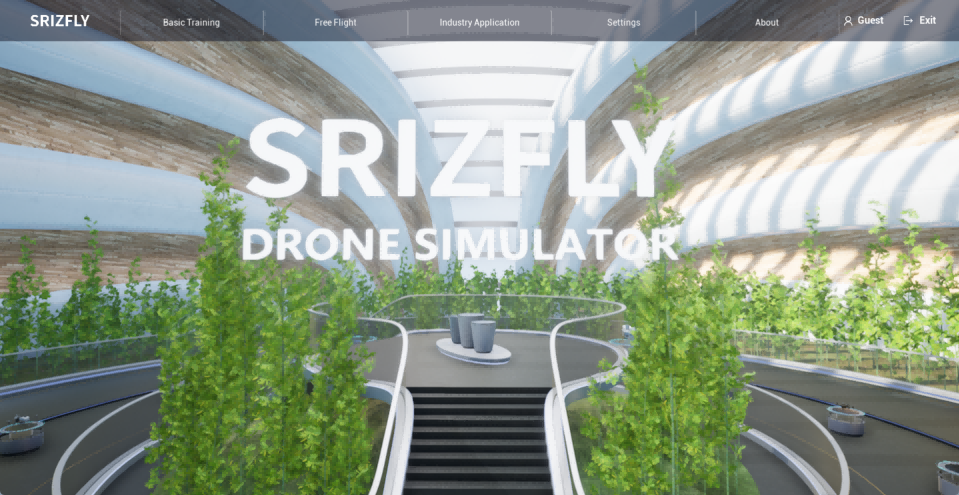
Modern pilot training demands a shift from one-size-fits-all curricula to bespoke pathways that recognize each cadet’s strengths and learning rhythms. By weaving together adaptive simulators, real-time performance analytics, and modular skill-building blocks, programs can sculpt a journey that feels personal and purposeful. This approach not only accelerates competency but also builds deeper confidence, as every training hour is invested directly where it matters most.
Behind the scenes, instructors use data-driven insights to adjust scenarios on the fly—introducing complex crosswind landings earlier for a fast learner, or dedicating extra time to systems management for someone who thrives on repetition. Such flexibility turns a standard syllabus into a living roadmap, one that evolves with the pilot rather than pushing them through a rigid checkpoint system. The result is a generation of aviators who are not just technically sound but resourceful and resilient.
Bridging the Gap Between Simulation and Real Flight
Moving from a sim to an actual aircraft often feels like learning to fly all over again. The physics models in consumer sims, while impressive, still miss the chaotic interplay of micro-turbulence, inertia shifts during fuel burn, and the subtle lag in control surface response. Pilots who train extensively on sims may develop habits that don't translate—like fixating on instrument panels because the peripheral view in a sim is artificially constrained. A better bridge starts with sim platforms that incorporate random, physics-based gust loads and realistic control loading that mimics the stick forces you'd feel in a climb or steep turn.
Visual fidelity is only half the battle. Real flight forces you to juggle a stream of non-instrument cues: the seat-of-the-pants feeling of a slipping turn, the engine vibration that hints at RPM without a gauge, even the smell of AVGAS when you enrich the mixture. High-end setups now combine motion rigs with transducer feedback and virtual reality to narrow this sensory gap, but the key is calibrated inconsistency—forcing the pilot to adapt continuously, just as in real air. No algorithm can fully replicate the unpredictable hum of an old Lycoming on a cold morning, but smart sim software can inject subtle, randomized anomalies to keep the experience honest.
Perhaps the most overlooked element is the mental shift. In a sim, consequences are resets and replays; in the cockpit, they're final. Bridging that gap demands training scenarios that punish complacency without being theatrical. It means sim sessions where a rough-running engine at 3,000 feet isn't a programmed event but a probabilistic outcome of your neglect in the virtual preflight. When the line between simulation and reality blurs just enough to make your palms sweat, the bridge has been built.
How China Is Shaping the Future of Drone Education
China’s approach to drone education goes far beyond hobbyist clubs. From primary schools to top-tier universities, drone programs are now woven into the curriculum, blending hands-on piloting with coding, engineering, and AI. Students as young as six are building and programming quadcopters, while older learners tackle real-world challenges like aerial mapping and agricultural spraying. This nationwide push isn’t just about creating pilots—it’s about equipping the next generation with a deep understanding of autonomous systems.
What sets Chinese programs apart is the emphasis on competition and practical problem-solving. Schools regularly host drone racing leagues and innovation contests, where students design custom builds to address local needs, such as monitoring pollution or inspecting power lines. These events are backed by partnerships with industry giants like DJI, giving learners direct exposure to cutting-edge technology and career pathways. The result is a fast-moving ecosystem where classroom theory quickly translates into marketable skills.
The ripple effects are global. As China graduates thousands of drone-savvy students each year, the talent pool reshapes international supply chains and R&D. Countries looking to develop their own drone industries are now eyeing China’s model—not just for its scale, but for the way it merges academic rigor with commercial agility. In the classroom, the seeds of tomorrow’s urban air mobility and drone delivery networks are already taking root.
The Role of Adaptive AI in Pilot Skill Development
Adaptive AI has quietly reshaped how pilots build and refine their skills, moving beyond static simulators into dynamic environments that react in real time. Instead of following fixed scripts, these systems analyze a pilot's decisions, stress levels, and even subtle patterns in control inputs to generate scenarios that challenge where they need it most. It is not about replacing instructors but giving them a sharper tool—one that can compress years of experience into focused, repeatable sessions without the risk of real-world consequences.
What makes this approach effective is its ability to personalize training at a granular level. An adaptive AI might notice a pilot consistently hesitating during crosswind landings and gradually increase wind variability while offering subtle cues, then dial back when frustration sets in. This kind of responsive coaching builds muscle memory and decision-making speed in ways that one-size-fits-all syllabi never could. The system does not just test knowledge; it cultivates the instinctual reactions that keep crews safe when unexpected situations arise thousands of feet in the air.
Even in recurrent training, where seasoned pilots often coast through familiar exercises, adaptive AI introduces variance that keeps skills from decaying. It pulls from a vast library of real-world anomalies—from partial system failures to sudden weather shifts—and threads them into sessions in unpredictable sequences. The result is a training partner that knows when to push, when to back off, and how to turn every flight hour into a genuine learning opportunity. Over time, this builds a depth of readiness that static checklists and rote drills simply cannot match.
Immersive Environments That Mimic Real-World Challenges
Stepping into an immersive environment is nothing like a classroom simulation—it’s a fully realized ecosystem where every detail pushes you to think on your feet. The air pressure drops just before a storm, equipment behaves unpredictably when temperatures spike, and communication with remote teammates isn’t through a scripted headset but through actual static-laced channels that mimic remote fieldwork. These scenarios aren’t designed to trip you up, but to embed problem-solving into your muscle memory so that when a real crisis hits, your response feels instinctive rather than learned.
What makes these environments stick is their refusal to take shortcuts. Instead of generic obstacles, they throw in layered complications: a tight deadline suddenly shifts because of a simulated supply chain delay, or a safety protocol you memorized turns out to require real-time adaptation when the “emergency” unfolds differently than the manual described. You’re not just completing a task—you’re managing the emotional friction of uncertainty, the kind that can’t be replicated in a slide deck. The result is a learning experience that leaves a mark because it feels lived, not consumed.
Behind the scenes, these worlds are built with input from people who’ve actually been in the field—wildland firefighters, surgical teams, disaster response coordinators. They know that authentic pressure comes from small details: the way a tool feels slightly wrong in low light, or how cultural misunderstandings creep in during high-stakes multilingual coordination. By weaving those hidden variables into the fabric of the scenario, the environment doesn’t just train skills; it rewires how you perceive risk and collaboration. You walk away not with a list of right answers, but with a sharper sense of what to pay attention to when it matters most.
FAQ
It's an advanced training platform built specifically to develop drone piloting skills using artificial intelligence. The primary audience includes professional drone operators in industries like power line inspection, agriculture, and logistics, as well as students at aviation academies. Hobbyists looking to fly more safely and confidently also find it useful.
The AI analyzes your stick inputs, flight path choices, and reaction times in real time. Instead of just replaying a recording, it highlights exactly where you hesitated or made inefficient maneuvers. It also adapts scenarios on the fly—if you're handling crosswinds too easily, it might throw in a sudden GPS signal loss to test your manual recovery skills.
Yes, it models actual environments like the dense urban corridors of Shenzhen, high-altitude mountain passes in Sichuan, or coastal wind farms in Fujian. Scenarios are based on common commercial tasks: inspecting high-voltage towers, spraying crops with precise overlap, or delivering medical supplies to remote villages. Even local weather patterns and signal interference typical in China are simulated.
It works on a average gaming laptop or desktop with a dedicated GPU from the last few years. Most pilots connect their own physical transmitters via USB—it supports popular brands like FrSky and FlySky. For those without high-end hardware, a cloud streaming option is available, letting you run everything from a lightweight tablet.
Absolutely. The training modules align with CAAC's practical test standards for Part 107 equivalent ratings. It covers mark-based navigation, emergency procedures, and night flight exercises that examiners care about. Schools often use it as a supplementary tool to reduce actual flight hours without compromising hands-on skill development.
You get a detailed breakdown beyond basic metrics. For instance, it might say: 'Your altitude control was smooth, but you lost 15% efficiency by banking too steeply on turns 3 and 4—try a coordinated shallow turn next time.' It also tracks consistency across sessions, so you see whether your landing accuracy is improving or plateauing.
Yes, you can join virtual airspace with other pilots to practice coordinated missions like formation flying for light shows or multiple drones covering a large survey area. There's also a shared scenario where one person acts as visual observer while another flies, mirroring real two-person crew operations required by some regulations.
Conclusion
China’s latest drone simulators are rewriting the rules of flight training, weaving artificial intelligence into every layer of the experience. Gone are the days of rigid, one-size-fits-all tutorials—these platforms adapt in real time, generating hyper-realistic wind gusts, sensor failures, and urban canyon interference that push pilots beyond textbook scenarios. The AI doesn’t just mimic physics; it learns from each maneuver, tweaking difficulty and introducing subtle variables that mirror the unpredictability of real skies. Behind this sits a training framework that treats every pilot as a unique profile, carving out personalized progression paths that accelerate mastery for some while digging deep into foundational skills for others. The result is a living curriculum, where algorithms track reaction times, decision points, and even eye-tracking patterns to recalibrate exercises on the fly.
What truly separates these simulators from their Western counterparts is the seamless bridge they build to actual drone operation. Using transfer learning models, skills honed in pixel-perfect replicas of cityscapes or disaster zones translate directly to stick-and-rudder muscle memory. The simulators don’t just prepare pilots for calm conditions—they immerse them in edge-case chaos that would be too costly or dangerous to recreate with physical hardware. Adaptive AI sits at the core, constantly reshaping scenarios to target weaknesses, whether that’s precise hovering in turbulent air or navigating GPS-denied environments. This fusion of synthetic training and real-world readiness is already reshaping China’s drone education pipeline, turning out pilots who think faster, react smarter, and treat every flight as a conversation with an ever-evolving machine.
Contact Us
Contact Person: Niles Liu
Email: [email protected]
Tel/WhatsApp: 8619945009803
Website: https://srizfly.com/