

Blown Film Masterbatch Rankings: Top Products and Selection Tips
2026-08-02
Choosing the right blown film masterbatch can make or break your extrusion line—poor dispersion, inconsistent color, or unexpected downtime are nightmares no processor wants to face. That's where a reliable partner like Xinwancai changes the game. In this guide, we dive into top-ranking masterbatch products and share insider selection tips that help you avoid common pitfalls, improve output quality, and keep your operations running smoothly. Whether you're battling film defects or simply looking to upgrade your material choices, the insights ahead are crafted to give you a practical edge.
Blown Film Masterbatch Demystified: Getting Past the Jargon
Let’s strip away the industry speak and look at what blown film masterbatch actually does. At its core, it’s a concentrated blend of pigments or additives wrapped in a carrier resin, designed to be diluted into the base polymer during film extrusion. The magic happens inside the blown film line: the masterbatch melts, disperses, and becomes one with the polymer, imparting color, UV protection, slip, or anti-block properties without rewriting the entire formulation. No, it’s not just “color pellets” — it’s a precision tool for tuning film performance, whether you’re after a crisp white bread bag or a heavy-duty agricultural cover.
The jargon around “let-down ratios” and “compatibilizers” can make your head spin, but you don’t need a PhD to get the essentials. Think of the let-down ratio as a recipe measurement — how many parts of carrier resin are needed to properly dilute one part of masterbatch. Get this wrong, and you’ll see streaks, uneven thickness, or worse, a batch of film that tears under tension. The real insight nobody talks about? Masterbatch selection is more about process conditions than color chips. Screw type, melt temperature, and bubble stability often dictate success more than the pigment loading itself. Sweating the small stuff here prevents hours of downtime and miles of wasted film.
Differentiating expertise from a catalog means leaning into the nuance. For instance, some masterbatches are engineered with low melt viscosity to spread evenly in recycled-content films, others use specialty carriers that don’t interfere with barrier layers in laminated structures. The pros understand that masterbatch isn’t a one-size-fits-all plug-in — it’s a dialogue between the raw material and the machine. Mastering that conversation turns a standard extrusion line into a flexible, efficient operation that can pivot from thin-gauge packaging to rugged geomembrane without missing a beat.
Standout Products: Blown Film Masterbatches That Consistently Top Charts
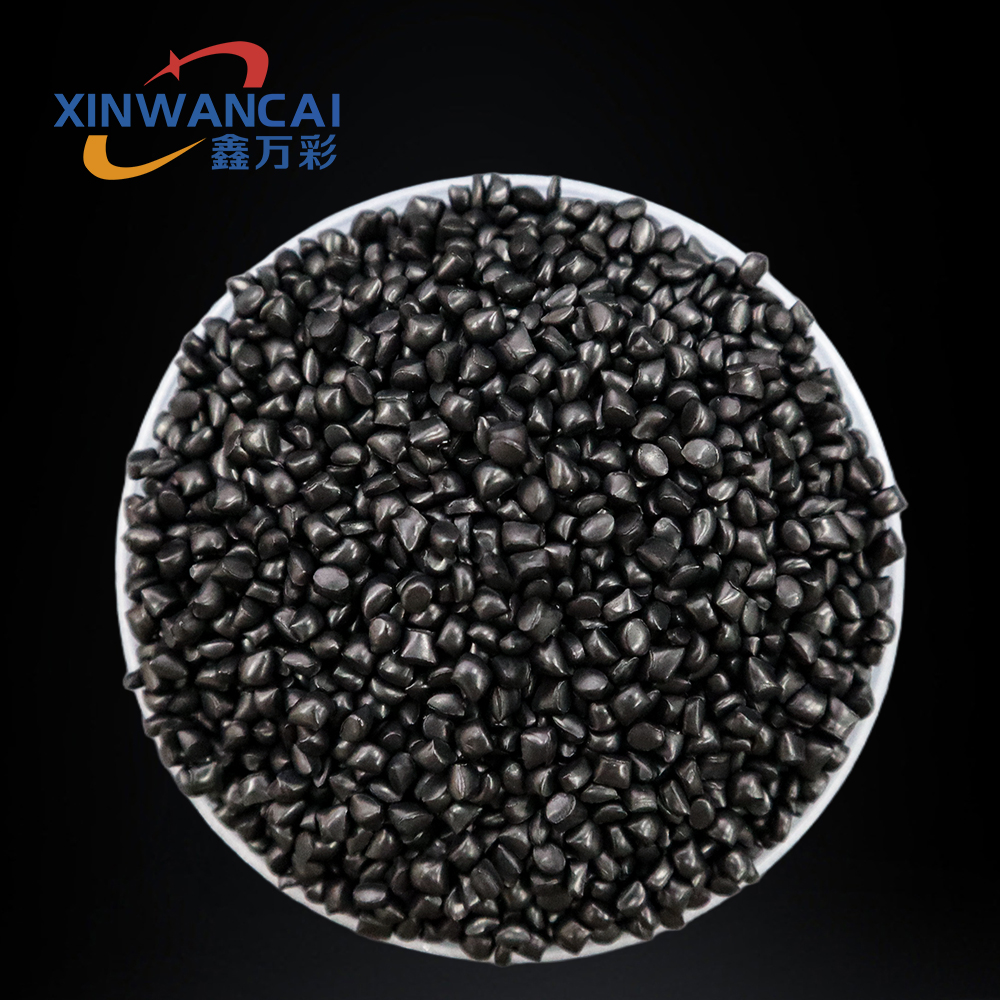
In the realm of blown film extrusion, certain masterbatches regularly outpace the competition, earning top spots through a blend of reliability and innovation. These formulations are engineered to deliver exceptional dispersion, ensuring consistent color and functional properties across even the thinnest gauge films. When converters need predictable performance run after run, these standout products become the go-to choice, reducing waste and boosting output without compromise.
What sets these top-charting masterbatches apart is their ability to marry optical brilliance with processing ease. Whether it’s a high-clarity barrier film or a heavy-duty agricultural cover, the right masterbatch maintains film integrity while enhancing UV stability, slip, or anti-block characteristics. Manufacturers who switch to these proven grades often report fewer line interruptions and a marked improvement in film aesthetics—two factors that directly influence customer satisfaction and repeat business.
The secret behind their consistent performance lies in rigorous raw material selection and advanced compounding techniques. Leading suppliers invest heavily in quality control, batch-to-batch traceability, and customized solutions that address specific blown film challenges—from gauge variation to melt fracture. As a result, these masterbatches not only top sales charts but also build lasting partnerships with film producers who refuse to settle for anything less than the best.
Selection Without the Guesswork: What Experienced Buyers Prioritize
Experienced buyers skip the fluff and dive straight into what matters—material integrity, design precision, and long-term value. They know that a product’s true worth isn’t in the sales pitch but in the details most overlook. This approach eliminates uncertainty and replaces it with informed confidence.
From scrutinizing build quality to evaluating real-world performance data, their priorities are clear. They favor items backed by verifiable track records over trendy aesthetics. By focusing on substance and usability, these buyers consistently make choices that stand the test of time.
The Dispersion Factor: Why It Can Make or Break Your Film Quality
Dispersion factor isn’t just another technical spec that only engineers argue about. It crawls into your footage in ways most people don’t expect until they’re staring at soft edges and purple halos in the editing bay. Light doesn’t play fair—different wavelengths bend at their own pace through glass, and if your lens design doesn’t account for that properly, you’re going to see it in every high-contrast scene. The frustrating part? It’s not always visible on a small monitor while shooting, but once you throw that footage onto a decent screen, the chromatic fringing starts screaming at you.
What makes it even trickier is that dispersion isn’t a fixed flaw you can just dial out with a preset. It shifts depending on the focal length, the aperture setting, and even the distance to your subject. A wide-open shot at the edge of the frame might show noticeable separation of colors, while stopping down cleans it up but costs you light and depth. Budget zooms are notorious for this, but even some high-end primes will whisper hints of it when pushed against scenarios like backlit tree branches or reflective metal. You learn to anticipate it like an old enemy that never really goes away.
The real kicker is how dispersion interacts with modern post-production tools. They’ve gotten good at removing basic purple and green fringing, but they often eat into fine detail—eyelashes become smudges, textures turn to plastic. And if you’re working with anamorphic lenses, good luck, because the dispersion patterns there are uniquely asymmetrical and not what standard correction algorithms expect. At some point you stop treating dispersion as a defect to fix and start seeing it as a character trait you can either embrace or deliberately fight against through glass choice and careful technique. Either way, ignoring it is never the right move.
Beyond Price Tags: Long-Term Considerations When Investing in Masterbatch
While it’s tempting to fixate on the per-kilogram cost of masterbatch, this narrow focus often masks far heavier expenses down the line. A bargain-priced color or additive concentrate that delivers inconsistent dispersion can trigger production slowdowns, increased scrap rates, and rework that quietly eats into margins. Opting for a product with documented batch-to-batch uniformity and rigorous quality control, even at a slightly higher upfront cost, invariably pays for itself through smoother runs and fewer customer rejections.
Beyond the immediate material, the supplier’s technical expertise frequently becomes the deciding factor in long-term value. A partner who tailors formulations to your specific resin system, machinery, and end-use requirements can slash processing temperatures, reduce cycle times, or eliminate secondary operations—gains that no commodity price list will ever reflect. Investing early in collaborative problem-solving and proactive support builds a supply chain resilience that protects against costly downtime and market volatility.
Green Shifts: How the Market Is Adapting to Sustainable Demands
Walk into any grocery store and you’ll spot the change immediately—shelves once dominated by familiar brands now share space with products wearing earthy tones and promises of carbon-neutral footprints. It’s not a niche trend anymore. From biodegradable phone cases to oat milk that’s become a fridge staple, consumer habits are pulling companies into a new reality where sustainability isn’t just a label, but a baseline expectation. The market is quietly rewriting its rulebook, adapting production lines and supply chains not out of charity, but because wallets are voting green.
Beneath the surface, this adaptation runs deeper than marketing gimmicks. Manufacturers are rethinking materials from the ground up—shipping pallets made from fungal mycelium, dyes extracted from algae, even packaging that dissolves in water. Smaller startups, free from legacy systems, are forcing established players to accelerate. A fashion brand that once relied on virgin polyester now spins threads from ocean plastics, not because it sounds good in a commercial, but because the cost of ignoring these shifts is losing relevance entirely. The shift feels less like a revolution and more like a gradual, stubborn remaking of norms—one material, one process at a time.
Yet the real story lies in how finance is catching up. Investment funds now screen for environmental metrics with the same rigor once reserved for profit margins, and banks are tying loan rates to emission targets, creating a quiet pressure cooker where sustainability becomes a competitive edge rather than a side project. The transformation is uneven, awkward at times, with greenwashing still lurking in corners—but it’s also undeniable. Markets aren’t just adapting to demands; they’re internalizing them, shaping a future where the question isn’t whether to change, but how fast.
FAQ
Compatibility with the base polymer is non-negotiable. You also need to look at dispersion quality, thermal stability at processing temperatures, and the desired properties like opacity, UV resistance, or slip. Particle size and loading level will affect film clarity and mechanicals, so always run a trial.
Differences usually come down to dispersion consistency and additive packages. Some excel in high-speed lines due to better thermal stability, while others prioritize color accuracy or functional add-ons like antifog. The best ones maintain film gauge uniformity and don't cause die buildup over long runs.
Masterbatches containing reinforcing fillers like calcium carbonate in controlled particle sizes can improve tear resistance, but they often reduce clarity. For durability, look for UV stabilizer masterbatches with hindered amine light stabilizers and antioxidants. Often, a combination of a filler masterbatch and a stabilizer masterbatch gives balanced performance.
Ignoring the melt flow compatibility can lead to gel formation or poor dispersion. Overlooking moisture sensitivity in some fillers can cause pinholes. Also, chasing the lowest price often results in inconsistent quality, more downtime, and higher scrap rates, so total cost of ownership matters more than per-kilo cost.
Request a sample and run it on your production line under normal conditions. Check for filter pressure buildup, film appearance, and mechanical properties. Also, ask for a certificate of analysis and verify the masterbatch's moisture content and carrier resin type. A reputable supplier will be transparent about these details.
Ampacet focuses heavily on color and additive masterbatches with a strong emphasis on consistency. PolyOne offers a broad range of functional and color solutions. Cabot is known for black masterbatches, while Schulman brings options with recycled content. There are also regional players like Alok Masterbatches that offer competitive pricing for standard grades.
The carrier resin must match the base polymer closely; otherwise, dispersion suffers and you may see film defects. For polyethylene films, a LDPE or LLDPE carrier with a similar melt index ensures good mixing. Mismatched carriers can lead to melt fracture or poor mechanicals, especially in thin-gauge films.
Yes, bio-based carriers and masterbatches with post-consumer recycled content are gaining traction. Some suppliers offer masterbatches that enable film biodegradation or have lower carbon footprints. The key is verifying that these eco-options don't compromise film properties; many now meet performance standards for lightweight bags and agricultural films.
Conclusion
Getting a handle on blown film masterbatch rankings means first cutting through the noise. Terms like “carrier resin compatibility” and “dilution ratio” often scare off newcomers, but at its core, a top-tier masterbatch simply marries a well-chosen pigment or additive package with a base that melts right into your film’s backbone. The products that consistently lead the pack—whether from established multinationals or specialized compounders—earn their spots through relentless batch-to-batch consistency and deep technical support. When experienced buyers scan the market, they’re not just comparing datasheets; they’re asking how a grade handles on their specific extruder, whether it can run at high letdowns without surging, and how the final film’s color holds up under retail lighting. That’s where dispersion enters the picture: a masterbatch with poor pigment breakup will leave behind gels and streaks that weaken the film, create pinholes, or ruin print adhesion. The best rankings reflect this hidden performance, not just a pretty label.
Wise selection goes far beyond the initial price per kilo. A cheap masterbatch that forces frequent screen changes or leads to customer returns quickly erodes any savings. Long-term thinkers focus on total cost in use, factoring in processing stability, scrap rates, and machine downtime. They also press suppliers for real-world data: how does the masterbatch behave with PCR content, does it affect the film’s seal curve, and can it support downgauging without sacrificing opacity? The market’s sustainability push further reshapes the rankings. Products that enable up to 30% post-consumer recycle incorporation without sacrificing aesthetic or mechanical properties are surging ahead. Biobased carriers and masterbatches that boost biodegradability in home compost settings are becoming differentiators. In the end, the top-ranked masterbatches are the ones that help converters deliver consistent, high-quality film while meeting eco-conscious brand targets—a combination that no single spec sheet can fully capture, but that every smart buyer learns to recognize.
Contact Us
Contact Person: JACK
Email: [email protected]
Tel/WhatsApp: 86 18650130917
Website: https://www.xinwancai.com/