

Best Miniature Circuit Breaker Options for Superior Circuit Protection
2026-08-11
When it comes to protecting your electrical systems, cutting corners isn't an option. The right miniature circuit breaker (MCB) can mean the difference between seamless operation and a catastrophic failure. In this guide, we cut through the noise to spotlight the most reliable options on the market—with a special focus on ETEK, a brand that consistently delivers robust, precision-built breakers. Whether you're upgrading an industrial panel or securing a residential setup, the choices ahead combine safety, durability, and innovation. Ready to find your ideal match?
What Really Matters When Choosing a Miniature Circuit Breaker
Selecting the right miniature circuit breaker (MCB) goes far beyond matching the rated current to the expected load. The breaking capacity is often overlooked until a fault occurs, but it's the silent spec that determines whether the device will safely clear a short circuit or weld itself into a dangerous mess. A 6kA-rated breaker might be fine in a residential setting, but placing it downstream of a low-impedance transformer could be a recipe for disaster when fault currents surge past 10kA. Always calculate the prospective short-circuit current at the installation point and choose a breaker that can handle what the system might throw at it, not just what it will carry during normal operation.
Then there's the matter of tripping characteristics, which too many people boil down to 'B for residential, C for commercial'. That simplification misses the nuance of real inrush currents. LED lighting arrays, modern power supplies, or even grouped motors can trip a B-curve breaker on startup, causing nuisance trips that erode user trust in the installation. Conversely, a C-curve might fail to provide adequate protection for a long lighting circuit if the earth fault loop impedance is too high. Matching the magnetic trip threshold to the actual inrush profile of the connected load—and verifying that disconnection times are met under earth fault conditions—is what separates a functional setup from one that quietly compromises safety.
Finally, pay attention to the environmental and mechanical details that don't appear on data sheets. Heat accumulation in densely packed consumer units can derate breakers significantly, leading to premature tripping at only 80% of their nominal current. Ambient temperature extremes, vibration, and even altitude affect performance in ways that standard tests don't fully capture. Look for breakers with genuine multinational approvals if the equipment ships globally—not just a CE mark, but third-party certifications that confirm the device performs as claimed in real-world conditions. The right choice isn't the one with the best brochure, but the one that has been proven to stay in spec when the real world gets messy.
How Thermal-Magnetic and Electronic Tripping Work in Practice
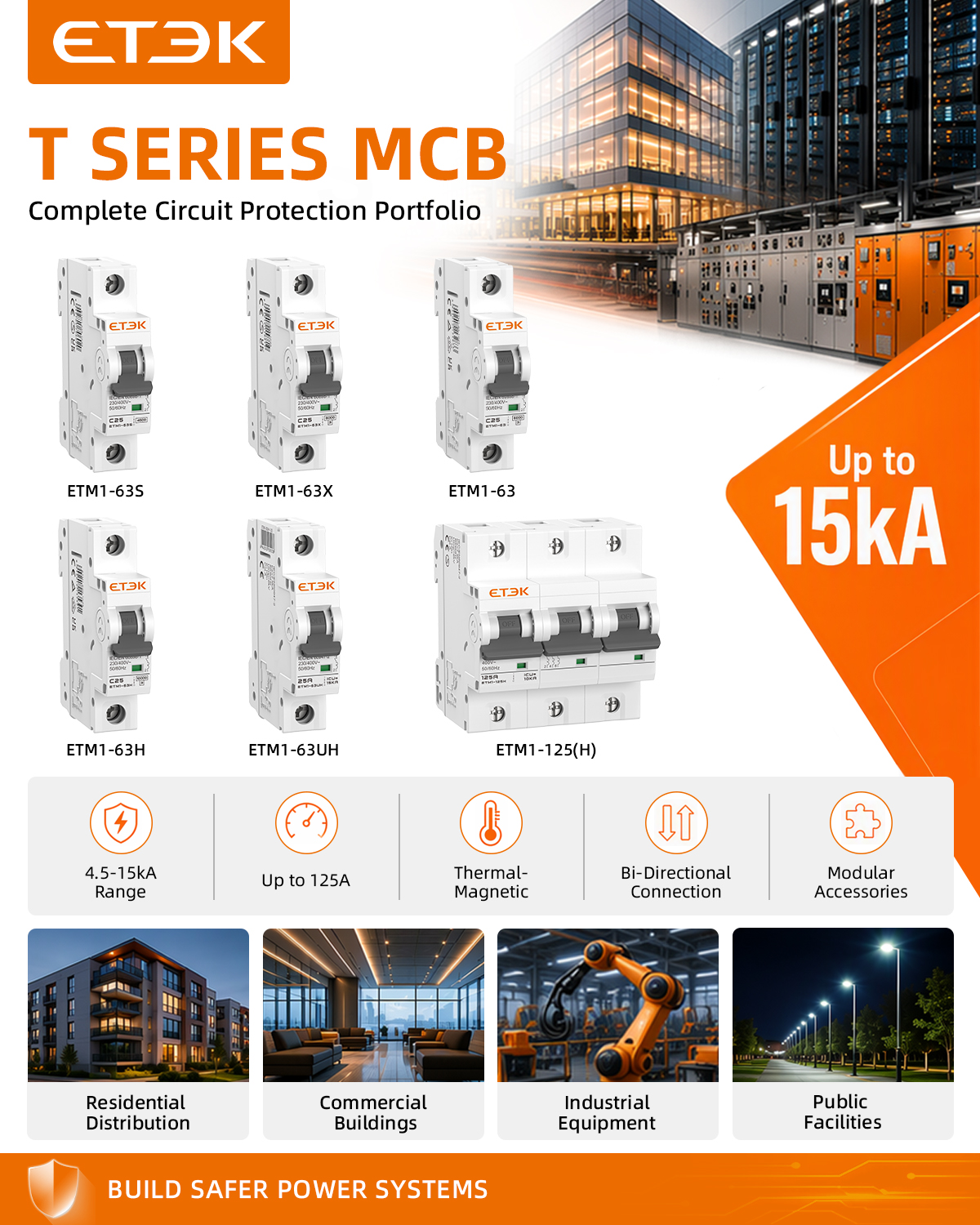
In a thermal-magnetic breaker, the thermal element relies on a bimetallic strip that bends when heated by sustained overloads, opening the circuit after a delay that mirrors the conductor's heating curve. This mimics how wires heat up under excess current, so a moderate overload might take minutes to trip while a severe one warps the strip faster. The magnetic side uses a solenoid or armature that reacts instantly to the intense magnetic field from a short circuit, slamming the contacts open in milliseconds. This dual mechanism handles everyday overloads and sudden faults with a simple, self-contained design that needs no external power.
Electronic trip units abandon the purely mechanical approach for a microprocessor-based system. Current transformers monitor the load continuously, feeding data into algorithms that track fault conditions with far greater precision. Instead of a one-size-fits-all thermal curve, you can dial in exact tripping thresholds, time delays, and even discriminate between temporary inrush currents and genuine faults. The brain of the unit compares real-time samples against user-set parameters, triggering a shunt trip or flux transfer mechanism when limits are exceeded. This makes coordination across a multi-tier distribution system straightforward, since every breaker in the chain can be programmed to wait its turn before acting.
What separates these two philosophies in the field comes down to flexibility versus rugged simplicity. A thermal-magnetic breaker tubs along for decades with nothing more than a mechanical toggle and a bimetal strip, immune to software glitches or control power loss. Yet its tripping characteristics are baked-in at the factory, and nuisance tripping on harmonics or cold-load pickup isn't uncommon. Electronic units thrive in environments where loads shift—think data centers or plants with heavy motor starts—because you can adjust parameters on the fly or even monitor energy usage through a network. But they depend on a reliable control power source and solid-state components that, while highly durable, don't have the century-long track record of a strip of metal and a spring.
Why Breaking Capacity Can Make or Break Your Protection Setup
Breaking capacity is the maximum fault current a device like a circuit breaker or fuse can safely interrupt without being destroyed. When a short circuit or severe overload occurs, the current can spike to tens of thousands of amps—far beyond normal levels. If the protective device can't handle that surge, it may fail to extinguish the arc, leading to a violent rupture, fire, or even an explosion. That's why this rating isn't just a technical footnote; it's a direct measure of whether your protection will actually protect you.
The real danger often sneaks in during system upgrades or expansions. Imagine adding new machinery to a factory or extra solar inverters to a building; the available fault current at the main panel can climb significantly. If the original breaker's breaking capacity was sized for the old setup, it might now be woefully inadequate. During a fault, the breaker could weld its contacts together or disintegrate, leaving the circuit energized and the fault unchecked. The aftermath is usually expensive and hazardous—damaged busbars, melted cables, and costly downtime.
Choosing the right breaking capacity isn't about overspending on the highest rating; it's about matching the device to your installation's prospective short-circuit current, calculated by a qualified engineer. Properly rated equipment contains the fault energy, isolates it safely, and preserves the rest of your infrastructure. This foresight protects people from arc flash injuries, prevents equipment loss, and keeps operations running. When you consider what's at stake, that number on the datasheet is far more than a compliance checkbox—it's the heart of your safety strategy.
Spotting Quality Construction in Compact Breakers
Compact breakers endure punishing jobsite conditions, so build quality is non-negotiable. Start by checking the housing: a well-made breaker uses a robust, single-piece forged body rather than multi-piece assemblies that can loosen over time. Look for reinforced stress points and sealed construction to keep out dust and moisture. The quality of internal components matters just as much—hardened steel anvils, high-grade piston materials, and solid bushings directly impact tool life and consistent performance.
Pay attention to the breaker's vibration damping system. Premium models integrate advanced anti-vibration technology that not only improves operator comfort but also protects internal parts from excessive wear. A simple test is to compare how different breakers feel under load; excessive vibration often signals lower build precision. Also examine the bit retaining system: quality breakers use a reliable, easy-to-service mechanism that holds bits securely without complicated tools, reducing downtime on the job. Bushings should be replaceable and properly aligned to prevent premature bit wear.
Don't overlook the seals and lubrication system. Grease points should be easily accessible and well-protected from debris. Some high-end compact breakers feature automatic lubrication or sealed lubrication chambers that extend service intervals. Check the power-to-weight ratio as well—a heavier breaker isn't always better if it hasn't been engineered for balance. Ultimately, quality construction reveals itself through smooth operation, consistent impact energy, and thoughtful details like protected hoses and ergonomic grips that make a real difference in daily use.
Installation Insights That Go Beyond the Manual
Installation isn't just about following steps; it's about understanding the subtle choreography between your system, the software, and the environment. Manuals give you the 'what,' but we focus on the 'why' lurking beneath the surface—the dependency conflicts that only manifest under specific kernel versions, the permission cascades that turn a ten-minute setup into a half-day debugging session, and the configuration optimizations that shift performance from functional to exceptional. This is the knowledge that separates a routine install from a truly integrated deployment.
We gather these insights from thousands of real-world setups, not sterile lab environments. When you're warned about a particular filesystem quirk or a seldom-documented environment variable, it's because someone has already lost an afternoon—or a weekend—to that very issue. Every nuance we share is a distillation of community experience, field testing, and the hard-won intuition that only comes from seeing things break in unexpected ways. This collective memory turns your installation process from a gamble into a calculated, confident procedure.
Beyond troubleshooting, these insights help you align the tool with your actual workflow from day one. It's about discovering shortcuts, leveraging less obvious features, and anticipating upgrade paths before they become painful. The manual tells you how to get started; we tell you how to keep going without hitting the same walls that others have already scaled.
Quiet Advances Driving Smarter Circuit Safeguards
Behind the scenes, a wave of subtle but significant innovations is reshaping how circuits protect themselves from damage. Engineers are moving beyond traditional fuses and simple breakers, embedding intelligence directly into the hardware. These new safeguards can monitor conditions in real time, reacting not just to overcurrents but to subtle voltage fluctuations and temperature shifts that predict failures before they happen.
One quiet advance comes from solid-state materials that alter their resistance under stress. Instead of physically breaking a connection, they limit current flow seamlessly, resetting once conditions normalize. This eliminates the need for replacement and minimizes downtime in critical systems. Paired with microprocessors no larger than a grain of rice, these protectors learn from each event, adjusting their thresholds to suit the specific quirks of the device they guard.
Such developments are finding their way into everything from electric vehicles to home appliances, often unnoticed by end users. The result is a generation of electronics that endure harsh environments longer and fail less dramatically—a quiet revolution that makes our increasingly electrified world a little more reliable each day.
FAQ
A miniature circuit breaker, or MCB, is an automatically operated electrical switch designed to protect an electrical circuit from damage caused by overcurrent or short circuits. Unlike traditional fuses that must be replaced after one fault, an MCB can be simply reset by flipping a switch. This makes it a convenient and reliable first line of defense against electrical fires and equipment damage in residential and commercial settings.
First, look at the breaking capacity—this tells you the maximum fault current the breaker can safely interrupt. A rating of 6kA or 10kA is common for homes. Next, consider the tripping characteristic (B, C, or D curve) which determines how quickly it responds to surges; B-curve is typical for lighting and general circuits, while C or D curves suit motors or high inrush loads. Finally, check certifications from recognized bodies like UL or IEC to ensure quality, and opt for a design that fits your existing panel busbar for easy installation.
Absolutely. The curve indicates the magnetic trip sensitivity. B-curve MCBs trip instantly at 3 to 5 times the rated current, making them ideal for purely resistive loads like lighting and heating. C-curve breakers trip at 5 to 10 times the rated load, suited for general domestic and commercial applications with moderate inrush currents, like small motors or fluorescent lighting. D-curve MCBs trip at 10 to 20 times the rated current, designed for high inrush equipment such as large transformers, X-ray machines, or industrial motors. Choosing the wrong curve can lead to nuisance tripping or inadequate protection.
Start by calculating the total expected load on the circuit, adding up the wattage of all connected devices and dividing by the voltage (usually 120V or 230V). Then apply a safety factor—most codes recommend the continuous load not exceed 80% of the breaker's rating. For example, if your total load is 12 amps, a 15-amp MCB is appropriate. Also, consider the wire gauge; 14 AWG typically pairs with 15A, while 12 AWG handles 20A. Never oversize an MCB just to stop it from tripping—that defeats its protective purpose and creates a fire hazard.
Reliability varies by region, but a few names consistently stand out. Siemens, Schneider Electric (Square D in the US), and ABB are industry leaders with extensive portfolios and proven track records for durability and safety. Eaton and Legrand also offer excellent residential and light commercial options. For budget-conscious buyers, brands like Chint or GE provide decent quality, but always verify they have the necessary certifications for your local code. Consulting an electrician for brand compatibility with your specific panel is a smart move.
One big error is mismatching the breaker to the wire size—a 20-amp breaker on 14-gauge wire can overheat the wiring before tripping. Another is using the wrong curve type, leading to nuisance trips or delayed response. Loose terminal connections are also frequent; tighten screws to the manufacturer's torque spec to prevent arcing and heat buildup. Additionally, never install a used or damaged breaker, and avoid mixing brands in a panel unless explicitly listed as compatible, as busbar fit can vary and create hot spots.
Maintenance is fairly straightforward. Periodically (once a year) turn each breaker off and on to exercise the mechanism and prevent internal sticking. Check for any signs of discoloration, burning smell, or rust around the terminals while the panel is open—these indicate overheating or moisture. Use an infrared thermometer or thermal camera while under load to spot any abnormally hot breakers, which may signal internal wear or loose connections. If a breaker trips repeatedly, investigate the cause rather than ignoring it; replacement is easy and affordable compared to potential damage.
Conclusion
Picking the right miniature circuit breaker (MCB) goes beyond basic amperage ratings—it’s about how the device behaves when things go wrong. Thermal-magnetic breakers handle everyday overloads with a predictable delay, while electronic trip units offer far sharper response to sudden faults, cutting power in milliseconds. This speed means the difference between a minor surge and a damaged appliance. But speed alone isn’t enough: breaking capacity must match the worst-case fault current your system could see. A unit rated too low can weld its own contacts together, leaving the circuit wide open. That’s why industrial settings often demand 10kA or higher, whereas typical home panels may only need 6kA—assuming no recent upgrades have increased the available fault current.
Build quality reveals itself in subtle details—tight riveting, uncompromising contact materials, and a trip mechanism that feels precise rather than mushy. Even the most robust breaker depends on clean installation: correct torque on terminals, proper busbar alignment, and enough air gap for heat dissipation are often overlooked but heavily influence longevity. Modern advancements are quieter but transformative; arc-fault detection and remote trip signaling now integrate into footprint-neutral designs, letting you retrofit intelligence without rewiring. The best MCB isn’t the most expensive—it’s the one that matches your real fault environment, installs cleanly, and stays dependable through years of unnoticed thermal cycling. Pairing these practical insights with a skeptical eye toward marketing claims gets you genuinely superior circuit protection.
Contact Us
Contact Person: Andy
Email: [email protected]
Tel/WhatsApp: +86 13356133008
Website: https://www.etek-china.com/