

Best Coal-Based Activated Carbon for Superior Filtration and Purification
2026-08-02
When it comes to filtration and purification, not all activated carbon is created equal. Coal-based activated carbon stands out for its exceptional adsorption capacity and durability, making it the go-to choice for demanding industrial and environmental applications. But what truly sets the best apart? At Tundrr, we've engineered our carbon to deliver unmatched performance, consistency, and value. Join us as we explore the key factors that define superior coal-based activated carbon and how it can elevate your filtration processes.
Why Coal-Based Carbon Leaves Coconut Shell in the Dust
While coconut shell carbon is often celebrated for its high microporosity and renewable sourcing, coal-based activated carbon offers a broader pore size distribution that makes it far more versatile in industrial settings. The presence of mesopores alongside micropores allows coal-based carbon to adsorb larger molecules—such as color bodies in sugar decolorization or organic contaminants in wastewater—that would simply be too bulky to fit into the tight micropores dominating coconut shell variants.
Cost and scalability give coal-based carbon another decisive edge. Coal is an abundantly available raw material with a stable global supply chain, which translates to lower production costs and consistent quality. This reliability is critical for large-scale operations like municipal water treatment or gold recovery, where unpredictable coconut harvests and price fluctuations can disrupt supplies of shell-based carbon.
Durability also tips the scales in favor of coal-based carbon. Its higher mechanical strength and lower attrition rate mean less material loss during handling, backwashing, or regeneration cycles. For applications demanding repeated thermal reactivation, coal-based carbon maintains its adsorptive capacity over more cycles, while coconut shell carbon tends to degrade faster, increasing long-term operational expenses and downtime.
Inside the Pores: How It Traps Contaminants at the Molecular Level
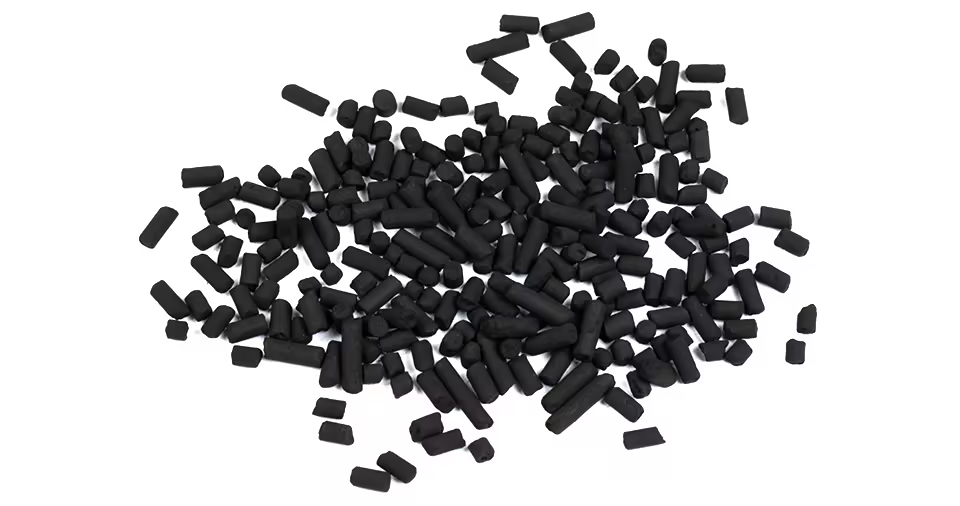
At the heart of every effective filtration system lies a hidden world of microscopic caverns and channels, each carefully designed to ensnare unwanted particles. These pores aren’t just empty spaces; they are active traps where physical and chemical forces converge. As contaminated fluid or air flows through, the pore walls present a sticky maze. Molecules that are too large simply cannot pass, but the real magic happens with smaller contaminants. Van der Waals forces, like invisible hands, reach out from the pore surfaces to grab passing molecules, while electrostatic attractions pull oppositely charged pollutants out of the stream. This intimate, molecule-by-molecule capture is far more sophisticated than a simple sieve.
What makes this process so effective is the deliberate engineering of pore size, shape, and surface chemistry. By tuning the diameter to just a few nanometers, manufacturers create a size-exclusion barrier that blocks viruses, heavy metals, or organic compounds. But size isn’t everything. Functional groups grafted onto the pore walls—such as amines or hydroxyls—act as chemical anchors. They form hydrogen bonds or coordinate with metal ions, holding them tightly even under high flow. Think of it as a lock-and-key mechanism where each pore is customized to recognize and retain specific threats, while harmless molecules slip through unscathed.
The dynamics inside a pore are also a story of collisions and residency time. As contaminants navigate the labyrinth, their path is intentionally chaotic, increasing the odds they’ll brush against a reactive site. Some advanced materials even swell or contract in response to pH or temperature, dynamically adjusting their trapping efficiency. This isn’t passive filtering; it’s an active, responsive system. The result is a level of purification so precise that it can separate nearly identical molecules—an ethanol molecule from water, or a targeted pollutant from a complex mixture. Understanding this inner world reveals why nanostructured adsorbents and membranes outperform conventional filters, turning a simple concept into a high-precision tool for clean water and air.
The Unsung Hero of Clean Water and Breathable Air
It’s easy to overlook what keeps our water safe and our air breathable. Every day, a vast network of natural and engineered systems works quietly behind the scenes. From the soil microbes that break down pollutants to the sophisticated filtration plants that remove invisible threats, these processes rarely make headlines. Yet without them, the basic resources we rely on would quickly become unusable.
Wetlands and forests act as Earth’s kidneys, straining sediments and absorbing excess nutrients before they reach our rivers. Underground aquifers slowly purify water over decades, and the ozone layer—though battered—still shields us from harmful radiation. Meanwhile, industrial scrubbers and catalytic converters tackle contaminants at their source, turning what could be toxic emissions into harmless compounds. It’s a delicate balance, and one that demands constant upkeep.
The true cost of this silent work is often invisible until something fails. When algae blooms choke a lake or smog descends on a city, we’re reminded how fragile these systems are. Investing in them isn’t flashy, but it’s fundamental. The unsung hero doesn’t ask for recognition, just a little maintenance and respect.
Picking the Perfect Carbon Without Getting Lost in the Specs
Carbon can feel like a maze of numbers—stiffness, weight, modulus—but chasing the highest figures rarely leads to the best ride. A frame that’s impossibly light on paper might chatter over rough pavement, while a slightly heavier layup can transform harsh roads into smooth ribbons. Instead of fixating on grams, think about where the material’s been placed. A well-designed carbon structure distributes fibers precisely where stress demands, giving you a bike that feels lively without punishing your body.
The term “high-modulus” gets tossed around like a badge of honor, but it only tells part of the story. High-modulus fibers are stiff in tension, yet they can be brittle if not paired with complementary materials. Great carbon manufacturing isn’t about using the most expensive fiber everywhere; it’s about blending different grades to balance ride quality, impact resistance, and durability. A savvy builder will reinforce high-stress zones with tough, intermediate-modulus plies and reserve ultra-stiff stuff for areas that actually benefit from it, like the bottom bracket or head tube.
Finally, look past raw specs and into the builder’s philosophy. Two frames with identical numbers can feel worlds apart because resin systems, fiber orientation, and compaction methods shape the outcome. Some prioritize a damped, planted sensation, while others aim for snappy power transfer. The only way to know is to ride. Don’t let a spreadsheet determine your choice—let the road reveal what the numbers can’t.
When Purity Isn't Just a Buzzword: Testing That Proves It
Purity claims are everywhere, but how do you separate genuine quality from marketing fluff? The answer lies in rigorous, transparent testing that goes beyond surface-level promises. Without verifiable data, even the most eloquent labels are just words. We believe purity should be a fact you can see in a lab report, not a slogan you read on a box.
Our approach starts with third-party laboratories that specialize in detecting contaminants at trace levels. Every batch undergoes a battery of tests—from heavy metals and microbial analysis to potency verification and residual solvent screening. If a product doesn't meet our exceptionally tight thresholds, it never reaches a shelf. This isn't about meeting the bare minimum; it's about refusing to compromise.
What does that mean for you? It means you get a product that consistently delivers what the label promises, with no unwanted surprises. You can request the certificate of analysis for any batch, anytime. Because when purity is proven by science, not just stated in an ad, it becomes more than a buzzword—it becomes the standard you deserve.
From Refineries to Respirators: Stories Where Performance Mattered
It was 2:47 a.m. at a Gulf Coast refinery when a pressure gauge spiked past the red line. The immediate response wasn't a manual override or a frantic phone call—it was a precision-machined relief valve, tested to cycle 50,000 times without failure, that prevented a catastrophic rupture. The night shift didn't even know how close they came to disaster. That valve had been installed 11 years earlier, selected not because it was the cheapest, but because an engineer named Margie had once stood on that very platform and said, "We'll never have to worry about this one." And she was right.
Thirty miles from Wuhan in January 2020, a similar kind of quiet competence was taking hold inside a converted convention center. Makeshift oxygen lines snaked across floors, each junction relying on tiny check valves to keep breath flowing one way. When the power failed for 17 minutes during a storm, not a single valve stuck or reversed—because months earlier, a procurement officer had insisted on aviation-grade components instead of easier-to-source alternatives. Doctors noticed nothing unusual. Patients kept breathing.
What links these moments isn't heroics, but the unglamorous work of making things that simply function when they must. A bearing that doesn't seize in abrasive dust. A seal that holds against corrosive gas. A diaphragm that flexes a million times without cracking. The engineers who design them rarely get called to podiums. But their fingerprints are on every system that refused to buckle when the world leaned hardest against it.
FAQ
Its high density and robust pore structure handle viscous fluids and high-pressure systems better than wood or coconut shells. The raw material leads to a durable filter media that doesn't break down easily under mechanical stress.
Steam activation at precise temperatures develops a network of micropores and mesopores tailored for large-molecule adsorption. Physical activation avoids chemical residues, making the final product safer for drinking water and food-grade applications.
A balanced mix of small pores (for trapping low-molecular-weight contaminants) and larger transport pores (for faster diffusion) ensures both depth filtration and high adsorption capacity. Coal-based grades often excel here because the source material naturally yields varied pore dimensions.
It shines when dealing with chlorine, industrial solvents, pesticides, and color bodies in liquids. In air streams, it captures volatile organic compounds (VOCs) and odors effectively due to its high carbon content and surface reactivity.
Yes, thermal reactivation at high temperatures burns off adsorbed organics and restores most of the original capacity. After multiple cycles, abrasion resistance decreases slightly, but properly reactivated coal-based carbon often retains 90-95% of its initial activity.
Finer mesh provides more surface area and better contact but increases pressure drop. For high-flow systems, a coarser grade prevents clogging. Always match the particle size to the contact time required and the contaminant's molecular size.
Many manufacturers now use bituminous coal sourced from low-sulfur mines and employ waste-heat recovery during activation. Spent carbon is often reactivated rather than landfilled, cutting down the need for virgin material and lowering the overall carbon footprint.
Conclusion
When it comes to filtration that demands more than surface-level promises, coal-based activated carbon stands apart from the usual contenders like coconut shell. Its secret lies in a rugged, irregular pore structure born from high-temperature steam activation of bituminous coal, which creates a dense network of micropores and mesopores that trap contaminants at the molecular level. Unlike the narrower pores of coconut shell carbon that favor only small molecules, this architecture catches a wide spectrum—volatile organics, chlorine, industrial solvents—while still leaving room for larger impurities. That balance means faster adsorption kinetics and a longer service life, especially in aggressive water or air streams where other media choke early.
But real performance goes beyond lab specs. The best coal-based carbons earn their place through rigorous, application-specific testing: iodine numbers that confirm vast surface area, but also hardness tests for low dusting, and challenge tests that replicate real-world pollutant loads. From protecting refinery catalysts against fouling to stripping odors in respirators and municipal water plants, the difference shows up where purity isn't negotiable. Choosing the right carbon means matching mesh size, surface chemistry, and activity level to your exact challenge—not just grabbing the highest number on a datasheet. In the end, it's the unglamorous, proven grind of coal-based carbon that quietly delivers clean water and breathable air, day after day.
Contact Us
Contact Person: Ellen Zhang
Email: [email protected]
Tel/WhatsApp: +86(21) 2287 6756
Website: https://www.tundrr.com/en/