
Autonomous Handling Factory: Unlocking Next-Level Operational Efficiency
2026-08-17
Warehouse floors are changing fast—no longer just aisles of static racks and manual forklifts, but living systems where machines think, route, and respond in real time. The autonomous handling factory isn't a distant concept; it's here, and it's redrawing the line between possible and profitable. At the center of this shift is HANGCHA, a name long trusted for material handling, now pushing into fully integrated automation that promises not just fewer touchpoints, but radically better throughput, safety, and uptime. In this post, we'll unpack what that actually looks like on the ground—and why the next level of operational efficiency may be closer than you think.
When Forklifts Start Thinking for Themselves
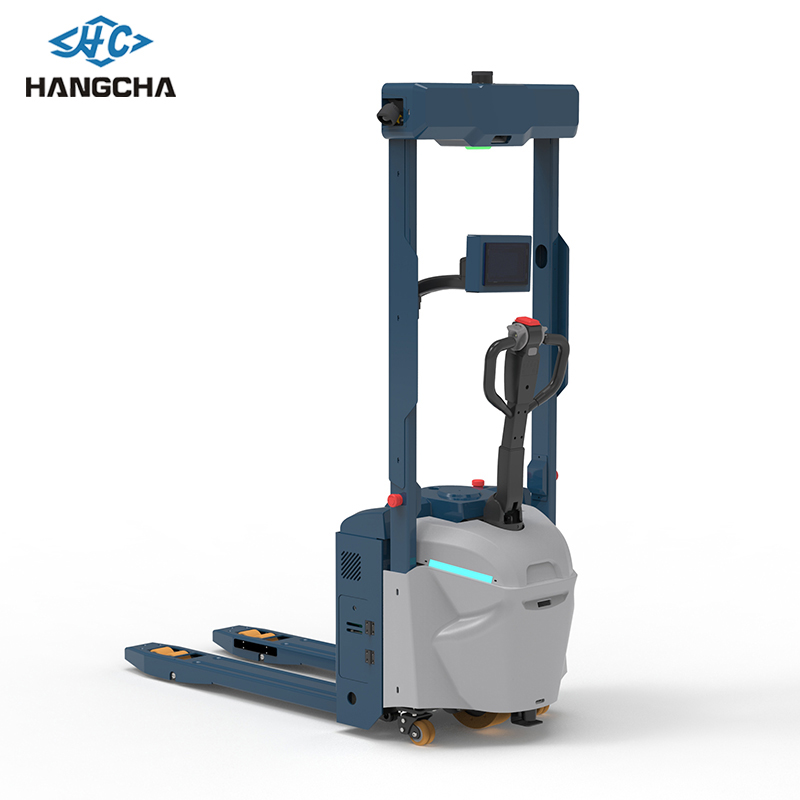
Forklifts have always been the quiet workhorses of the warehouse, following painted lines and the steady hand of an operator. That picture is starting to shift. New machines now carry lidar and camera arrays, building a live map of their surroundings and choosing their own routes through aisles. The first time you watch one back away from a misplaced pallet, pause, and angle around it without any human input, it feels less like automation and more like a decision.
That word—decision—is where things get interesting. A self-driving forklift doesn't just execute a fixed path; it weighs options, adjusts to unexpected obstacles, and sometimes picks a path that surprises its supervisors. In busy loading docks, this leads to smoother flows and fewer collisions, but it also opens questions about accountability. If a machine chooses to take a shortcut and knocks over a rack, the root cause isn't a simple sensor failure anymore. It's a choice made by software that no one fully watched in real time.
Over time, these machines will probably learn from each other, sharing traffic patterns and refining their behavior between shifts. The real shift isn't just about moving pallets faster. It's about handing over small, everyday judgments to machines that were once purely mechanical. That changes not only the warehouse floor but also the role of the people who still work alongside them—now more as supervisors of intent than as operators of movement.
The End of the Fixed Conveyor Line
For decades, the fixed conveyor line was the backbone of mass production. Workers stood at assigned stations while the chain dragged chassis or pallets past them at a constant, unyielding speed. Every model change required weeks of retooling, and a single bottleneck upstream could idle an entire plant. That rigidity made sense when a factory produced one variant at high volume, but it collapsed under the weight of today’s fragmented demand.
Now plants are tearing out the old track and replacing it with fleets of autonomous mobile robots that carry parts to whichever station needs them next. Work cells can be rearranged over a weekend, not a shutdown. Production control systems assign each unit a route in real time, so a custom-configured item and a base model can move side by side without collision. This shift is especially visible in automotive assembly, where the same line now mixes electric, hybrid, and combustion vehicles without stopping.
The end of the fixed conveyor line does not mean chaos. It means assembly becomes a mesh of small, flexible loops instead of one long chain. Engineers no longer ask how to balance a line; they ask how to schedule a swarm. And operators, instead of repeating a single motion for an entire shift, rotate through multiple tasks as the work follows its own path.
Real-Time Traffic Control for Robot Fleets
Real-time traffic control for robot fleets demands more than pathfinding; it requires a continuous arbitration layer that resolves conflicts before they become physical. In high-density facilities, robots may share narrow corridors, intersect at blind corners, or compete for charging docks. A practical control stack combines local sensor fusion with a fleet-level scheduler that reassigns priorities every few hundred milliseconds. For example, a robot approaching an intersection can broadcast its intended trajectory, while nearby units adjust speed or yield based on a distributed right-of-way rule. This keeps aggregate throughput high even when individual routes change due to obstacles or order reassignment.
The harder part is handling exceptions without deadlock. Pure reactive systems tend to produce oscillation, where two robots repeatedly step forward and back. To avoid that, modern deployments use a mix of conservative reservation zones and optimistic replanning. A robot may claim a short segment of path ahead, but that claim expires if the robot fails to make progress. When a high-priority task enters the system, lower-priority robots may be pushed to holding areas rather than forced to wait in place, which preserves local traffic flow. Monitoring the age of these reservations and the variance in travel time gives operators an early warning of congestion before it spreads.
Maintenance That Predicts Its Own Next Move
A bearing on a packaging line starts humming a fraction of a pitch higher than it did yesterday. No human ear catches the shift, but a small sensor bolted to the housing does. It logs the change, compares it against months of baseline data, and flags a wear pattern that typically precedes failure by about three weeks. That's the quiet promise behind maintenance that no longer waits for a breakdown—or even a routine calendar date.
The approach leans on continuous condition monitoring rather than fixed service intervals. Vibration, temperature, acoustic signatures, and electrical current draw stream into a model that learns what "normal" looks like for each individual asset. When the signals drift outside learned tolerances, the system maps the anomaly to known failure progressions and issues a work order with enough lead time to schedule parts and labor without disrupting production.
The payoff shows up in the margins that matter: fewer emergency call-outs, smaller spare-part inventories, and machines that retire on their own terms instead of seizing mid-shift. Perhaps more interesting is how the maintenance conversation shifts. Teams stop asking "what broke?" and start asking "what's about to break, and how long can we safely run?" That changes both the budget and the culture around upkeep.
Plug-and-Play Autonomy Without a Factory Rebuild
Retrofitting existing machinery with autonomous capabilities usually conjures images of production lines halted for weeks, custom brackets, and a team of integration engineers rewriting control code. A plug-and-play approach flips that assumption. The autonomy kit arrives as a self-contained package: a sensor bar with lidar and cameras, a ruggedized compute module, and a drive-by-wire actuator that clamps onto the steering column or hydraulic controls. Because the kit communicates through standard CAN bus or Ethernet interfaces, it taps into the vehicle's existing electronic control units without requiring a tear-down or a factory rebuild. Installation is measured in hours, not months, and the machine can be back in operation the next shift.
The real breakthrough is software abstraction. Instead of hard-coding behaviors for each make and model, the system uses a vehicle-agnostic control layer that maps generic commands—throttle, brake, steering angle, lift height—to the specific signals of the host machine. A quick configuration session, often done through a tablet app, teaches the system its physical dimensions, weight distribution, and operating envelope. From there, the same hardware can be moved from a sit-down forklift to a pallet truck or even a tugger with only a change in configuration file. This portability means a facility can pilot the technology on one vehicle, measure results, and then scale across a mixed fleet without ever touching the factory floor layout or rebuilding production infrastructure.
Operationally, this approach changes the math for adopting autonomy. There is no need to commit to a lengthy retrofit project or accept downtime for a line rebuild. The upfront investment is limited to the kit and a few hours of technician time. If a different task emerges, the module can be unbolted and reinstalled on another asset. That flexibility is particularly valuable in warehouses and distribution centers where seasonal peaks demand rapid redeployment of equipment. By decoupling autonomy from the machine's original manufacturing process, plug-and-play kits deliver a practical migration path: start with one lane or one shift, learn from real-world data, and expand at a pace that matches operational confidence.
Measuring Gains Beyond the Robot Count
When automation enters a facility, the easiest metric to track is the number of machines installed. Yet that figure alone misses most of the story. Real progress shows up in quieter places: how quickly changeovers happen, how often a line runs without intervention, and how consistently output meets spec across shifts. A facility can add a dozen robots and still struggle if work-in-process piles up at the next station.
A more useful view weighs throughput per labor hour, defect escape rates, and the time needed to train a person to oversee multiple cells. It also looks at flexibility—whether the same robot can switch from one product variant to another without reprogramming from scratch. Gains measured this way reflect not just the presence of automation, but its fit with the surrounding process.
Ultimately, the robot count is a snapshot; the gains are a moving picture. Teams that track downtime reasons, first-pass yield, and average cycle time per unit start to see where automation truly pays for itself. They also discover where it doesn't, which can be just as valuable. The number that matters is not how many arms you've bolted to the floor, but how much closer the whole system gets to running untended.
FAQ
The core difference is decision-making. A standard automated warehouse follows pre-set routes and scripts—conveyors move items from point A to point B, but the system doesn't rethink that path if a station gets congested. An autonomous handling factory uses real-time sensor data, machine vision, and onboard intelligence so robots and other movers can choose their own routes, swap tasks on the fly, and coordinate with each other. That shift from fixed automation to adaptive orchestration is what prevents bottlenecks from turning into downtime.
Yes, in most cases it's a phased retrofit rather than a clean-slate build. Many facilities start by automating the most repetitive or injury-prone material movements—like dock-to-stock transfers or line-side replenishment—while leaving existing conveyors and racking in place. Autonomous mobile robots can operate on current floor plans without magnetic tape or fixed guidepaths, and software layers on top of a warehouse management system gradually take over routing decisions. The key is picking one high-pain area first and letting the wins build internal confidence.
Instead of a fixed daily schedule, the factory continuously reads demand signals, inventory levels, and robot positions. If a cell suddenly consumes parts faster than planned, the system can dispatch the nearest autonomous vehicle with a replenishment load and reroute others around the congestion. That means flow becomes pull-based and self-correcting—shortages are caught before they stop a line, and excess movement drops because every trip is tied to an immediate need rather than a forecast.
Collaborative robots, or cobots, often handle the precise end-of-arm tasks—picking a part from a bin, placing it in a kit, or loading a machine—while autonomous mobile robots cover the long and mid-range transport. The two share a common map or traffic-management layer, so a cobot can signal an AMR to wait, move, or dock at exactly the right height. This split lets each platform do what it's best at: cobots for fine manipulation, AMRs for flexible movement.
Labor savings get the headlines, but three quieter gains usually matter more over time. First, space utilization improves because autonomous vehicles can navigate tighter aisles and don't need fixed conveyor footprints, freeing square footage for value-added work. Second, inventory accuracy jumps simply because every movement is logged in real time, reducing cycle-counting effort. Third, product damage drops—consistent, sensor-guided handling replaces rushed manual carts and forklift jostling, which cuts rework and customer returns.
The biggest resilience advantage is dynamic re-routing. When a dock gets flooded with urgent orders or a supplier truck arrives off-schedule, the system doesn't have to wait for a planner to redraw routes. Autonomous vehicles can be reassigned by priority, alternate staging lanes can be activated, and loads can be buffered in less-used corners of the facility. Because the fleet is software-defined, adding temporary capacity—like renting extra robots for a peak week—is also faster than installing new fixed conveyance.
The shift isn't about becoming a robotics engineer; it's more about moving from operating equipment to supervising and improving processes. Teams need people comfortable reading dashboards, interpreting exception alerts, and making quick judgment calls when a robot flags an ambiguous situation. Maintenance skills also evolve from mechanical repair to software diagnostics and sensor calibration. In practice, the best transition programs pair experienced floor workers with the integration team—those workers know the real constraints that a simulation will miss.
Yes, but they should be chosen to reflect the whole flow, not just robot uptime. Common benchmarks include throughput per square foot, order cycle time from release to dock, and on-time line-side delivery rate. Many facilities also track non-value-added travel distance per unit—autonomous systems should drive that number down sharply. A more revealing metric is the time from an exception like a missing part to resolution; autonomous orchestration should shrink that from hours to minutes. The real next level is seeing those metrics improve together without adding headcount.
Conclusion
The quiet shift from fixed infrastructure to adaptive robotic handling is redefining what a factory floor can do. Forklifts no longer wait for a driver’s cue—they read the environment, reroute around obstacles, and coordinate with pickers on their own. The fixed conveyor line, once the backbone of material flow, is giving way to modular autonomous carts that rearrange themselves with demand. Overhead, a real-time traffic control layer keeps every robot moving without gridlock, adjusting paths instantly when a dock gets crowded or a pallet drops. It’s less about replacing humans and more about removing the friction that slows everything down.
What makes this shift stick is not just smarter machines, but smarter upkeep and rollout. Predictive maintenance flags a failing wheel bearing before it halts a shift, so repairs happen between runs, not during them. Plug-and-play autonomy means a facility can start with a handful of units and scale without tearing out floors or reworking legacy systems. The real payoff shows up in metrics that matter: order cycle time, aisle congestion, energy per move, and how workers are redeployed to higher-value tasks. Counting robots misses the point; the win is a factory that finally breathes—adjusting in minutes, not months.
Contact Us
Contact Person: Liuxue
Email: [email protected]
Tel/WhatsApp: +86-19084200370
Website: https://www.hf-ec.com/