

Air Rotary Union Supplier: What to Look for in a Reliable Partner
2026-10-19
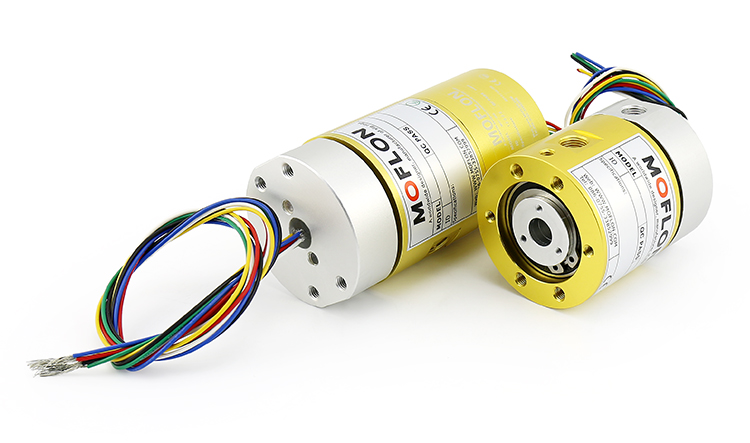
Choosing the right air rotary union supplier isn't just about checking a box on a spec sheet. It's about finding a partner who can handle pressure—literally and figuratively—when your equipment is running non-stop. From leak-free performance to responsive support, the difference between a supplier and a reliable partner becomes obvious on the production floor. In this article, we'll walk through the key traits to look for, and why names like MOFLON keep showing up in conversations among engineers who can't afford downtime.
Material Choices That Reveal More Than a Data Sheet
Material choices often tell unspoken stories. A brushed aluminum casing, for instance, does more than list tensile strength—it hints at a design team that values cool touch and subtle light play. These decisions get made in late-night prototyping sessions, not just from spec tables.
Consider recycled polymers with visible flecks. The data sheet mentions impact resistance and UV stability, but the visual texture reveals a commitment to circular supply chains that no compliance report can capture. Buyers sense it immediately: this product was built by people who thought about where materials come from and where they'll end up.
Even the absence of certain materials speaks. A device that avoids adhesives in favor of mechanical fasteners suggests repairability long before you open the manual. It's a quiet admission that longevity matters more than sleek minimalism, and it often wins loyalty that benchmarks alone never could.
Seal Placement and Porting Geometry Affect Everyday Performance
Seal placement rarely gets the spotlight, but it quietly decides how an engine behaves in stop-and-go traffic. Where the ring pack sits relative to the combustion pressure directly changes blow-by, oil consumption, and how much heat reaches the piston crown. Slide the seal a few millimeters lower and the engine may feel lazy off idle, yet hold revs slightly better on the highway. Those small shifts matter when you are merging into a gap or crawling uphill with the air conditioning running, not just on a dyno chart.
Porting geometry does not only chase peak airflow. The angle of the port floor, the radius approaching the seat, and how the throat transitions into the bowl all shape charge motion at low and mid lift. That is where a daily driver spends most of its life. A port shaped purely for maximum volume may flow well at full throttle but stumble during gentle acceleration or require constant throttle correction at cruising speed. The right geometry gives the engine a linear, predictable pedal response, so pulling away from a light feels natural rather than like waiting for a turbo to wake up.
When seal placement and port geometry work together, the result shows up in everyday drivability. Cold starts settle quickly, part-throttle response feels crisp without surging, and the engine tolerates low-quality fuel or hot weather better. None of that shows on a spec sheet, but it is the difference between a vehicle you can live with every day and one that only feels good at wide-open throttle. These two details, often dismissed as racing minutiae, actually define how the engine responds the other ninety-nine percent of the time.
A Supplier's Test Rig Can Expose Weaknesses Before Delivery
When a supplier builds a dedicated test rig, they aren't just ticking a box for quality assurance—they're creating a controlled environment that mirrors real-world operating conditions. This kind of setup lets them push components beyond normal duty cycles, revealing fatigue cracks, seal degradation, or unexpected resonance that would otherwise stay hidden until the equipment reaches your facility. By catching these issues early, the supplier can refine materials, adjust tolerances, or redesign weak points before the final product ships.
What often gets overlooked is how a test rig changes the conversation between buyer and supplier. Instead of relying on theoretical specs or past performance, both parties can review actual stress-test data. A pump that leaks after 500 hours on the rig, for example, signals a need for better shaft sealing—something that's far cheaper to fix in the supplier's workshop than during an emergency shutdown at your plant. This transparency builds trust and gives you the chance to request specific tests that mimic your harshest operating scenarios.
The real value, though, comes from the failures that never reach you. A well-instrumented rig can expose weaknesses in bearings, electrical connections, or fluid paths that standard inspection checklists miss. It's one thing to see a CAD model that looks perfect; it's another to watch a prototype run at full load for a week and start showing signs of wear. That kind of pre-delivery insight not only prevents downtime but also pushes the supplier to improve their design iteratively—ultimately delivering equipment that's already been through its first breakdown, without you having to pay for it.
Custom Modifications Shouldn't Feel Like a Special Favor
When you ask a vendor to tweak a workflow or adjust a dashboard, you shouldn't have to brace yourself for a sigh. Too many platforms still treat any change outside the default setup as an exception that requires escalation, a manager's sign-off, and an extra invoice. That mindset turns a routine request into a negotiation, and it quietly pushes customers back toward workarounds instead of asking for what they actually need.
The real fix is to build flexibility into the product's bones. If a field can't be renamed, a report can't be filtered, or a notification can't be rerouted without a support ticket, that's not a premium feature—it's a missed opportunity. Customization should be a first-class path, not a favor you have to earn. When users can make those changes themselves, the relationship stops being about permission and starts being about partnership.
Replaceable Parts and Tool Access Shape Long-Term Maintenance
Perhaps the clearest lesson from years of field service is that long-term maintenance costs are decided long before the first wrench turns. Machines built around replaceable modules—bearings, seals, wear plates, filter cartridges—allow technicians to swap out degraded components in minutes rather than hours. But that advantage disappears if the surrounding structure blocks access. A bolt hidden behind a fixed panel or a hose clamp positioned just out of reach transforms a simple replacement into a partial disassembly job.
Good tool access is less about giving every fastener an open line of sight and more about respecting the natural sequence of a repair. Designers who leave enough clearance for a standard socket, position drain plugs toward the front, and keep common wear items on one side of the unit cut down on improvised workarounds. Those workarounds—universal joints, mirror inspections, blind reaching—are where mistakes creep in, and they add hours to what should be routine service.
Over a decade, a fleet of machines with awkward access accumulates a hidden tax: longer preventive maintenance windows, more stripped threads, and higher labor costs. In contrast, equipment designed with replaceable parts and honest tool clearances tends to stay in service longer because it never gives technicians a reason to postpone minor fixes. That simple shift in perspective turns maintenance from a recurring headache into a manageable routine.
Field Service Stories From Current Users Offer Real Insight
When a veteran HVAC technician talks about the time a mobile dispatch update saved him from a forty-minute deadhead across town, that’s not a sales pitch. It’s the kind of detail you only get from someone who has spent years juggling work orders, traffic, and frustrated customers. Current users tend to skip the feature lists and go straight to what changed on a Tuesday afternoon: fewer callbacks, clearer notes from the office, or the ability to pull up a unit’s service history while standing in a customer’s driveway.
Those stories carry weight because they come with specific, unpolished edges. A field tech might mention that the biggest win wasn’t a dashboard metric, but the fact that their spouse stopped hearing complaints about lost paperwork at dinner. A dispatcher may describe the quiet shift when they finally closed out every ticket before leaving. These aren’t curated testimonials; they’re casual remarks from people still doing the work. Listening closely reveals what actually matters in the field, often far from the bullet points.
FAQ
A supplier who asks about media type, pressure fluctuations, rotational speed, and temperature range before quoting a price shows real understanding. They focus on the operating envelope rather than pushing a catalog number.
Consider it a strong signal. A supplier with test rigs that mimic your actual conditions can catch seal and bearing issues early, which is far more valuable than polished brochure specifications.
Custom capability matters when your space is tight or the media is unusual. However, a good supplier will first confirm whether a standard design can work, then propose the smallest practical change instead of forcing a costly bespoke build.
Ask about housing, rotor, seal, and bearing materials plus surface treatments. Request compatibility data for compressed air, vacuum, or coolants, and look for specific field examples rather than generic claims.
Ask for actual installation histories, operating hours, and maintenance records. A trustworthy partner will share verifiable field data or even connect you with a reference customer using similar equipment.
It is often the difference between a minor hiccup and a major shutdown. Check whether they keep local stock, offer fast diagnostics, provide repair kits, and respond quickly when your line is down.
Avoid making price the sole criterion. Low upfront cost often hides cheaper seals or looser machining tolerances, leading to frequent replacements and downtime. Evaluate total cost of ownership including lifespan, energy use, and maintenance labor.
Vague technical answers, no test data, evasive replies about materials, repeated delivery changes, hard-to-reach support, and a focus only on price rather than your actual operating conditions are all warning signs.
Conclusion
A rotary union supplier's real character shows in choices that aren't obvious on a catalog page. Look past standard 304 stainless steel claims and ask which alloys hold up in your actual media, whether that's hot oil, coolant, or compressed air with trace moisture. Seal placement matters just as much as the seal material itself; a union that stacks seals where they're easy to inspect and keeps porting geometry clean will save you from daily dribbles and pressure drops. Before you trust any delivery date, ask to see the supplier's test rig. A shop that runs unions through thermal cycling, low-speed rotation under load, and dry-start conditions is far more likely to catch a weak point than one that boxes parts straight off the CNC.
Custom modifications shouldn't feel like you're asking for a favor. A good supplier treats a different thread pitch, an extended rotor, or a non-standard port orientation as routine engineering, not a special project with endless change orders. Maintenance tells the rest of the story: if you need a pin spanner and three hands just to reach the wear ring, that's a design failure. Replaceable seals and accessible tool paths turn a two-hour repair into a fifteen-minute job. Finally, ask current users what happens when a union fails in the field. The stories you hear about after-hours support, loaner units, and honest root-cause feedback will tell you more than any polished brochure.
Contact Us
Contact Person: Xiangpin Li
Email: [email protected]
Tel/WhatsApp: 86 186 1706 8578
Website: https://www.moflon.com